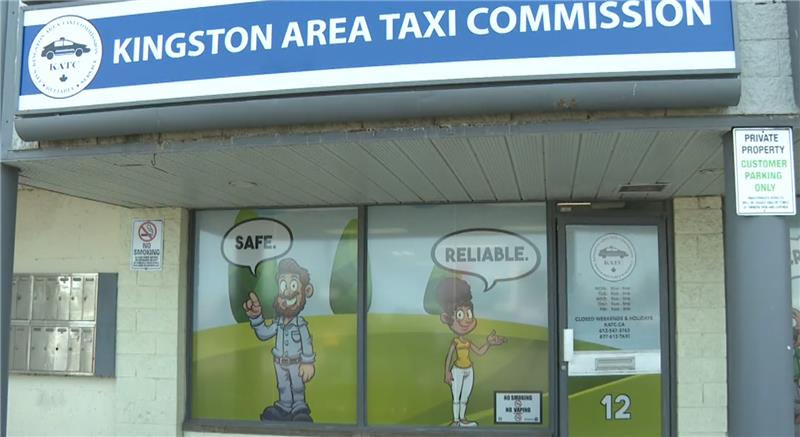
The $400,000 deficit facing the Kingston Area Taxi Commission (KATC) is not an isolated accounting error but a structural failure of a regulatory body to align its fixed overhead with a shrinking revenue base. When a municipal regulatory agency shifts from a self-sustaining model to a six-figure deficit, the breakdown occurs at the intersection of three specific vectors: labor-market displacement by ride-sharing platforms, stagnant fee structures, and an inflexible administrative cost layer. A forensic audit serves as the diagnostic tool to distinguish between simple cash-flow mismanagement and the deeper rot of institutional obsolescence.
The Mechanistic Failure of Regulatory Revenue Models
Regulatory commissions like the KATC operate on a cost-recovery basis. Their primary income streams—licensing fees, vehicle inspections, and plate transfers—are tied directly to the volume of active participants in the traditional taxi market. The current $400,000 shortfall indicates a decoupling of operational expenses from market activity.
The Volume-Fee Gap
The emergence of Transportation Network Companies (TNCs) has fundamentally altered the taxi unit economics. Traditional taxi operators face high barriers to entry, including mandatory insurance premiums and municipal plate costs. TNCs bypass these legacy structures, siphoning off the demand that previously funded the commission’s oversight activities.
- Variable Revenue Contraction: As drivers exit the taxi industry for the flexibility of TNCs, the commission loses the recurring revenue of annual renewals.
- Fixed Cost Rigidity: Unlike a private firm that can scale down staff or office space in response to market contraction, the KATC maintains statutory obligations that require a baseline level of administrative and enforcement personnel.
The deficit represents the accumulated "delta" between the cost of maintaining a regulatory framework and the willingness of the remaining market participants to fund it through fees.
Quantifying the $400,000 Deficit Through Forensic Inquiry
A forensic audit differs from a standard financial audit by seeking the intent and the granular "why" behind transactions rather than just verifying that the numbers add up. In the context of a public commission, this inquiry focuses on the misappropriation of funds or, more commonly, the "administrative creep" where expenses grow unchecked by revenue realities.
The Three Pillars of Expenditure Scrutiny
To understand where the $400,000 vanished, the forensic process must deconstruct the KATC’s ledger into three specific cost centers:
- Personnel and Benefit Indexing: Total compensation for commission staff often accounts for 60% to 80% of operating budgets. The audit will determine if staffing levels were adjusted relative to the declining number of licensed taxis in Kingston. If the commission maintained peak-market staffing during a period of 20% to 30% industry contraction, the deficit was a mathematical certainty.
- Enforcement Efficacy: Regulatory bodies justify their existence through enforcement. However, if the cost of inspectors and patrol vehicles exceeds the fines and compliance fees generated, the enforcement wing becomes a net loss center. The audit must evaluate the "return on enforcement" to see if the commission was over-investing in policing a shrinking pool of drivers.
- Governance Overheads: Legal fees, consultancy costs, and board stipends are often the first areas where fiscal discipline fails. High legal expenditures often point to protracted battles with TNCs or internal labor disputes, neither of which produces revenue.
The Cost Function of Regulatory Oversight
The central tension in the Kingston case is the cost function of safety and fair-market competition. The commission’s role is to ensure vehicle safety and driver vetting, but these are high-touch, expensive processes.
The formula for the commission’s fiscal health can be expressed as:
$$Net Position = (L \times F) + (I \times V) - (S + O)$$
Where:
- $L$ is the number of active licenses.
- $F$ is the average fee per license.
- $I$ is the number of inspections performed.
- $V$ is the fee per inspection.
- $S$ is fixed staffing costs.
- $O$ is operational overhead.
When $L$ and $I$ decrease due to market competition, the commission must either increase $F$ and $V$—which risks further driving operators out of the market—or aggressively cut $S$ and $O$. The $400,000 deficit is the result of failing to execute either side of this equation effectively.
Structural Bottlenecks in Municipal Oversight
The call for a forensic audit by city officials suggests a breakdown in the reporting relationship between the KATC and the City of Kingston. Unlike direct city departments, independent commissions often operate in a "gray zone" of accountability. They are mandated by the city but managed by an independent board.
This distance creates an information asymmetry. City councilors, who are ultimately responsible for the city's financial health, may only receive high-level budget summaries that mask underlying trends until the deficit reaches a critical mass. The "sudden" discovery of a $400,000 gap is usually the result of "smoothed" reporting where small monthly losses are ignored in hopes of a seasonal rebound that never arrives.
The Liability Shift
If the commission cannot cover its $400,000 deficit through its own revenue, the burden shifts to the taxpayer. This creates a moral hazard: a specific industry (taxis) is being regulated, but the general public is subsidizing the oversight of that industry. This is a fundamental violation of the "user-pay" principle that governs most municipal regulatory bodies.
Strategic Reconfiguration of the Taxi Commission
The forensic audit is merely the first step. The data derived from the audit must lead to a complete overhaul of the commission's operational mandate. There are three potential paths forward for the KATC to resolve the insolvency and prevent its recurrence.
1. The Consolidation Model
The most immediate solution to the high fixed-cost base is to dissolve the independent commission and fold its functions into a larger city department, such as Licensing and Enforcement. This eliminates the need for a separate board, executive director, and dedicated office space. Centralizing these functions allows for "shared services" where staff can be diverted to other municipal licensing tasks when taxi volume is low, effectively turning fixed labor costs into variable costs.
2. The Tech-Neutral Regulatory Shift
The current deficit is exacerbated by the fact that the commission regulates a shrinking pie (taxis) while a growing pie (Uber/Lyft) operates under different or non-existent local fee structures. A sustainable model requires a unified regulatory framework where all "vehicles-for-hire" pay into the system based on a per-trip fee rather than a flat annual license. This aligns the commission’s revenue directly with the total volume of rides happening in the city, regardless of the platform.
3. Service Level Retrenchment
The audit may reveal that the commission is performing "gold-standard" oversight on a "bronze-standard" budget. If the industry can only support $200,000 in fees, the commission must define what $200,000 of oversight looks like. This may mean fewer inspections, move toward self-certification for certain vehicle classes, or digitizing the licensing process to remove human clerical costs.
Limitations of the Forensic Approach
A forensic audit will identify where the money went, but it cannot fix a broken market. If the audit concludes that the $400,000 was spent entirely on legitimate, albeit high, operational costs, the city faces a political rather than a financial problem. They must then decide if a regulated taxi industry is a public good worth subsidizing from the general tax base.
Forensic audits also have a high "carry cost." Hiring a top-tier accounting firm to investigate a $400,000 deficit could cost between $50,000 and $100,000, further straining the commission's limited resources. The "return on audit" must be measured by the structural changes it forces, not just the errors it finds.
The Strategic Path Forward
The city must immediately move to freeze all non-essential spending within the commission while the forensic team investigates the 2023-2025 fiscal years. The focus must be on identifying "non-performing assets"—specifically staff or programs that have not seen a proportional decrease in funding as taxi plate numbers declined.
Simultaneously, the board must be held accountable for the "burn rate." A $400,000 deficit in a city the size of Kingston does not happen overnight; it is the result of months of ignored "red flag" reports. The transition to a per-trip fee model should be accelerated. By capturing a small fee (e.g., $0.10 to $0.25) on every TNC and taxi ride, the commission can create a stable, volume-sensitive revenue stream that reflects the actual state of the 2026 transportation market. Failure to integrate TNCs into the funding model will ensure that any "fix" provided by the audit is only temporary, as the traditional taxi market continues its inevitable contraction.


