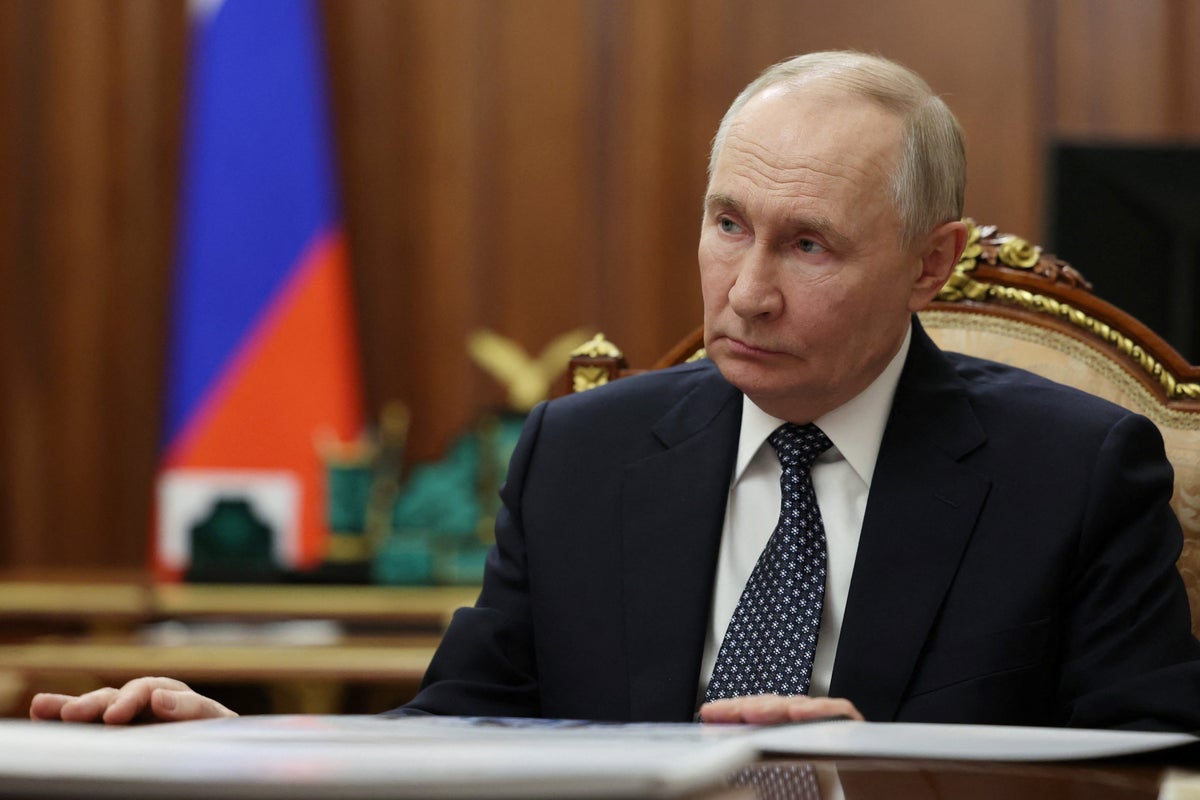
The temporary suspension of offensive operations between the Russian Federation and Ukraine, framed by the cultural and religious observance of Orthodox Easter, is not a humanitarian pivot but a calculated pause in the kinetic attrition cycle. This cessation of active hostilities functions as a logistical breathing space, allowing both commands to address critical bottlenecks in manpower rotation and ammunition stockpiling. The primary objective of this analysis is to deconstruct the operational variables that make a short-term truce mathematically advantageous for both sides despite the absence of a long-term diplomatic resolution.
The Triad of Operational Attrition
To understand why a ceasefire occurs at this specific juncture, one must analyze the interaction between three physical constraints: equipment depreciation, personnel fatigue, and supply chain latency.
- Equipment Depreciation and Maintenance Cycles: High-intensity conflict subjects armored vehicles and artillery systems to "barrel wear" and mechanical stress that exceeds standard maintenance intervals. A 48-to-72-hour pause allows for forward-deployed repair units to conduct essential preventative maintenance that cannot occur under active fire.
- Personnel Rotation and Psychological Thresholds: Combat effectiveness follows a predictable decay curve. Units deployed in high-pressure sectors like the Donbas require periods of low-stimulus environments to maintain tactical cohesion.
- Logistics Stockpiling: The caloric and kinetic requirements of a modern offensive are immense. A ceasefire allows transport echelons to move closer to the zero-line without the risk of precision strikes on supply nodes, effectively resetting the "starting block" for the next phase of engagement.
The Political Economy of the Orthodox Pause
The timing of this ceasefire is tethered to the cultural gravity of Orthodox Easter, a variable that carries significant internal political weight for both Moscow and Kyiv. For the Kremlin, respecting the holiday reinforces the narrative of defending "traditional values," a core pillar of domestic propaganda. For the Ukrainian administration, a pause provides a reprieve for a civilian population under constant dual-threat from missile strikes and energy grid instability.
This is a case of Signal Alignment. Both actors find it useful to signal a degree of restraint to their respective domestic audiences, even if the strategic intent remains the total neutralization of the opponent’s military capacity. By framing the pause as a religious necessity, both leaderships avoid the perception of "weakness" that usually accompanies a request for a truce.
Strategic Reconstitution and the Zero-Sum Reset
A ceasefire does not freeze the war; it shifts the conflict from the kinetic to the logistical dimension. During these hours of "silence," both militaries engage in Strategic Reconstitution. This involves the movement of reserves and the hardening of defensive positions.
- Intelligence Collection: With artillery silent, acoustic and electronic signatures change. This allows signals intelligence (SIGINT) teams to recalibrate their sensors and identify new enemy positions that were previously masked by the noise of active combat.
- Fortification Engineering: Sapping and trench reinforcement are high-risk activities under fire. A ceasefire enables engineering battalions to deploy heavy machinery to deepen secondary and tertiary lines of defense.
- Drone Re-calibration: Both sides utilize this window to update flight software and adjust frequencies for FPV (First-Person View) drones, anticipating the electronic warfare (EW) countermeasures the opponent will likely deploy once the pause expires.
The paradox of the "Easter Truce" is that it often leads to a more violent resumption of hostilities. Because both sides use the time to solve their most pressing supply issues, the first 24 hours post-ceasefire typically see a spike in kinetic intensity as "refreshed" units attempt to capitalize on their reconstituted strength.
Constraints on the Ceasefire’s Viability
The durability of any temporary truce in a decentralized conflict is threatened by the Command-and-Control (C2) Latency. In high-attrition warfare, localized commanders often operate with a degree of autonomy. A "halt" order from a central authority takes time to permeate to the squad level. Furthermore, the definition of "attack" is often contested. Does a reconnaissance-in-force mission violate a ceasefire? Does the movement of a battery to a more advantageous position constitute an aggressive act?
These ambiguities create a "trigger-happy" environment. If a local commander perceives a repositioning of enemy troops as a precursor to a post-truce strike, they may engage in a "pre-emptive defensive" action, effectively collapsing the ceasefire in that sector.
The Cost-Benefit Calculus of Russian Compliance
Vladimir Putin’s decision to halt attacks is a function of the Marginal Utility of the Current Offensive. If Russian forces have reached a point of diminishing returns in their current tactical direction—due to mud seasons (rasputitsa) or depleted localized stocks—a ceasefire costs them nothing in terms of momentum while gaining them political capital.
The cessation of fire acts as a "reset button" for the Russian military’s complex mobilization and training pipeline. It provides a clean break-point to integrate newly trained contract soldiers into existing units without the chaos of an active frontline.
Ukrainian Strategic Response and Defensive Depth
For Ukraine, the ceasefire is a critical window to address the Ammunition Deficit. While Western aid packages move through the logistics pipeline, the Ukrainian Armed Forces (AFU) must manage a "shell economy," rationing fire to ensure they can repel major pushes. A 48-hour pause allows them to redistribute their limited stocks to the most vulnerable sectors without the immediate pressure of suppressing Russian batteries.
The AFU also utilizes these periods for civilian infrastructure repair. Working on the power grid or water filtration systems near the front is impossible under shelling. The "Easter Pause" allows for rapid-response utility teams to conduct high-speed repairs, increasing the overall resilience of the rear areas.
The Mechanism of Resumption
Warfare is a system of feedback loops. The resumption of attacks following an Orthodox Easter ceasefire follows a predictable pattern of escalation:
- Phase I: Probing: Reconnaissance units test the edges of the contact line to see if the opponent has moved or reinforced during the pause.
- Phase II: Counter-Battery Priming: Artillery units engage known targets identified by SIGINT during the ceasefire.
- Phase III: High-Intensity Surge: Armored and infantry units attempt to break through the newly reinforced lines before the opponent has fully re-acclimated to the kinetic tempo.
The ceasefire is essentially a "loading screen" for the next level of the conflict. The side that manages its logistics more efficiently during the silence will hold the tactical advantage when the first rounds are fired on Monday morning.
Strategic Forecast: Post-Easter Kinetic Trajectory
Expect an immediate escalation in the frequency of long-range glide bomb strikes and drone swarms. Both sides have used this period to stockpile these relatively low-cost, high-impact assets. The Russian military will likely attempt to leverage the "rested" status of its motorized rifle units to probe for gaps in the Ukrainian line that may have been thinned out to allow for troop rotations.
Conversely, Ukraine will likely utilize the intel gathered during the pause to launch precision strikes on the Russian logistical hubs that were repositioned during the ceasefire. The tactical reality is that a ceasefire in a war of attrition is merely a change in the state of energy—from kinetic release to potential storage.
The primary strategic move now is the optimization of the OODA Loop (Observe, Orient, Decide, Act). The military that transitions from the "Easter Calm" back to "High-Intensity Combat" the fastest will dictate the operational tempo for the remainder of the spring season. This requires a transition from the static defensive posture of the ceasefire to a dynamic, mobile defense or offensive within minutes of the truce's expiration. Commanders must treat the final hour of the ceasefire not as the end of a break, but as the "H-Hour" for a new phase of the campaign.