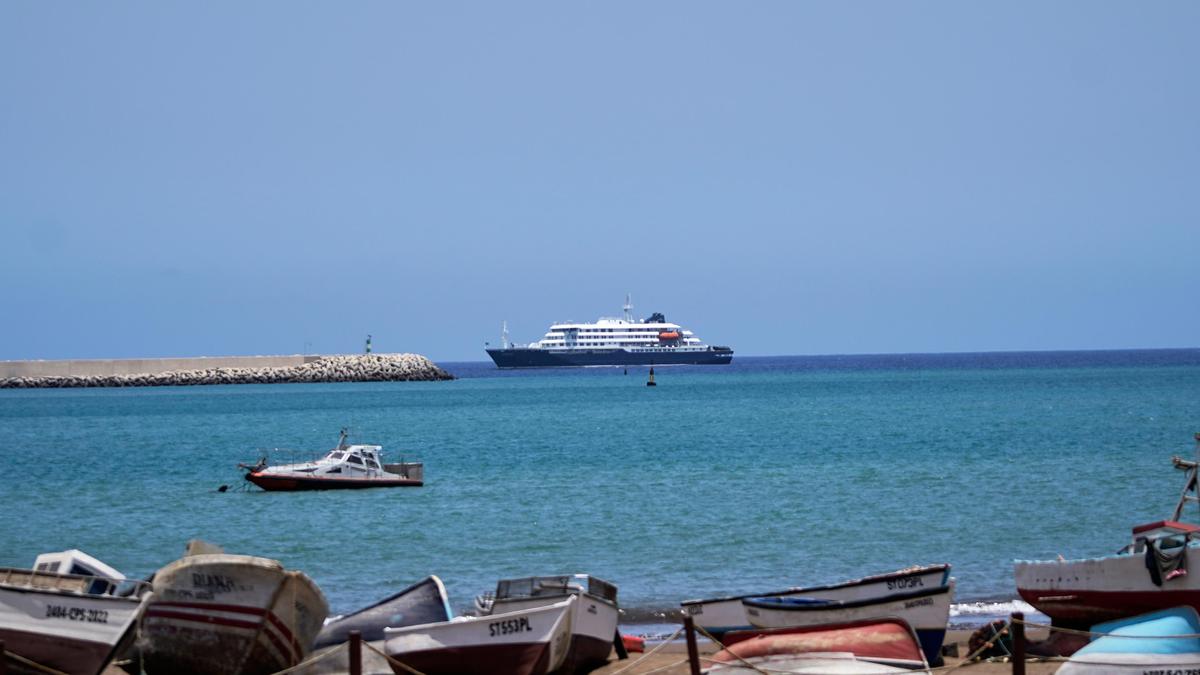
The containment of a suspected Hantavirus outbreak on a vessel carrying 150 individuals represents a catastrophic intersection of logistical rigidity and biological volatility. While standard maritime reporting focuses on the human drama of being "stranded," a clinical analysis reveals a deeper systemic failure: the inability of mobile high-density environments to execute rapid-response diagnostic protocols for non-traditional pathogens. Hantavirus, typically a zoonotic respiratory or hemorrhagic threat, fundamentally breaks the standard "Norovirus" containment model used by the cruise industry. The refusal of port authorities to allow docking is not merely a bureaucratic delay; it is a calculated risk-mitigation strategy to prevent a land-based spillover of a pathogen with high case-fatality rates.
Pathogen Mechanics and Transmission Dynamics
Hantaviruses belong to the Bunyaviridae family. Unlike the common gastrointestinal illnesses associated with maritime travel, Hantavirus is generally transmitted through the aerosolization of excreta from infected rodents (primarily Muridae or Cricetidae families). This creates a unique environmental hazard profile for a cruise ship.
The logic of the current quarantine hinges on three transmission variables:
- Aerosolization Point-Sources: On a ship, the HVAC system acts as a primary distribution network. If a rodent infestation exists within the ducting or sub-deck storage, the movement of air can transport viral particles across multiple cabin tiers.
- Incubation Latency: Hantavirus Pulmonary Syndrome (HPS) has an incubation period ranging from one to eight weeks. This creates a "shadow window" where asymptomatic passengers may bypass thermal screening while being actively infectious or about to enter a critical symptomatic phase.
- The Zoonotic Barrier: The presence of an outbreak on a ship implies a failure in the vessel's Integrated Pest Management (IPM). Identifying the bridge between the animal reservoir and the human population is the only way to confirm the scope of the risk.
The Tri-Node Crisis Framework
To understand why this vessel remains adrift, we must analyze the crisis through three distinct operational nodes: the Biological Node, the Legal-Jurisdictional Node, and the Logistical-Containment Node.
The Biological Node: Pathogen Classification
Hantavirus is categorized into two clinical manifestations depending on the geographic origin of the strain:
- Hantavirus Pulmonary Syndrome (HPS): Common in the Americas (e.g., Sin Nombre virus). It begins with fatigue and fever but progresses rapidly to acute respiratory distress. The mortality rate is approximately 38%.
- Hemorrhagic Fever with Renal Syndrome (HFRS): More common in Europe and Asia. While the mortality rate is lower (1% to 15% depending on the strain), the morbidity involves severe renal failure, requiring dialysis resources that are non-existent on a standard cruise ship.
The "waiting for help" status of the ship indicates a lack of on-board PCR (Polymerase Chain Reaction) testing capabilities for rare pathogens. Without definitive serology, the vessel is treated as a "hot zone" by default.
The Legal-Jurisdictional Node: Sovereignty vs. Maritime Law
The refusal to dock exposes the friction between the International Health Regulations (IHR 2005) and national sovereignty. Under the IHR, ships should be granted "free pratique"—permission to enter a port and embark or disembark—unless there is clear evidence of a public health risk.
However, port states possess the "Right of Refusal" under the principle of protecting domestic biosecurity. The ship becomes a "liminal space," a territory where the flag state (often a country like Panama or the Bahamas) holds theoretical responsibility, but the coastal state holds the physical gate. The stalemate occurs because neither party wants the liability of a "land-based transmission event."
The Logistical-Containment Node: Vessel Architecture
Cruise ships are optimized for leisure, not quarantine. The structural bottlenecks include:
- Recirculation Ratios: Most modern ships utilize Energy Recovery Ventilators (ERVs). If these are not configured to 100% fresh air intake, the viral load in communal areas increases exponentially.
- Waste Management: The handling of medical waste on a ship under quarantine becomes a hazardous material (HAZMAT) challenge that most crews are not trained to manage for BSL-3 (Biosafety Level 3) pathogens.
Quantifying the Risk of Port Entry
The decision to deny docking is a function of the Community Infection Probability (CIP). If 150 people disembark, the contact tracing requirements for a pathogen with an 8-week incubation window would overwhelm local health departments.
The cost-benefit analysis used by the coastal authority likely follows this formula:
$$Total Risk = (P_{leak} \times C_{local}) + (L_{legal} \times T_{delay})$$
Where:
- $P_{leak}$ is the probability of a single infected individual or rodent escaping the cordoned area.
- $C_{local}$ is the economic cost of a local outbreak (healthcare strain, loss of tourism).
- $L_{legal}$ is the litigation risk from the cruise line.
- $T_{delay}$ is the duration of the standoff.
In almost every scenario involving a high-fatality pathogen like Hantavirus, the value of $C_{local}$ is so high that the port authority will accept any level of $L_{legal}$ to maintain the barrier.
Essential Protocols for High-Lethality Maritime Outbreaks
The current situation demonstrates a need for a shift from "Reactive Containment" to "Proactive Biosecurity Integration." The following protocols define the required standard for resolving the 150-person standoff:
1. Remote Triage and Tele-Diagnostics
Instead of waiting for help to arrive, the ship must utilize satellite-linked diagnostic suites. The absence of point-of-care (POC) testing for Hantavirus is the primary reason the ship is denied entry. If the ship could provide verifiable negative results for 90% of the manifest, the "risk of leak" would drop below the threshold for docking.
2. Rodent Vector Eradication (RVE)
The medical crisis cannot be solved without solving the pest crisis. A specialized HAZMAT team must board the vessel at sea to conduct a "Sweep and Destroy" mission. This involves:
- Deploying ultrasonic deterrents.
- Sealing all food-storage bulkheads.
- Using CO2 fumigation in non-passenger compartments to neutralize the reservoir without damaging the ship's electronics.
3. Tiered Disembarkation
The disembarkation process must follow a "Clearing House" model. Passengers are moved to a secondary, land-based quarantine facility (not a hospital) for a period of no less than 21 days. This offloads the risk from the vessel—which is a high-density environment—to a controlled, low-density environment.
The Economic Impact of Biological Liability
The cruise industry operates on thin margins regarding "Vessel Utilization Time." A ship that cannot dock is a total loss of revenue and a massive liability sink. Insurance premiums for "Pandemic and Rare Pathogen Coverage" will likely recalibrate based on this event.
The second-order effect is the "Port Avoidance" syndrome. Future ships may find that even a single suspected case of a non-standard illness leads to a total blockade. This necessitates an industry-wide investment in onboard BSL-2+ certified lab modules.
Resource Scarcity and Ethical Prioritization
On a vessel with 150 people, medical resources are finite. If the outbreak progresses, the on-board physician faces a triage crisis. Hantavirus treatment is primarily supportive (extracorporeal membrane oxygenation or ECMO is often required for HPS). Since no cruise ship carries ECMO equipment, every hour spent at sea is a direct increase in the probability of mortality for symptomatic patients.
The ethical dilemma shifts from "how do we save the ship?" to "whom do we evacuate first?"
- Symptomatic High-Risk: Those showing early signs of pulmonary edema.
- Asymptomatic High-Risk: The elderly or immunocompromised.
- Essential Personnel: Crew members required to keep the vessel operational.
Strategic Realignment for Maritime Health Security
The resolution of this crisis requires a transition from maritime law to emergency epidemiological management. The vessel should be moved to a "Deep Water Anchorage" (DWA) to minimize the chance of rodent escape to land while allowing for helicopter-based medical supply drops.
The cruise line must immediately execute the following:
- Deploy a private BSL-3 mobile response team via tender.
- Establish a "Clean/Dirty" zoning protocol within the ship’s decks.
- Initiate a full genetic sequencing of the pathogen to identify the strain and origin, which determines whether the threat is HPS or HFRS.
The immediate strategic play for the operator is the "Bilateral Extradition" of the risk: transferring passengers to a military-grade quarantine facility while the ship undergoes a thermal and chemical sterilization process. Any attempt to "wait for help" without these specific diagnostic and containment upgrades will result in a prolonged stalemate and avoidable loss of life. The ship is no longer a vessel; it is a laboratory, and it must be managed with the clinical coldness that a BSL-3 environment demands.