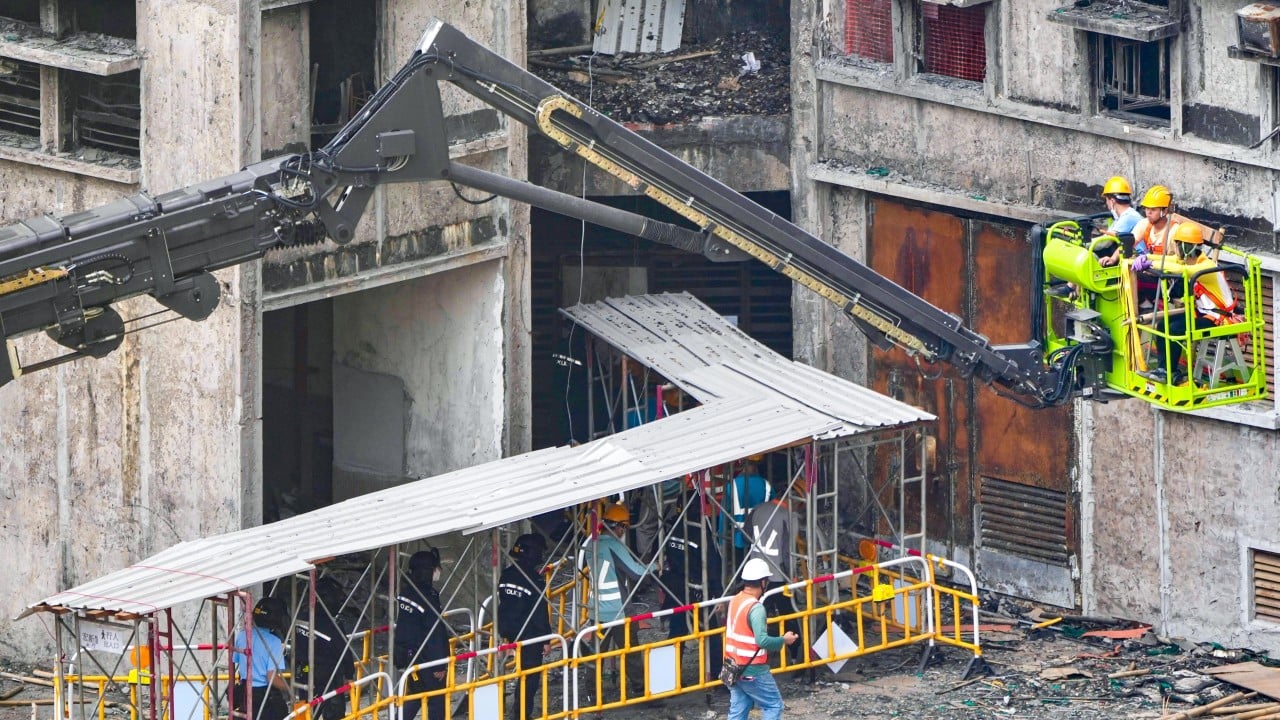
The intersection of structural fire incidents and opportunistic crime in high-density residential environments creates a specific "vulnerability window." This window is defined as the period between the initial emergency response and the re-establishment of secure access control. In the recent incident at a Tai Po residential estate in Hong Kong, the recovery of a lost credit card by law enforcement serves as a micro-case study for a larger systemic failure in urban security protocols during crisis evacuation.
The Triad of Crisis Vulnerability
When an emergency evacuation occurs in a vertical urban structure, three distinct risk vectors converge to degrade the security of personal assets:
- The Evacuation Friction Coefficient: Residents are forced to prioritize immediate physical safety over the securing of portable high-value assets (cash, identification, credit cards). This creates a high volume of "orphaned assets" within a localized geographic area.
- Access Control Dissolution: Standard security barriers—digital locks, concierge checkpoints, and CCTV monitoring—are often bypassed or neutralized to facilitate fire services' ingress. This effectively opens a "gray zone" for unauthorized entry under the guise of emergency assistance or opportunistic looting.
- Information Asymmetry in Chaos: The time lag between the suppression of the fire and the return of residents allows for a period where the chain of custody for personal property is entirely broken.
The recovery of financial instruments in the Tai Po case highlights that while the fire itself is a kinetic threat, the secondary economic threat is often more persistent. Financial assets like credit cards represent "liquid risk"; once separated from the owner in a public or semi-public space during a disaster, the window for fraudulent exploitation opens instantly.
The Mechanics of Asset Recovery and Chain of Custody
The Hong Kong Police Force's intervention in recovering a credit card during the Tai Po estate fire is not merely a localized success but an indicator of the necessary pivot toward tactical asset protection during civil emergencies. The recovery process follows a specific operational logic:
Identification of Potential Theft Vectors
Law enforcement must differentiate between accidental loss (displacement due to haste) and intentional theft (extraction by third parties). In high-density estates, the proximity of units means that a single breach in a hallway can expose multiple households. If a credit card is found outside its typical storage location—such as a resident's wallet or home—it indicates either a high-stress drop during flight or a discarded item by a perpetrator fearing a stop-and-search.
Digital Signal Interception
The modern credit card is not just plastic; it is a node in a global financial network. The moment a resident reports a loss, the recovery moves from physical search to digital monitoring. If the card was recovered before unauthorized transactions occurred, the security failure remains at the physical layer. If transactions were attempted, the crime shifts into the domain of cyber-physical integration, where the location of the point-of-sale terminal provides a geolocation data point for suspect tracking.
Structural Integrity vs. Security Integrity
Fire services prioritize structural cooling and life preservation. This often requires the "breaching" of doors and windows. From a strategy perspective, every breached door is a compromised security perimeter. The Tai Po incident underscores the need for a "Post-Suppression Security Audit" where police units secure these breaches immediately after fire services declare the site safe from thermal threats but before residents are allowed back in.
The Economic Impact of Displacement Theft
The loss of a credit card or identification during a fire is not a standalone event; it is a multiplier of the disaster's total cost. We can quantify this through the Total Loss Function of Emergency Displacement:
$$L_{total} = C_{physical} + C_{fraud} + C_{reconstitution}$$
Where:
- $C_{physical}$: Direct damage from fire and water.
- $C_{fraud}$: Potential loss from stolen financial instruments.
- $C_{reconstitution}$: The administrative and time cost of replacing identity documents and cards.
In many cases, $C_{fraud}$ and $C_{reconstitution}$ can exceed the actual fire damage for residents on higher floors who were not directly impacted by flames but were forced to evacuate. The recovery of a single card by the police effectively zeroes out the $C_{fraud}$ variable, but the incident reveals a lack of automated systems to protect these assets.
The Role of Biometric and Digital Redundancy
The Tai Po event exposes the fragility of physical financial tokens. The reliance on plastic cards in an era of digital wallets creates an unnecessary point of failure. The strategic shift for high-density urban populations should involve:
- De-tokenization of Physical Access: Moving toward biometric or mobile-based building access that does not require physical keys or cards, which are easily lost during a fire.
- Encapsulated Asset Storage: Residential design that incorporates fire-rated, high-security "emergency vaults" near exits, allowing residents to grab essential documents in seconds without compromising evacuation speed.
- Smart Grid Law Enforcement: Utilizing the estate's internal IoT (Internet of Things) infrastructure to monitor movement within a building specifically during fire alarms, when traditional human security is occupied with evacuation.
Tactical Response Deficiencies in Urban Fire Scenarios
Current emergency protocols in Hong Kong and other major metropolises are optimized for "Life Safety First." While logically sound, this creates a vacuum in "Asset Safety." The Tai Po police recovery was reactive. A proactive model would involve the deployment of "Security Cordons" simultaneous with "Fire Suppression."
The second limitation of current responses is the lack of a standardized "Recovery Inventory." When residents are cleared to return, there is no formal mechanism to report lost items in the immediate aftermath, leading to a delayed recognition of theft. This delay is the primary advantage for criminals.
Operational Recommendation for High-Density Residential Management
To mitigate the risk seen in the Tai Po incident, property management firms must implement a Crisis Asset Protection Protocol (CAPP):
- Immediate Perimeter Lockdown: As soon as the fire department secures the fire floor, police or private security must establish a "Positive ID Only" entry point.
- Asset Reporting Hub: An on-site digital portal where residents can instantly report missing financial or ID assets, triggering an immediate check of the building's CCTV and access logs.
- Thermal-Hardened Surveillance: Implementing camera systems that remain operational in high-heat environments to ensure that the "gray zone" during the fire is not a blind spot for law enforcement.
The recovery of assets in Tai Po was a result of diligent patrolling, but relying on manual discovery is an inefficient strategy. The future of urban security lies in the integration of emergency response with real-time asset tracking. Property developers should treat security as a fluid system that must adapt to the "melted" environment of a fire-stricken building. Residents must move toward digital-first identification to minimize the physical footprint of their most sensitive data. The strategic play is to decouple physical presence from financial vulnerability, ensuring that when the fire is out, the victim's economic life remains intact.