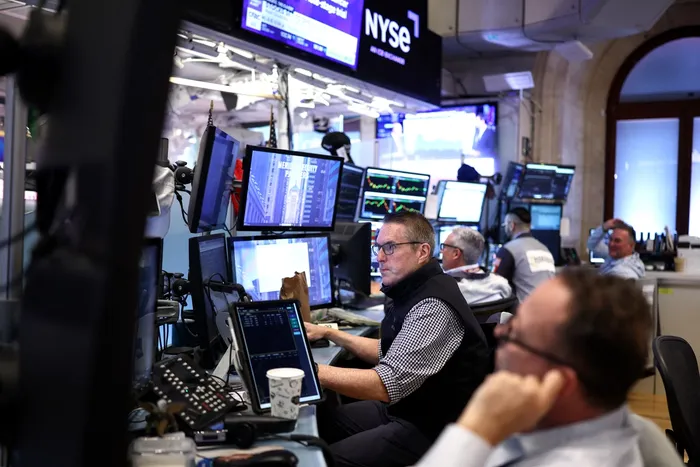
The financial press is currently backslapping over the S&P 500 hitting record highs. They call it a "recovery" from geopolitical jitters. They credit "resilient consumer spending." They point to the cooling of tensions in the Middle East as the green light for the next leg up.
They are looking at the scoreboard while the stadium foundations are cracking.
Wall Street loves a simple narrative. War scare? Sell. De-escalation? Buy. It is a binary, primitive way of processing risk that ignores the structural rot beneath the surface. If you think the index hitting an all-time high means the economy is "back," you are falling for the oldest trick in the book: confusing price with value.
The truth is far more clinical. We aren't seeing a recovery; we are seeing the final, desperate expansion of a liquidity bubble that has decoupled from the reality of industrial output and debt servicing costs.
The Geopolitical Mirage
Every time a missile is intercepted or a diplomatic cable suggests a "measured response," the markets rally. The common wisdom says the "Iran war sell-off" was a temporary blip. This assumes that geopolitical risk is a light switch. It isn't. It's a slow-leak puncture.
I’ve sat in rooms with hedge fund managers who treat regional conflicts like a line item on a spreadsheet. They think as long as the Strait of Hormuz remains open, the "risk" is priced in. They are wrong. What isn’t priced in is the permanent shift in global supply chains and the massive increase in defense spending that acts as a hidden tax on every corporation in the S&P 500.
When the market "recovers" from a war scare, it isn't because the threat went away. It's because the market has a short attention span. We are currently ignoring the fact that the cost of shipping, insurance, and energy is being structurally reset higher. A record-high S&P 500 in this environment doesn't signal strength; it signals a failure to account for the long-term erosion of profit margins.
The Magnificent Seven are a Life Raft Not an Engine
The biggest lie in finance today is the "broad market recovery." If you strip away the top handful of tech giants—the companies essentially acting as sovereign states with their own central banks—the S&P 500 looks mediocre at best.
We are seeing a massive concentration of capital. Investors aren't buying the American economy; they are hiding in the only companies that have enough cash to survive a high-interest-rate environment. This isn't a bull market. It's a crowded trade. When everyone is standing on the same side of the boat, the "record high" becomes a liability.
Think about the math. For the S&P 500 to maintain these levels, the earnings growth of these few companies must not just be good—it must be miraculous. We are pricing in a perfection that doesn't exist in a world of 5% interest rates and crumbling global trade agreements.
The Interest Rate Delusion
"The Fed will pivot." "Rates have peaked."
These are the mantras being chanted by the bulls. They believe that once inflation hits 2%, we go back to the era of free money. This is a fundamental misunderstanding of the last forty years of economic history. The period from 2008 to 2021 was the anomaly. Zero-bound interest rates were a fever dream, not the baseline.
$$r_t = \rho + \pi_t + 0.5(\pi_t - \pi^) + 0.5(y_t - y^)$$
If you look at a basic Taylor Rule calculation, the idea that rates are going back to 0% or 1% without a total systemic collapse is laughable. We are entering a "higher for longer" reality that the current S&P 500 valuation simply cannot support.
I’ve seen this play out before. In the late 90s, the "New Economy" was supposed to justify astronomical P/E ratios. In 2007, "Subprime was contained." Today, the "AI Revolution" is the shield used to deflect questions about debt-to-GDP ratios and the fact that the average American can no longer afford a median-priced home.
The Productivity Gap
Stocks go up for two reasons: multiple expansion (people are willing to pay more for the same dollar of profit) or earnings growth. Currently, we are riding on multiple expansion driven by AI hype.
But where is the actual productivity?
For AI to justify the current market cap of the S&P 500, it needs to do more than write clever emails or generate art. It needs to solve the labor shortage, fix the broken healthcare system, and streamline manufacturing. That takes a decade, not a fiscal quarter. The market is pricing in the decade of results today, while ignoring the decade of capital expenditure required to get there.
Most companies are not getting more efficient; they are just getting more expensive to run. Wages are up. Energy is up. Debt servicing is up. If your costs are rising at 4% and your revenue is rising at 3%, you are dying. The S&P 500 hitting a record high in this context is a statistical hallucination caused by the extreme performance of a few outliers masking the decay of the many.
Why the "Retail Resiliency" Narrative is Dangerous
The media loves to talk about how the US consumer is "resilient." They point to credit card spending as proof.
Using credit card debt to fund consumption in a high-interest environment is not resiliency. It’s a countdown. We are seeing record-high credit card balances and rising delinquency rates in auto loans. The "recovery" is being financed by the last remaining bits of pandemic savings and a reckless reliance on plastic.
The market is treating this spending as high-quality earnings. It isn't. It's a sugar high. When the consumer finally hits the wall—and they always do—the reversal won't be a "correction." It will be a liquidation.
Stop Asking if the Market Will Go Up
The question "Is the S&P 500 going higher?" is the wrong question. It’s a gambler’s question.
The real question is: "What is the quality of the dollar being earned by these companies?"
If those dollars are being earned in an environment of debased currency, rising geopolitical instability, and extreme concentration of risk, then the nominal price of the index is irrelevant. You are getting poorer even as your brokerage account shows a higher number.
The Strategy for the Disillusioned
The "lazy consensus" tells you to buy the index and wait. For forty years, that worked. But that was a forty-year tailwind of falling interest rates and globalizing trade. Those tailwinds are now head-winds.
- Abandon Index Fetishism: Passive investing is a death trap in a concentrated market. You are buying the most overvalued companies by default. Look for the "un-investable" sectors that actually produce tangible goods and have clean balance sheets.
- Value Cash Flow over "Growth": In a world of 5% risk-free returns, a "growth" company that might make money in 2030 is a liability. You want companies that can pay dividends today from actual cash, not accounting tricks.
- Ignore the Headlines: When the media says "Stocks recover on peace hopes," they are selling you a narrative to keep you in the market while the insiders are rotating out.
The S&P 500 at a record high is not a sign of a healthy economy. It is the sound of a balloon being over-inflated. The more it grows, the more violent the eventual pop will be. We are not in a recovery; we are in a high-altitude stall.
Keep your eyes on the horizon, not the scoreboard.
The record high is the trap. The exit is closing. Move.