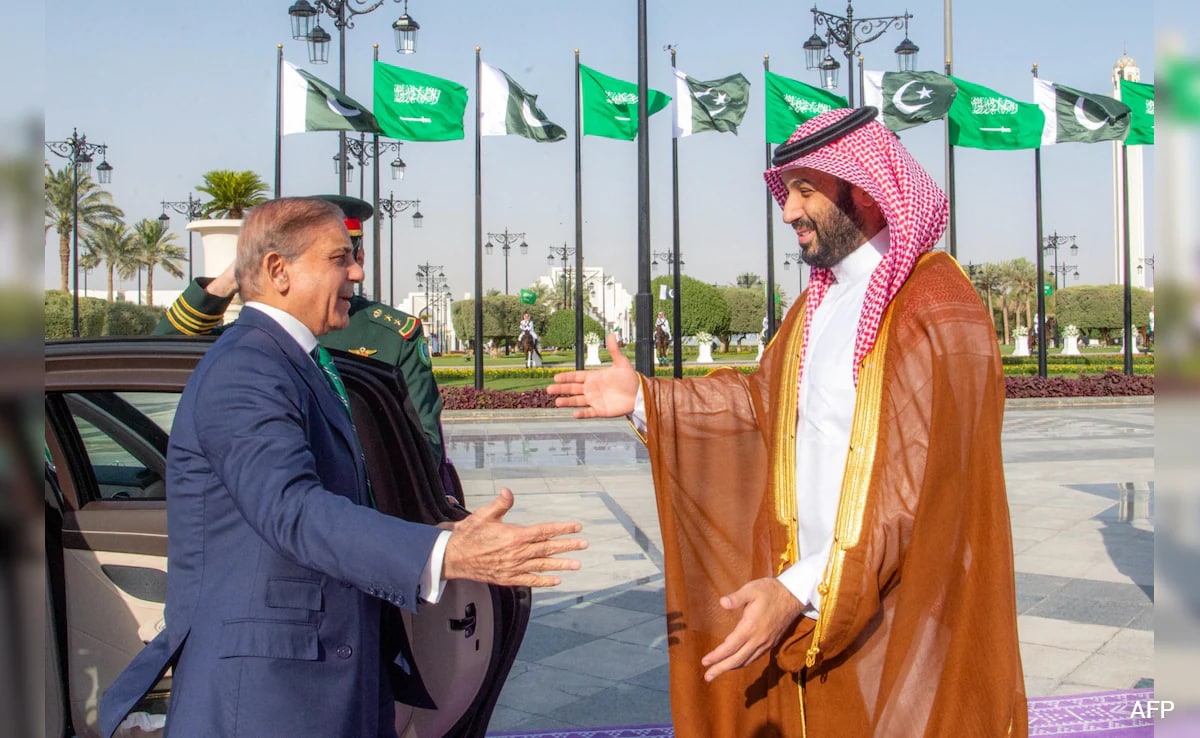
Pakistan just made a move that could permanently alter the map of the Middle East. On April 11, 2026, the Saudi Defense Ministry confirmed that a massive Pakistani military contingent—roughly 13,000 troops and a fleet of fighter jets—landed at King Abdulaziz Air Base. This isn't just another routine training exercise. It's the first major activation of the Strategic Mutual Defense Agreement (SMDA) signed in September 2025.
If you've been following the news, you know the region is a powder keg. Iran and the U.S. have been locked in a grinding five-week military conflict that has hammered energy markets and turned the Persian Gulf into a no-go zone. Now, Islamabad has officially tethered its military fate to Riyadh. By doing so, Pakistan has essentially told Tehran: if you hit the Kingdom, you’re hitting a nuclear-armed neighbor.
The Pact That Changed the Rules
For decades, Pakistan and Saudi Arabia had a "wink and a nod" agreement. Riyadh provided the oil and the cash, while Islamabad provided the boots and the brawn. But the SMDA, signed on September 17, 2025, changed that into something far more formal. It’s modeled after NATO’s Article 5. The text is blunt: "any aggression against either country shall be considered an aggression against both."
Think about that for a second. Pakistan isn't just sending "advisors" anymore. They’ve deployed JF-17 Thunders and support aircraft to the Eastern Province. These assets are now sitting directly in the line of fire if Iranian drones or missiles target Saudi oil infrastructure again.
I’ve seen plenty of defense treaties that aren't worth the paper they're printed on. But this one feels different. Field Marshal Asim Munir, who recently took over as Pakistan’s first-ever Chief of Defence Forces, has tied his personal legacy to this alliance. He’s not just protecting a holy site; he’s protecting the hand that feeds Pakistan’s struggling economy.
Why Now?
You might wonder why Pakistan would stick its neck out when it already has enough problems at home with the ongoing border skirmishes in Afghanistan. The answer is simple: survival.
- Economic Lifeline: Saudi Arabia has been Pakistan's lender of last resort for years. From the $6 billion package in 2018 to the massive investment pledges made through the Special Investment Facilitation Council (SIFC), Riyadh holds the keys to Pakistan’s central bank.
- The Nuclear Umbrella: This is the part nobody likes to talk about openly. By signing a mutual defense pact, Saudi Arabia has effectively placed itself under Pakistan’s nuclear umbrella. It’s a massive middle finger to regional rivals and a signal to the West that Riyadh doesn't need a U.S. security guarantee as much as it used to.
- The Iran Factor: Pakistan is currently the "middleman." Even as these troops land, Islamabad is hosting ceasefire talks between Washington and Tehran. It’s a high-stakes double game. They’re acting as the peacemaker in the morning and a combatant’s shield by night.
The Risk of Getting Pulled into the Fire
Let’s be real: Pakistan is playing with fire. If the SMDA is triggered, Pakistan doesn't just send more jets; it enters a full-scale war.
Iran and Pakistan share a long, porous border in Balochistan. We’ve already seen how quickly things can escalate, like during the "Marg Bar Sarmachar" operations in early 2024. If Pakistan-based jets start intercepting Iranian missiles over Saudi airspace, Tehran won't just sit back. They have plenty of ways to make Islamabad's life miserable, from supporting cross-border militancy to cutting off energy trade.
Many analysts argue that Pakistan’s military is too stretched. Between the 2025 conflict with India and the 2026 tensions with Afghanistan, the army is already fighting on multiple fronts. Adding a third front in the Middle East seems like madness. But for the generals in Rawalpindi, the risk of losing Saudi financial support is scarier than the risk of an Iranian drone.
The China and Turkey Angle
You can't talk about this pact without mentioning the "Third Man." Turkey has been flirting with joining this alliance, which would create a powerful Islamabad-Riyadh-Ankara axis. Turkey’s military tech, combined with Saudi money and Pakistani manpower, would create a bloc that doesn't need to ask for permission from Washington or Beijing.
China is also quietly cheering this on. Anything that stabilizes Saudi energy exports and keeps Pakistan afloat is good for the China-Pakistan Economic Corridor (CPEC). It’s a "strategic pragmatism" that effectively pushes the U.S. further out of the regional security loop.
What Happens Next?
If you're watching the markets or the headlines, keep your eye on two things:
- The King Abdulaziz Air Base: Watch for further deployments. If the troop count creeps toward 20,000, it means Pakistan is preparing for a sustained defensive role.
- The Islamabad Ceasefire Talks: If Pakistan fails to broker a truce between the U.S. and Iran, the SMDA becomes a live wire.
Don't expect Pakistan to back down. They’ve gone too far to turn the planes around now. The "Brotherly Ties" are now a formal war pact. Whether that keeps the peace or ignites a larger conflict depends entirely on how much further Iran is willing to push its luck in the Gulf. For now, Pakistan has made its choice. It’s standing with the House of Saud, no matter the cost.