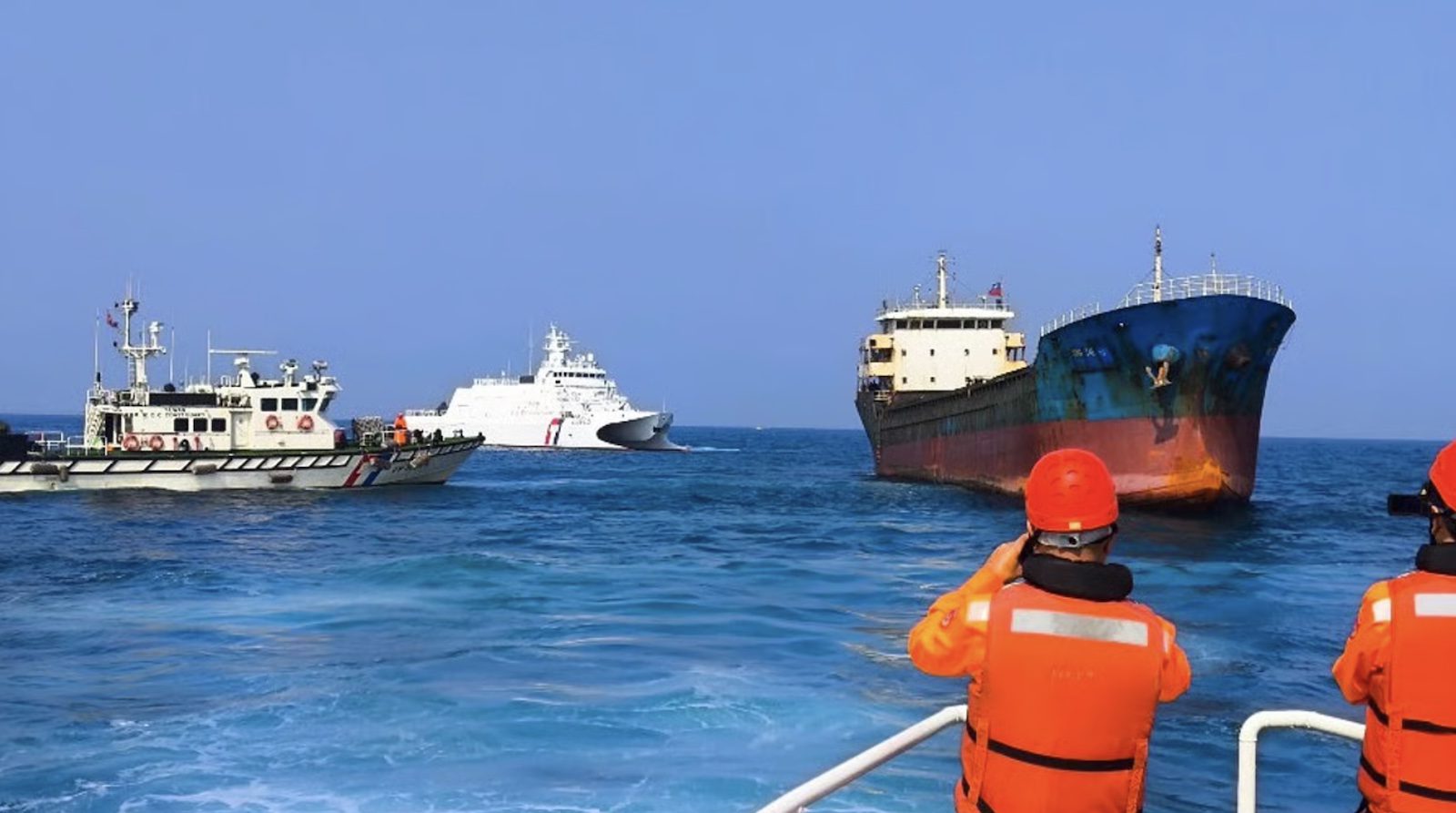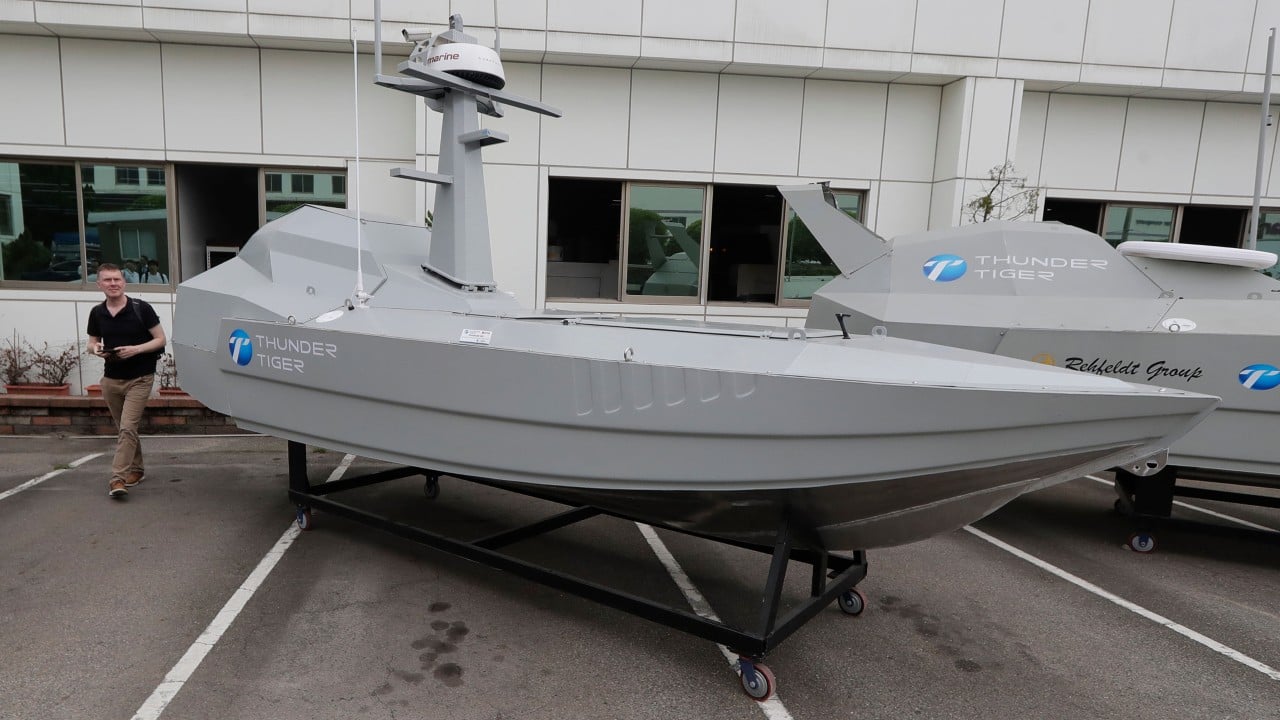
The plan sounds like a fever dream from a Silicon Valley boardroom. Admiral Samuel Paparo, the man currently holding the leash at U.S. Indo-Pacific Command, wants to transform the hundred-mile stretch of water separating China from Taiwan into an "unmanned hellscape." The goal is simple and brutal. As soon as the People’s Liberation Army (PLA) makes a move to cross the water, the U.S. Navy will flood the zone with thousands of autonomous dive boats, aerial loitering munitions, and undersea gliders.
This is not a theoretical exercise for 2040. The Pentagon is pushing to make this a reality by next year through its Replicator initiative. The core logic hinges on a cold mathematical trade-off. By sacrificing cheap, mass-produced robots, the U.S. hopes to buy enough time—roughly a month—to mobilize heavy assets and international coalitions without losing a single aircraft carrier in the opening hours of a conflict.
The Attrition Trap
Western military doctrine has long relied on exquisite, multi-billion-dollar platforms like the Ford-class carriers or F-35 Lightning IIs. These are marvels of engineering, but they are also magnets for Chinese "carrier-killer" missiles. In a high-end fight, losing one is a national catastrophe. The hellscape strategy flips the script. It moves the frontline of the conflict from the flight deck to the assembly line.
The U.S. is betting on attritable mass. These are systems designed to be lost. If a swarm of fifty $50,000 kamikaze boats manages to disable a $2 billion Type 055 destroyer, the exchange ratio is overwhelmingly in Washington's favor. It forces the PLA to expend its sophisticated, finite supply of interceptor missiles on "junk" targets. Every missile the Chinese navy fires at a drone is one less missile aimed at a crewed American ship.
The strategy aims to create a "curtain" of sensors and shooters. The first layer starts 80 kilometers out from the Taiwanese coast. Here, long-range undersea drones—essentially smart torpedoes that can wait on the seafloor for weeks—listen for the acoustic signature of transport ships. When the fleet passes overhead, they wake up.
Logistics are the Silent Killer
The math looks great on a spreadsheet, but the Pacific is a harsh grader. Unlike Ukraine, where drone operators can sit in a cellar in Kharkiv and fly over a land border, the Taiwan Strait is a salt-water desert. Salt air corrodes electronics. Humidity fouls engines. Batteries degrade in the tropical heat.
Maintaining thousands of these units in a state of "warm standby" is a logistical nightmare that the Pentagon hasn't fully solved. Most of these drones will be stored in shipping containers in places like Guam, the Philippines, or Japan. If they sit for two years and the spark plugs are fouled when the "on" switch is flipped, the hellscape remains a silent, floating scrap yard.
The Maintenance Gap
- Corrosion: Constant exposure to salt spray ruins commercial-grade sensors within weeks.
- Energy Density: Small boats lack the fuel capacity for long-duration loitering without mother ships, which themselves are vulnerable targets.
- Software Saturation: Coordinating 10,000 autonomous agents without they themselves colliding or being jammed into uselessness requires a level of edge-computing power that is still being tested.
The military has even created a new job title: the Robotic Warfare Specialist. These sailors won't be Manning guns; they will be debugging code and swapping out modular battery packs in the middle of a gale.
China is Not Watching Silently
Beijing has its own version of the drone revolution. While the U.S. focuses on high-tech autonomy, China is leveraging its massive industrial base to produce its own swarms. They are currently converting hundreds of retired 1960s-era fighter jets into unmanned strike platforms. These "zombie jets" serve a similar purpose: they exist to absorb Taiwanese and American missiles.
The PLA also holds the home-field advantage in terms of manufacturing. The factories that make the world’s consumer electronics are in their backyard. If the conflict becomes a war of industrial attrition—who can build 1,000 drones the fastest—the U.S. is starting from behind. The Pentagon's Replicator program is an attempt to close this gap by bypassing traditional defense giants like Lockheed Martin in favor of "defense-tech" startups like Anduril and Saronic. These companies operate more like software firms, pushing updates to the fleet overnight.
The Autonomy Dilemma
The most controversial part of the hellscape isn't the hardware; it's the brain. To work in a "denied environment" where China is jamming all radio and GPS signals, these drones cannot be remote-controlled. They must be autonomous. They need to be able to identify a ship, determine if it is a civilian tanker or a military transport, and decide to strike without a human in the loop.
This pushes the U.S. into a moral and strategic gray zone. If an autonomous swarm misidentifies a neutral Philippine fishing boat as a Chinese scout, the political fallout could fracture the very alliances the U.S. needs to win. Yet, if the drones require a human "go" signal, they will likely be rendered useless by Chinese electronic warfare within minutes of launch.
The "hell" in hellscape isn't just for the invaders. It's a description of a new kind of automated, high-speed warfare where humans are relegated to the role of spectators, watching their screens as thousands of machines decide the fate of a nation in a matter of seconds.
Success depends on whether the U.S. can transition from a military that buys "silver bullets" to one that buys "lead swarms." If the Replicator program fails to produce the necessary volume or if the salt air eats the fleet before the first shot is fired, the Taiwan Strait won't be a hellscape for the PLA. It will be an open highway.
The Pentagon is no longer just building weapons. It is attempting to build a mechanical ecosystem that can survive long enough to matter.