The Victim Narrative Is Rotting Your Brain
Every few months, a heartbreaking story ripples through the shipping trades. A crew is stranded. The food is running low. The fuel is gone. The sailors are "abandoned."
Media outlets love these stories because they are easy. They paint a picture of Dickensian cruelty on the high seas, casting the seafarers as helpless victims and the shipowners as mustache-twirling villains. It’s a comfortable, lazy consensus that ignores the brutal, cold mechanics of global maritime law.
Here is the truth that nobody wants to print: These "abandoned" crews aren't just victims of bad luck or mean bosses. They are the collateral damage of a system that prioritizes the Flag of Convenience (FOC) over human life—and the crews, the unions, and the insurers all know the stakes before the anchor ever drops.
If you’re stuck in the Persian Gulf for six weeks, you aren’t just "stranded." You are a pawn in a high-stakes game of maritime lien chicken. And until we stop crying about the "tragedy" and start talking about the equity, nothing changes.
The Myth of the "Surprised" Sailor
Stop pretending these men didn't know what they were signing up for.
I’ve spent years watching the paperwork trail on sub-standard tonnage. You don't end up on a 25-year-old bulk carrier flying a Mongolian or Panamanian flag by accident. You end up there because you’re chasing a specific type of high-risk, low-regulation paycheck, or because you’re part of a labor pipeline that treats bodies like ballast.
The "stranded" seafarer is often told to stay on the ship by his own union or legal counsel. Why? Because if the crew leaves the vessel, they lose their possessory lien.
In maritime law, the ship itself is the debtor. If the owner goes bust or disappears into a shell company in Dubai, the crew’s only hope of getting paid their back wages is to sit on that rusting hunk of steel until a court forces a judicial sale. To walk away is to forfeit the only collateral they have.
The media calls it a "crisis of abandonment." In reality, it is a forced occupation. The crew stays because the legal system provides no other way to secure their debt. We aren't looking at a humanitarian disaster; we are looking at a failed debt-collection mechanism.
The UAE Is Not the Villain You Think It Is
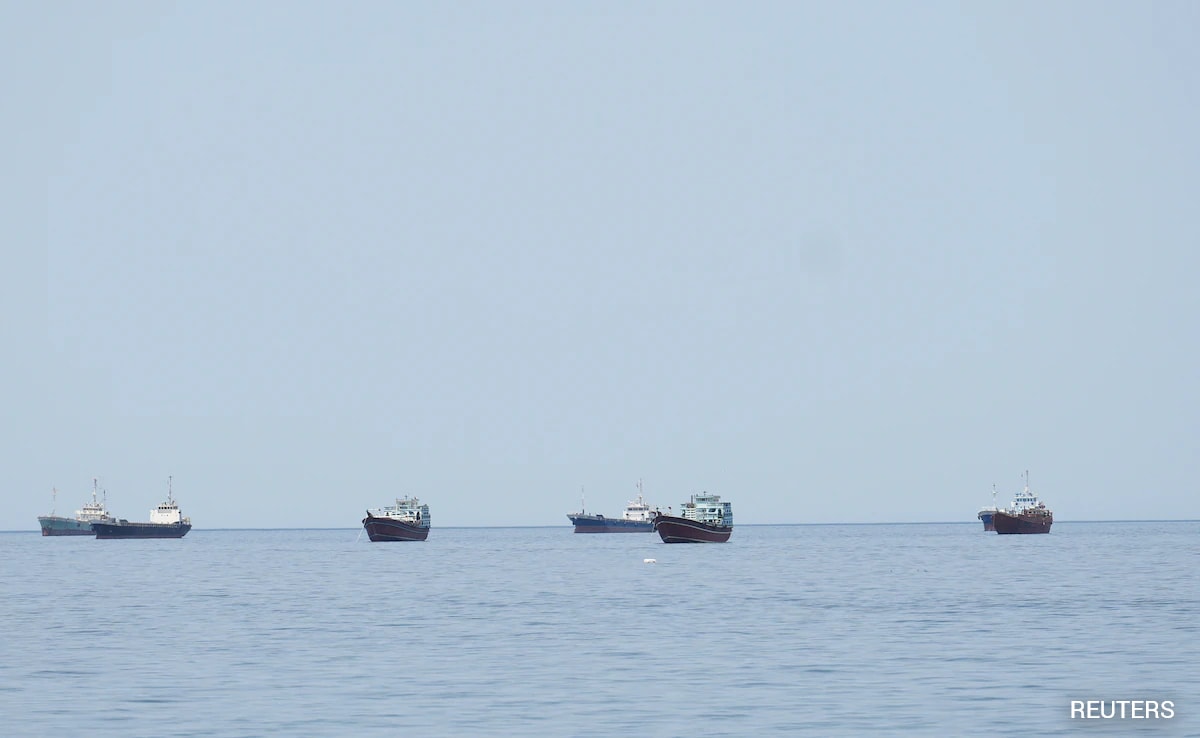
When a ship gets stuck off the coast of Khor Fakkan or Sharjah, the immediate reflex is to blame the port authorities. "Why won't they let them dock?" "Why aren't they feeding them?"
Imagine you’re running a city. A random truck parks in your driveway. The driver says the owner isn't paying him, and the truck is leaking oil and running out of gas. If you let that truck into your garage, you are now legally and financially responsible for the driver, the hazardous waste, and the eventual disposal of the vehicle.
The UAE authorities are often criticized for their "slow response," but they are actually acting with perfect economic rationality. The moment a coastal state "arrests" a ship for humanitarian reasons, they inherit a multi-million dollar liability.
- Port Dues: Tens of thousands of dollars a day.
- Repatriation Costs: Flying a crew of 20 back to South Asia or Eastern Europe.
- Environmental Risk: Defueling a dead ship is a logistical nightmare.
By keeping these ships at anchorage, the authorities are trying to force the P&I Clubs (Protection and Indemnity insurance) or the flag states to take responsibility. It’s a game of chicken where the crew’s hunger is used as a bargaining chip by every party involved.
The P&I Club Shell Game
Under the Maritime Labour Convention (MLC) 2006, shipowners are required to have insurance to cover abandonment. You’d think this would solve the problem. It doesn’t.
The insurance companies—the P&I Clubs—have perfected the art of the "technicality." They will argue that the ship wasn't "abandoned" in the legal sense. Maybe the owner sent one email three weeks ago? Not abandoned. Maybe there’s still one sack of rice on board? Not a crisis.
I’ve seen insurers drag their feet for months while men developed scurvy, all to avoid setting a precedent that would make them the "lender of last resort" for every bankrupt fly-by-night operator in the Gulf.
The industry doesn't need more "awareness" or "charity." It needs a mandatory, instant-trigger escrow system for wages. If a shipowner can't prove they have six months of crew wages in a third-party locked account, they shouldn't be allowed to transit the Strait of Hormuz. Period.
Stop Asking "How Are They?" Start Asking "Who Owns the Debt?"
The "People Also Ask" sections on Google are filled with fluff: How do sailors get food? Can they call their families?
These are the wrong questions. If you want to actually solve the problem of stranded crews, you have to follow the money, not the tears.
- Who is the Beneficial Owner? Most of these ships are owned by a Special Purpose Vehicle (SPV)—a company that owns exactly one asset: the ship. When things go south, the owner just walks away from the SPV. They lose the ship, but they keep their mansion in London or Mumbai. We need to pierce the corporate veil.
- What is the Scrap Value? Often, the crew is sitting on a ship worth $3 million in scrap, but they are owed $500,000 in wages. The delay isn't about "finding" the money; it's about the banks and the port authorities fighting over who gets the biggest slice of the scrap metal once the ship is finally cut up.
- Why is the Flag State Silent? Countries like Panama, Liberia, and the Marshall Islands make billions in registration fees. Yet, when their ships are stranded, they do nothing. They are the ultimate "ghost" landlords.
The Counter-Intuitive Solution: Let Them Sink (Economically)
The reason we have stranded crews is because we allow "zombie ships" to continue operating.
We keep trying to "fix" the humanitarian symptoms while ignoring the market rot. We need to make it more expensive to abandon a ship than to operate it.
- Blacklist the Owners, Not the Ships: If an owner abandons a crew, every other vessel they have an interest in—even through 10 layers of shell companies—should be barred from entering Tier 1 ports.
- Automatic Auction: If a ship stays at anchorage for more than 14 days without proving it has paid its crew, the title should automatically revert to a regional maritime trust. Sell the ship immediately. Pay the crew first. Everyone else—the banks, the fuel suppliers—gets the leftovers.
The current system rewards the slow-movers. The longer a ship sits, the more likely the crew is to give up and leave for a fraction of their wages. The delay is the point. The suffering is a financial strategy.
The Harsh Reality of the Sea
The ocean is not a place for the sentimental. It is the last truly lawless frontier of global capitalism.
The men stranded in the Persian Gulf are not there because of a "tragedy." They are there because the global supply chain requires cheap, disposable labor to keep your Amazon packages moving and your gas prices down.
If you actually cared about these sailors, you’d be demanding an end to the Flag of Convenience system. You’d be demanding that a ship registered in Panama actually has to follow Panamanian labor laws—and that Panama has to pay to fly the crew home.
But you won't. Because that would make shipping more expensive.
Until the cost of abandonment exceeds the cost of compliance, the Persian Gulf will remain a graveyard for ships and a prison for the men who sail them. Stop sending "thoughts and prayers" to the stranded. Send a maritime lawyer with a writ of attachment and a grudge.
The "tragedy" is that we keep calling it a tragedy instead of a business model.
Go ahead, look at the photos of the tired men on the deck. Now look at the registration on the hull. That gap is where the money is made.
End the play-acting. Either regulate the flag states out of existence or admit that we’ve collectively decided that a few dozen stranded sailors a year is a small price to pay for the "seamless" flow of global trade.
Pick a side. Just stop being surprised.