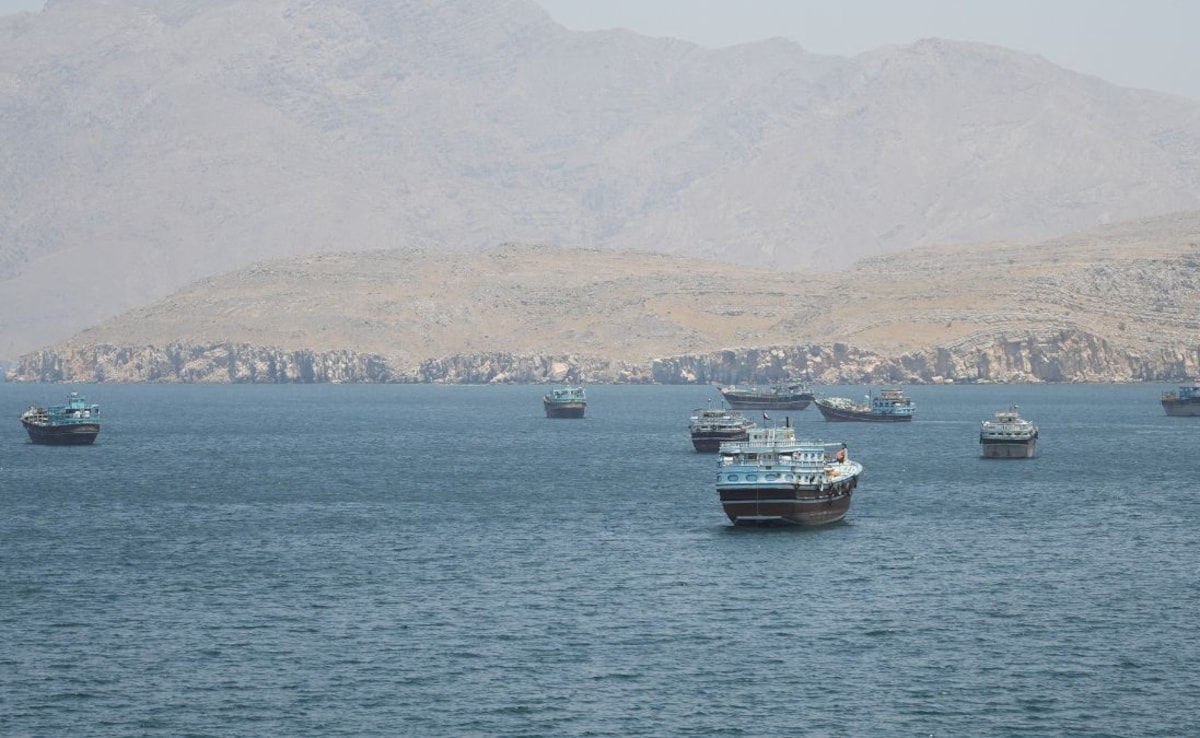
The headlines are screaming again. A ship was seized off the coast of the UAE, the transponder went dark, and the bow pointed toward Iranian waters. The knee-jerk reaction from the desk-bound analysts in London and DC is always the same: "Global trade is under siege." They want you to believe we are one boarding party away from a total collapse of the Strait of Hormuz.
They are wrong.
This isn't a breakdown of international law. It’s the new cost of doing business in a world where "neutrality" is a relic of the twentieth century. If you’re shocked that a vessel linked to a sanctioned entity or a geopolitical rival got scooped up, you aren't paying attention to the ledger. You’re reading the ghost stories instead of the balance sheet.
The Sanctions Shell Game is Over
The mainstream media treats these seizures like random acts of piracy. They frame it as a chaotic disruption of "innocent" commercial shipping. Let’s get one thing straight: in the current maritime environment, there is no such thing as an accidental target.
I have spent years tracking how commodity traders and shipping conglomerates mask their footprints. We see it every day. A Greek-owned tanker flying a Liberian flag, managed by a shell company in Dubai, carrying "Iraqi" crude that smells suspiciously like Iranian light. When these ships get seized, the owners don't scream for justice. They call their insurers and start the long, quiet process of horse-trading.
The seizure off the UAE coast isn't a threat to the global economy. It is a calculated regulatory enforcement action performed by a state actor playing by a different set of rules. We call it "seizure." They call it "repossession" or "legal detention."
Why the "Energy Crisis" Narrative is a Scam
Every time a RIB (Rigid Inflatable Boat) pulls up alongside a Suezmax tanker, oil speculators start foaming at the mouth. They want the price per barrel to jump. They want you to think 20% of the world's oil is about to vanish.
- Redundancy is Built In: The global energy market has spent the last decade building workarounds. Pipelines like the Habshan–Fujairah line already bypass the Strait of Hormuz.
- Storage is Stuffed: We aren't living in a just-in-time energy economy anymore. Strategic reserves and floating storage have created a buffer that can handle a few weeks of "maritime friction."
- The Aggressor Needs the Buyer: Iran doesn't want the Strait closed. They need it open more than anyone else to move their own product—clandestine or otherwise.
Stop asking if the oil will stop flowing. Start asking who benefits from the fear that it might.
Your "Safety" Data is Junk
Most logistics managers rely on AIS (Automatic Identification System) data to track their fleets. They see a ship go "dark" and assume the worst.
AIS is a suggestion, not a law. I’ve seen captains flip the switch because they’re doing a ship-to-ship transfer of sanctioned goods, or simply because they want to avoid being tracked by predatory hedge funds. When a ship "disappears" off the UAE coast and reappears in Bandar Abbas, it isn't always a kidnapping. Frequently, it’s a repossession for a debt or a violation of a backroom deal that the public isn't supposed to know about.
The Myth of the "Innocent Bypass"
The "lazy consensus" says that as long as a ship stays in international waters, it is untouchable.
The reality? The United Nations Convention on the Law of the Sea (UNCLOS) is a piece of paper that only carries weight if you have a carrier strike group nearby to enforce it. In the Persian Gulf, the geography is so tight that "international waters" is a legal fiction. You are always in someone’s backyard. If you’re moving cargo through a choke point, you are consenting to the local neighborhood rules.
If you haven't priced the "geopolitical tax" into your shipping rates yet, you’re failing at your job.
Stop Looking for a "Solution" to Piracy
I hear it in every boardroom: "How do we stop these seizures?"
You don't. You can't.
The maritime industry is the last true frontier of raw, unchecked power. If a regional power decides they need a bargaining chip for a nuclear deal or a sanctions reprieve, your 300-meter tanker is a very attractive poker chip.
- Armed Guards? They’re useless against a state-level navy.
- Flag of Convenience? Panama doesn't have a navy coming to save you.
- Insurance? That’s just moving the loss from one column to another.
The unconventional advice that actually works? Radical Transparency or Total Obscurity.
Either you fly a flag that commands immediate military retaliation (the U.S. or UK, though even that is softening), or you become so small and so intertwined with local interests that seizing you causes more headaches for the captor than it’s worth. The middle ground—the massive, corporate, "neutral" tanker—is the most vulnerable target on the water.
The Brutal Truth About Maritime Law
People ask: "Isn't this illegal under international law?"
Yes. And so what?
International law is the world's most expensive suggestion box. When a ship is steered into Iranian waters, the "law" is whatever the guy with the AK-47 says it is. The mistake we make is treating these incidents as legal problems. They aren't. They are economic and kinetic problems.
I’ve seen companies blow millions on legal fees trying to "liberate" a vessel through the courts. Meanwhile, the smart players send a representative to a quiet hotel in Muscat or Doha with a briefcase and a list of concessions.
Disruption is the New Baseline
We need to stop treating these "shocks" as outliers. The seizure of a ship off the UAE is not a "game-changer." It is the game.
The modern supply chain is built on the arrogant assumption that the oceans are a public utility. They aren't. They are a contested space. The era of "seamless" global trade was a historical anomaly fueled by a unipolar world that no longer exists.
If your business model depends on the 100% certainty of a ship passing through the Strait of Hormuz without a hitch, you don't have a business. You have a gamble.
The next time you see a headline about a seized ship, don't look at the map. Look at the sanctions list. Look at the insurance premiums. Look at the last three ports of call. The "victim" is rarely a bystander. In this corridor, everyone is a player, and everyone knows the stakes.
If you can't handle the heat in the Gulf, get your cargo off the water and onto a train. But wait—the tracks run through Russia.
Welcome to the real world. Pay the tax or lose the ship.

:max_bytes(150000):strip_icc():focal(819x186:821x188)/Murdaugh-Family-e90854a716884d608fb6fd925e18d840.jpg)
