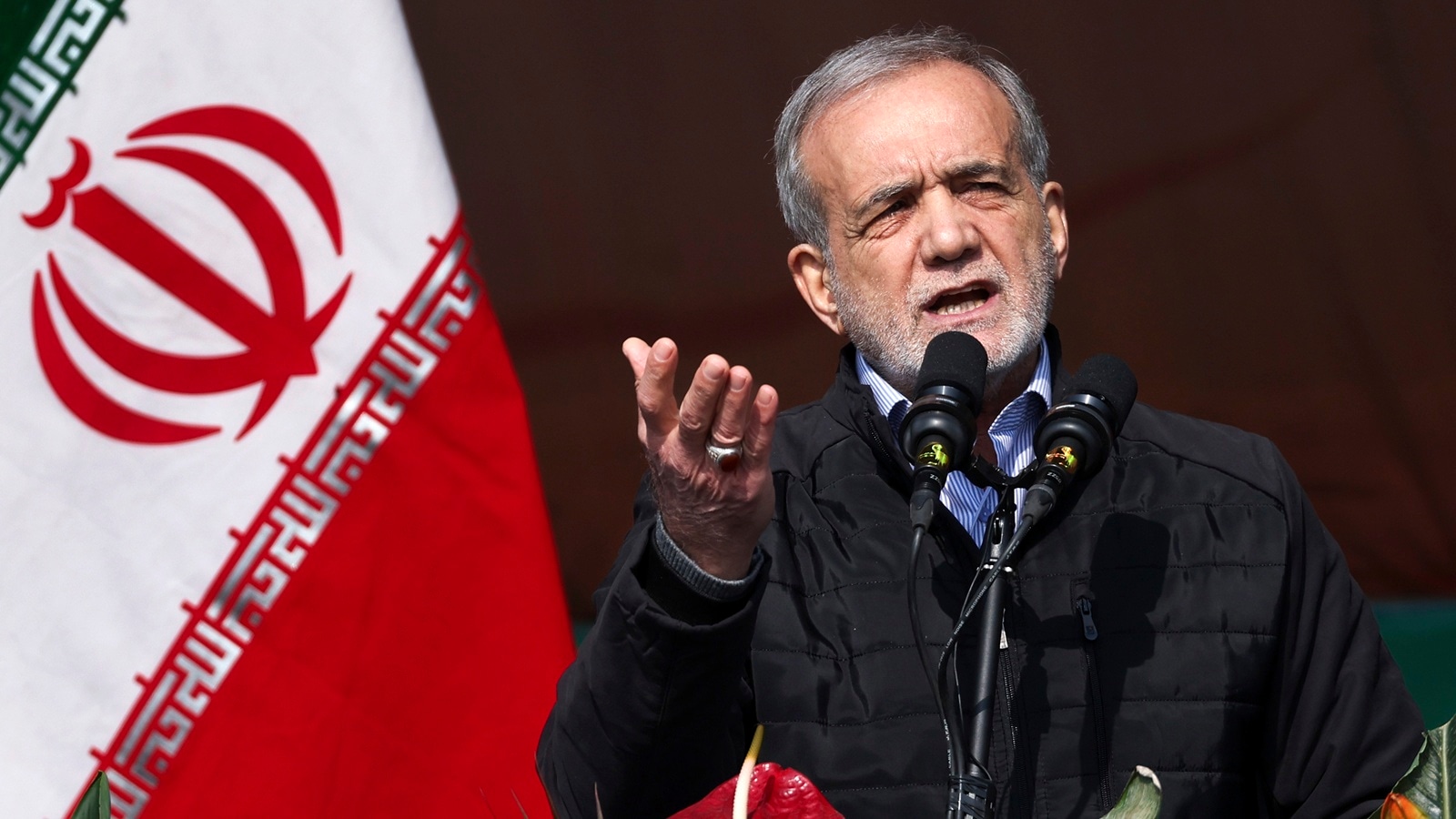
The Western media loves a simple villain arc. The current consensus on Tehran is a lazy rerun of a Cold War spy novel: a "reformist" President Masoud Pezeshkian is being bullied into submission, or outright replaced, by the shadows of the Islamic Revolutionary Guard Corps (IRGC). It makes for great headlines. It’s also fundamentally wrong.
The IRGC didn't "take control" of the Pezeshkian government. That would imply they weren't already the foundation of the house. To suggest there is a tug-of-war for the soul of the Iranian state is to misunderstand the very architecture of the Islamic Republic. Pezeshkian isn't a victim of a coup; he is the most effective PR mask the IRGC has worn in decades.
If you’re looking for a "deep state" takeover, you’re forty years too late.
The Myth of the Reformist Struggle
Analysts are obsessed with the idea of friction. They point to the IRGC’s dominance in defense policy and regional proxy wars as evidence of Pezeshkian’s weakness. This is a category error.
The Iranian presidency was never designed to be a Western-style executive seat. It is a management position. The Supreme Leader, Ali Khamenei, holds the keys, and the IRGC holds the gun. Pezeshkian’s role is to manage the optics and the economy just enough to keep the engine running.
When the IRGC ramps up its presence during regional escalations, it isn't "undermining" the president. It is fulfilling the state's primary directive: survival. Pezeshkian knows this. He didn't stumble into the presidency. He was vetted by the Guardian Council precisely because he wouldn't—and couldn't—challenge the military-industrial complex that runs the country.
The IRGC is Not a Military It is a Conglomerate
We need to stop talking about the IRGC like they are just soldiers in green fatigues. They are the board of directors for "Iran Inc."
The IRGC controls somewhere between 30% and 50% of the Iranian economy. They own construction firms, telecommunications giants, oil refineries, and shipping lanes. When people ask if the IRGC is "taking control" of the government, they are asking the wrong question. The government is a subsidiary of the IRGC’s financial interests.
Pezeshkian’s primary job is to lift the sanctions that hurt the IRGC's bottom line. The "reformist" tag is a marketing tool intended for Brussels and Washington. If Pezeshkian can project an aura of moderation, he might secure the breathing room needed for the IRGC to modernize its hardware and solidify its regional hegemony.
I’ve seen analysts track cabinet appointments like they’re reading tea leaves. "Look, a hardliner in the Interior Ministry!" they cry. Of course there is. The IRGC doesn't leave the internal security of the state to chance while they're busy fighting a multi-front shadow war with Israel.
The False Dichotomy of Hardliner vs Reformist
The biggest lie in Middle Eastern geopolitics is the binary between "hardliners" and "reformists." This distinction serves the Iranian state by giving the West a "good cop" to negotiate with.
In reality, the Iranian political spectrum is a circle.
Pezeshkian’s "moderate" stance on the hijab or social freedoms is the pressure valve. It’s designed to prevent another "Woman, Life, Freedom" style uprising from shattering the domestic front while the IRGC handles the external "Axis of Resistance."
- Hardliners: Provide the ideological backbone and military muscle.
- Reformists: Provide the diplomatic cover and economic management.
They aren't enemies. They are a tag team.
The War is the Catalyst Not the Cause
The current regional instability hasn't caused a power shift in Tehran; it has merely accelerated the visibility of the existing one. When missiles are flying, the diplomat sits down and the general stands up. That isn't a "de facto control" takeover. That's how every state on the planet functions during a conflict.
The IRGC’s increased profile in the Pezeshkian administration is a tactical necessity. They are coordinating the logistics of the "Ring of Fire" strategy around Israel. They are managing the drone pipelines to Russia. They are ensuring that the Houthi blockade in the Red Sea stays effective.
Expectations that Pezeshkian would "reign in" these elements were built on a fantasy. He was hired to be the face of a nation under siege, not the commander-in-chief.
The Economic Trap
The IRGC’s dominance is actually the biggest hurdle to Pezeshkian’s success, but not for the reasons you think. It isn't about "control"; it’s about efficiency.
The IRGC-linked firms, such as Khatam al-Anbiya, are massive, bloated, and insulated from competition. They operate on a patronage system that defies traditional market logic. Pezeshkian cannot "reform" the economy without gutting the IRGC’s revenue streams. And he won't do that, because the IRGC is the only thing keeping the current regime from collapsing under its own weight.
Imagine a scenario where a CEO tries to fire the security team that also happens to own the building and the power grid. It’s not going to happen.
Instead, Pezeshkian will attempt to bring in foreign investment that—ironically—will likely flow through IRGC-controlled entities. The "reformist" victory isn't a defeat for the IRGC; it’s a capital injection for them.
The West’s Dangerous Miscalculation
Western policy remains stuck in the "Hope as a Strategy" phase. There is a desperate wish to see Pezeshkian as a Persian Gorbachev. But Gorbachev was a true believer who accidentally broke the system. Pezeshkian is a pragmatist who is trying to save it.
By framing the IRGC’s role as an "encroachment" on the presidency, the West allows itself to be tricked into thinking that strengthening Pezeshkian is the way to weaken the IRGC.
The opposite is true.
A "successful" Pezeshkian presidency—one that secures sanctions relief and stabilizes the Rial—is a massive win for the IRGC. It replenishes the coffers they use to fund Hezbollah, the PMF in Iraq, and the secret nuclear facilities in the mountains.
Stop Asking "Who is in Charge?"
The question "Is Pezeshkian in control?" is a distraction.
The real question is: "How is the Iranian state evolving to survive the next decade?"
The answer is a hybrid model where the IRGC handles the "Hard Power" (security, proxies, regional dominance) and the presidency handles the "Soft Power" (diplomacy, social pacification, economic survival).
This isn't a civil war between factions. It’s a reorganization of a conglomerate that has realized it needs a better sales department.
If you think Pezeshkian is being sidelined, you’re missing the play. He’s the most valuable asset the IRGC has right now. He provides the one thing the generals cannot: the benefit of the doubt.
Stop looking for a coup. Start looking at the ledger.
The IRGC hasn't taken over the government. They just stopped pretending they weren't the ones signing the checks.
The house always wins, and in Tehran, the IRGC is the house.