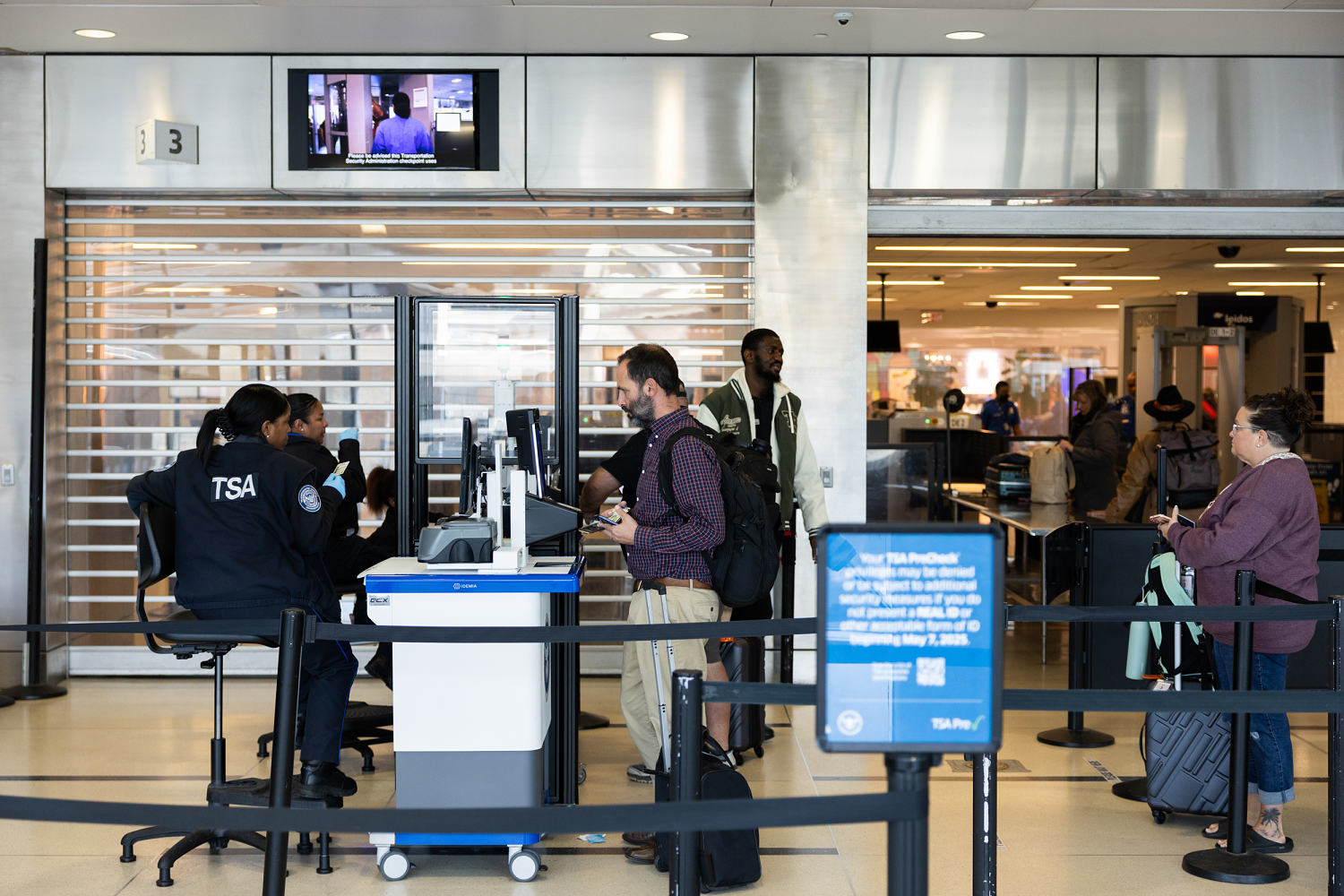
Philadelphia International Airport (PHL) is currently a case study in systemic failure. As of March 18, 2026, the Transportation Security Administration has shuttered three major security checkpoints—Terminals A-West, C, and F—leaving a decimated screening infrastructure to handle the mid-March travel surge. While the official line points to "operational optimization," the reality is a grim confluence of a month-old federal government shutdown and a radical, high-stakes overhaul of TSA labor policy that has pushed the workforce to a breaking point.
Travelers are now being told to arrive 3.5 hours early for international departures. For a mid-tier hub that prides itself on efficiency, this is an admission of defeat. The closures create a bottleneck effect where passengers from the shuttered international gates at A-West are funneled into A-East, while regional fliers from Terminal F are forced to migrate toward the D/E checkpoints. This isn't optimization. It is a desperate triage.
The Paycheck Precipice
The primary driver of the current crisis is the partial federal government shutdown that began on February 14, 2026. For over thirty days, roughly 800 TSA officers at PHL have been required to report for duty without pay. Last Friday marked the first full pay period where checks simply did not arrive.
When a federal employee misses a paycheck, the "mission" becomes secondary to survival. Reports from union officials at AFGE Council 100 suggest that officers are increasingly calling out not because of a coordinated strike, but because they literally cannot afford the gas or tolls required to reach the airport. Some have taken second jobs driving for ride-share apps or working retail shifts during their "off" hours, leaving them exhausted and prone to the very security lapses the TSA is designed to prevent.
The stress is visible on the floor. An officer distracted by an impending eviction notice is not an officer who is effectively screening for prohibited items. The TSA’s decision to consolidate staff at fewer checkpoints is an attempt to maintain a "safety minimum," but it essentially trades passenger convenience for a thin veneer of security.
The Invisible Labor War
Beyond the immediate budget impasse in Washington, a deeper, more permanent shift is eroding morale at PHL. On January 11, 2026, the TSA implemented a new "labor framework" that effectively stripped screening officers of their collective bargaining rights. This move, spearheaded by the Department of Homeland Security, rescinded the 2024 Collective Bargaining Agreement, claiming that union activities were "incompatible" with the national security mission.
The timing could not be worse. By terminating union dues deductions and ending "official time" for representational purposes, the agency has removed the only buffer between management and a workforce that is already being asked to work for free.
- Grievances Vanished: Pending disputes over working conditions or unfair treatment were essentially wiped clean when the new framework took effect.
- Retention Reversal: After years of progress in closing the "pay parity" gap with other federal agencies, the current instability is driving veteran officers toward the exit.
- Morale Deficit: Union leadership at PHL has characterized current morale as a "negative-2" on a ten-point scale.
This is the "why" behind the empty lanes in Terminal C. It is not just a temporary staffing glitch; it is the sound of a workforce opting out of a system they no longer trust.
The 2026 Collision Course
The timing of this collapse is particularly embarrassing for city officials. Philadelphia is currently in the midst of a $500 million modernization project intended to prep the airport for a massive 2026 calendar, which includes the MLB All-Star Game, the PGA Championship, and FIFA World Cup matches.
The airport recently launched a new logo and the slogan "Good things start here." For thousands of travelers currently standing in a two-hour line at Terminal B because their own terminal's checkpoint is dark, the irony is thick. The city is spending millions on "Enhanced Passenger Processing" and renovated restrooms while the basic human infrastructure—the people who run the scanners—is being dismantled.
Navigating the Shards
If you are flying out of PHL this week, the "2.5 hours early" recommendation is not a suggestion; it is a requirement.
The closure of the Terminal C checkpoint is particularly impactful for American Airlines fliers. Because Terminal C is a PreCheck-only hub, its closure forces those "trusted travelers" into the general population lanes at Terminal B or D. This negates the very benefit passengers pay for, turning a premium experience into a standard slog.
Check the PHL website for real-time wait estimates, but take them with a grain of salt. Those numbers reflect the time it takes to move through the physical line, not the time spent hiking from a shuttered terminal to an open one.
The shutdown will eventually end, and the back pay will eventually be processed. However, the damage to the TSA's recruitment and retention at PHL may take years to repair. The agency is currently betting that it can automate its way out of a labor crisis with biometric scanners and "touchless" processing. But as the current terminal closures prove, technology cannot replace a person who has decided that the job is no longer worth the cost of the commute.
Check your flight status and terminal assignments through the airline app before leaving for the airport, as some carriers are shifting gates to accommodate the screening bottlenecks.


