The Myth of the Hardened Perimeter
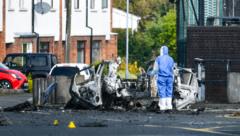
The recent explosion at Dunmurry police station is being treated by the press as a shocking lapse in security. The narrative is predictable: "How did this happen?" followed by "We need more cameras, thicker glass, and bigger walls." This is the lazy consensus. It assumes that a police station is a fortress and that any breach is a failure of architecture.
It isn’t.
The obsession with "hardened targets" is a reactionary relic of the 1990s. When we turn police stations into bunkers, we don’t actually stop determined actors; we just signal to the community that the police are an occupying force rather than a civic service. The explosion in Dunmurry isn't a failure of the front gate. It is a failure of the entire philosophy of static defense.
Static defense is a lie. If you build a ten-foot wall, your opponent buys an eleven-foot ladder. If you reinforce the glass, they find a way to bypass the door. By the time the news reports on a "security breach," the battle was already lost months ago in the planning phase.
The Dunmurry Fallacy: Why More Cameras Won't Save You
Standard reporting focuses on the "man charged" and the immediate mechanics of the blast. This satisfies the public's need for a villain and a resolution. But it ignores the structural incompetence of modern security protocols. We are addicted to post-incident forensics while ignoring real-time prevention.
Most police stations—Dunmurry included—rely on what I call the "Observer Effect." They believe that the presence of high-definition CCTV acts as a deterrent.
It doesn't.
For a motivated individual, a camera is just a recording device for their masterpiece. We have spent billions on visual surveillance that only serves to provide high-quality footage for the evening news after the smoke has cleared. True security isn't about watching; it's about shifting the variables so that an attack becomes logically impossible or strategically useless.
The Problem with Centralized Targets
Why is a police station a target? Because it is a centralized hub of perceived power.
- It houses records.
- It houses personnel.
- It symbolizes the state.
When you centralize these assets, you create a "high-yield" target. In the tech world, we moved toward decentralized systems decades ago to prevent single points of failure. Yet, in civil administration, we still insist on putting all our eggs—and our officers—in one highly visible, easily mapped basket.
If we want to stop explosions at police stations, we need to stop making police stations the centerpiece of urban geography.
Digital Ghosting Over Physical Bricks
The industry insider secret that no one wants to admit is that physical security is 80% theater. The heavy bollards and the barbed wire are there to make the public feel safe, not to actually be safe.
In my years consulting on infrastructure vulnerability, I’ve seen entities spend $5 million on a reinforced lobby while leaving their digital footprint wide open. You don’t need to scout a station in person anymore. Between Google Earth, leaked municipal blueprints, and social media geotags, an intruder knows the layout of Dunmurry better than the junior officers working the night shift.
We are fighting a 21st-century threat with a medieval mindset.
Dismantling the "Lone Wolf" Narrative
Every time a charge is brought against an individual, the media leans into the "lone wolf" trope. It’s a comforting thought. It implies the threat is an anomaly—a glitch in the system.
The reality is more uncomfortable. These incidents are symptoms of a fractured intelligence ecosystem. The "man charged" is rarely a surprise to the people who actually monitor radicalization patterns. The failure isn't that he got close to the building; the failure is that the data points weren't connected when he was still three miles away.
We treat the explosion as the start of the story. It’s actually the epilogue.
The Cost of the "Safety First" Lie
We are told that increased security measures are a necessary evil for public safety. This is a scam.
Every dollar spent on "hardening" a station is a dollar taken away from community intelligence. When you build a wall, you stop talking to your neighbors. When you stop talking to your neighbors, you lose the "human sensor" network that actually prevents crime.
Imagine a scenario where, instead of a fortress, a police station was integrated into a mixed-use development. The "security" wouldn't be a gate; it would be the hundreds of eyes from shops, apartments, and cafes that make it impossible to move a suspicious package unnoticed.
But no. We prefer the Dunmurry model: a lonely building, a dark perimeter, and a false sense of security provided by a fence that anyone with a basic understanding of physics can circumvent.
Stop Asking "How Did He Get In?"
The media and the "experts" are asking the wrong questions. They are obsessed with the breach.
- "Was the gate locked?"
- "Was the guard distracted?"
- "Did the sensors fail?"
These questions are irrelevant. The real question is: "Why did the system believe a gate could stop this?"
We have been sold a version of security that relies on "compliance." We assume that people will follow the rules of engagement. When someone decides not to play by those rules, the entire infrastructure crumbles because it has no flexibility. It is brittle.
Dunmurry was a brittle target.
The Actionable Pivot: Radical Transparency
If you want to actually secure a site, you don't hide it. You make it so transparent that any deviation from the norm is immediately obvious.
- Eliminate the Perimeter: Counter-intuitive? Yes. But a clear line of sight is better than a hiding spot behind a "security" wall.
- Decentralize Intelligence: Move the data off-site. If the building has no strategic value, it ceases to be a high-priority target.
- Replace Guards with Sensors: Humans are bored, tired, and easily bypassed. Multi-spectral acoustic and thermal sensors don't sleep.
The downside? It requires a total overhaul of how we think about the state's presence in our cities. It requires admitting that the current "fortress" model is an expensive, dangerous failure that actually invites the very violence it claims to prevent.
The Final Reckoning
The man charged in the Dunmurry case will go through the legal system. The police station will get a new coat of paint and perhaps a thicker gate. The politicians will give speeches about "resilience."
And absolutely nothing will change.
We will continue to build targets and act surprised when someone hits them. We will continue to value the appearance of strength over the reality of agility. Until we stop treating security as a matter of masonry and start treating it as a matter of network design, we are just waiting for the next fuse to be lit.
Stop looking at the gate. Start looking at the map. The map is where the war is being lost.