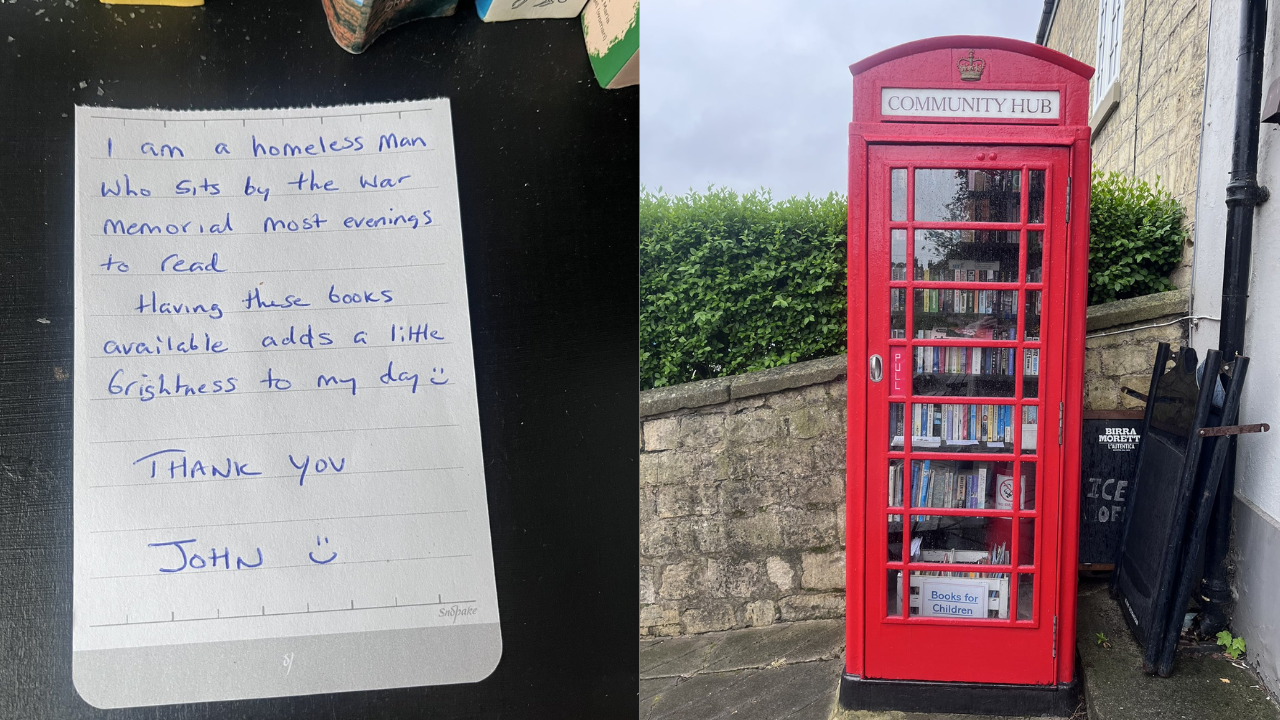
Community spirit isn't dead. It just lives in the quiet corners of our local libraries. A small, handwritten note found in a village library in the UK recently went viral, and it’s not because it contained some grand political manifesto or a celebrity secret. It was just a simple message of thanks from a man experiencing homelessness. He wanted to tell the staff and the locals that the warmth and safety of the building literally kept him going. While most of our news feeds are filled with shouting matches and doom-scrolling, this story hit a nerve because it’s deeply human. It reminds us that for some, a library isn't just a place to borrow a thriller; it’s a lifeline.
The note was short. It was honest. The man wrote about how the library offered him a sense of "brightness" during his darkest days. He didn't ask for money or a job. He just wanted the people who run the space to know they were making a difference. This kind of raw gratitude is rare these days. We’ve become so used to digital interactions that a physical piece of paper left on a desk feels like a relic from a different age.
Why This Viral Moment Touched the World
People are tired of being angry. We’re exhausted by the constant stream of negativity. When a photo of this note started circulating on social media, it didn't just get likes—it sparked a conversation about what we owe each other as neighbors. Most of us walk past people sleeping rough every day. We might feel a pang of guilt, or we might look away. This note forced everyone to look closer. It humanized a crisis that often feels too big to solve.
The library in question, located in a quiet UK village, became a symbol of something much bigger than its book collection. It represented a safe harbor. In many towns, libraries are the last remaining public spaces where you don’t have to spend money to exist. You can sit there for four hours, read the paper, use the Wi-Fi, and nobody will ask you to leave or buy a latte. That’s a radical concept in 2026.
The Reality of Homelessness in Modern Villages
We often think of homelessness as a "city problem." We imagine tents in urban underpasses or people huddled in shop doorways in London or Manchester. But rural and village homelessness is a growing issue that's far harder to track. When you’re homeless in a village, you’re invisible. There are no shelters nearby. There are no soup kitchens. You might be sleeping in a car or a shed behind a local park.
According to data from crisis charities like Shelter and Crisis UK, rural homelessness has seen a sharp uptick over the last few years. High rent prices and a lack of social housing in beautiful, "desirable" villages push people out. When those people have nowhere to go, they turn to the only infrastructure left: the local library.
It’s easy to ignore a problem when it doesn’t have a face. This note gave the problem a voice. It told us that the man isn't just a statistic or a "vulnerable person." He's someone who appreciates a warm room and a bit of kindness. He's someone who values the "brightness" in his day.
Libraries are the New Social Safety Net
Librarians aren't just filing books anymore. They’re becoming social workers, tech support, and mental health advocates. I’ve seen this first-hand. Go into any local branch and you’ll see the staff helping someone fill out a universal credit form or showing an elderly person how to use FaceTime. They do this with shrinking budgets and fewer staff members every year.
The fact that this man felt comfortable enough to leave a note tells you everything about the environment those librarians created. They didn't treat him like a nuisance. They treated him like a patron. That’s the "expertise" of kindness in action. It’s not taught in a manual, but it’s the most important thing they do.
What This Means for Your Local Area
If you think your local library is just for kids' storytime and retirees, you’re wrong. It’s a vital piece of infrastructure. When we lose these spaces, we lose the glue that holds the community together. If that library hadn't been open, where would that man have gone? Likely nowhere safe.
We need to stop viewing these services as optional extras that can be cut when the budget gets tight. They’re essential. This viral story shouldn't just be a "feel-good" moment that you share on Facebook and then forget about ten minutes later. It should be a wake-up call.
How to Support Your Local Community Today
Don't just wait for a viral note to remind you that your neighbors are struggling. You can take actual steps right now to make sure these spaces stay open and that people in your area are supported.
- Use your library. This sounds silly, but foot traffic matters. Funding is often tied to how many people actually walk through the doors. Go get a card. Borrow a book. Show the local council that the building is being used.
- Donate specifically. Food banks are great, but ask your local library if they have a "pay it forward" scheme for coffee or if they need donations for their community programs. Some libraries now host "warm banks" where they provide hot drinks during winter months.
- Volunteer your time. If you have a skill—whether it’s coding, CV writing, or just being a good listener—see if you can host a workshop. Shared knowledge is a huge asset for people trying to get back on their feet.
- Speak up. When local budgets are discussed, make it clear that you value public spaces. Send an email to your local representative. It takes two minutes, and they do actually track those things.
The Power of Small Gestures
The man who wrote that note probably had no idea it would be seen by thousands of people. He was just being polite. He was acknowledging the humanity of the people who helped him.
That’s the real takeaway here. You don’t need to start a charity or donate millions to change someone’s life. Sometimes, just providing a warm chair and a friendly "hello" is enough to bring a little brightness to someone's day. We should all be looking for ways to leave our own "notes" of kindness in the world, whether they’re written on paper or shown through our actions.
Go visit your local library this week. See what's actually happening there. You might be surprised at how much life is buzzing inside those quiet walls. It’s not just about the books; it’s about the people.