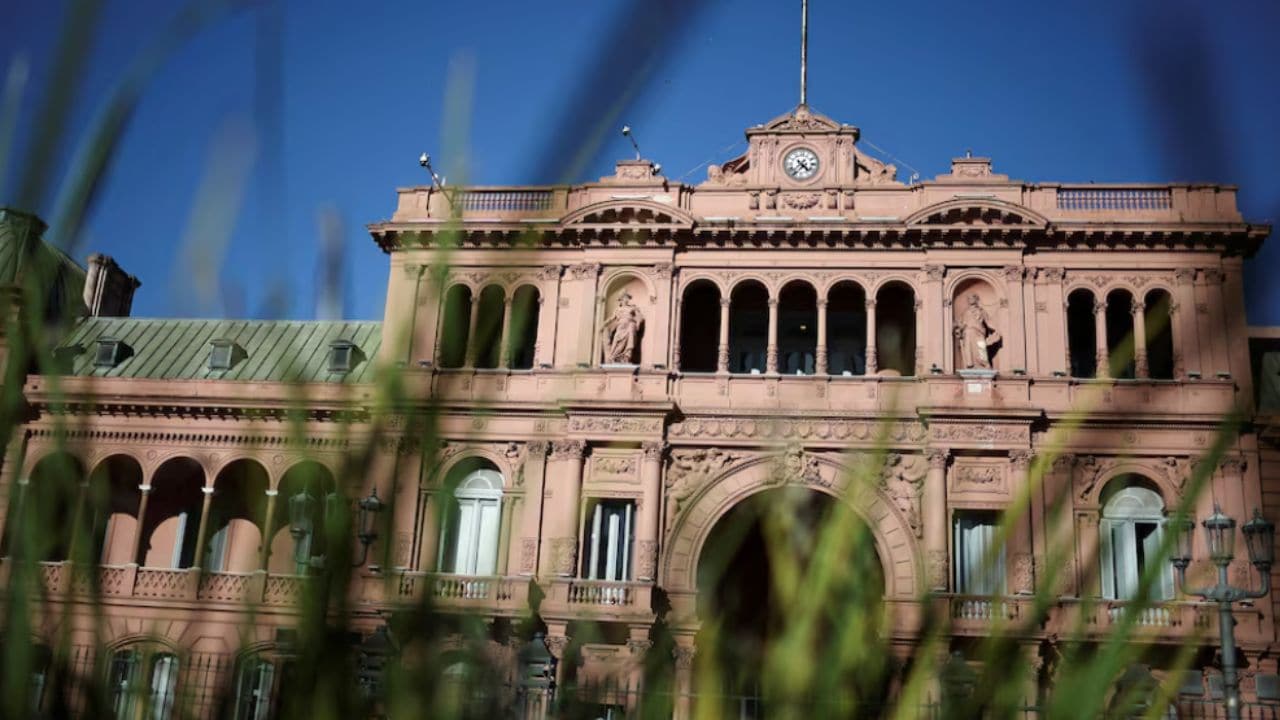
The hand-wringing over Javier Milei’s decision to restrict journalist access to the Casa Rosada is predictable, lazy, and fundamentally misses the point. Critics are lining up to scream about "press freedom" and "democratic backsliding." They are viewing a 21st-century information war through a 20th-century lens.
Access is not a right. Access is a currency. For decades, the relationship between the Argentine government and the press corps has been a cozy, symbiotic exchange of low-grade leaks for high-grade compliance. By cutting off the physical proximity of reporters to the seat of power, Milei isn't destroying transparency; he is destroying a cartel. In related news, we also covered: The Brutal Truth About Why Slingshot Rides Snap.
The Myth of the Objective Gatekeeper
The traditional media's argument rests on a flawed premise: that a journalist standing in a hallway is the only thing standing between the public and tyranny. In reality, the "accredited" press in Buenos Aires has long functioned as a filter that prioritizes narrative over raw data.
When you look at the fiscal disaster Milei inherited—inflation north of 200%, a bloated state, and a currency in freefall—the "press freedom" alarmism feels like a distraction. The media isn't upset about the public’s right to know. They are upset about their lost VIP status. They are upset that the "Pauta Oficial" (state advertising subsidies) has been slashed. TIME has analyzed this critical topic in extensive detail.
I have seen this play out in corporate restructuring for twenty years. When a new CEO comes in to gut a failing, bloated firm, the first thing they do is stop the leaks. They control the narrative because the middle managers (the journalists, in this analogy) are incentivized to protect the old, broken system.
The Disintermediation of Power
Milei is the first "Digital First" president of Argentina. He doesn't need a reporter from La Nación to interpret his thoughts for the public. He has X. He has live streams. He has a direct line to his base.
The "concerns" being raised by international watchdogs assume that information must pass through a professional guild to be valid. This is the same logic that travel agents used when Expedia launched. They claimed travelers would be "lost" without professional guidance. In reality, the middlemen were just terrified of becoming obsolete.
What we are witnessing is the disintermediation of political communication.
- Old Model: Government → Press Corps → Public (Filtered, spun, delayed).
- Milei Model: Government → Public (Direct, raw, volatile).
Is the new model dangerous? Perhaps. But let’s stop pretending the old model was a beacon of truth. It was a gated community.
Why Institutional Access is a Liability
If you are a journalist who relies on being "in the room" to get a story, you aren't an investigative reporter; you’re a stenographer. The best reporting on the Argentine economy doesn't happen in the hallways of the Casa Rosada. It happens in the central bank’s balance sheets, the grain elevators in Rosario, and the black-market exchange houses on Florida Street.
By barring journalists from certain areas of government HQ, Milei is inadvertently (or perhaps intentionally) forcing the press to actually do their jobs.
- Stop waiting for handouts. If the government won't give you a quote, find the data.
- Verify the math. Argentina’s crisis is mathematical, not rhetorical.
- Follow the money. The shift from state-funded media to market-driven media is the real story here.
The Harsh Reality of the "Public Right to Know"
Most people don't care about the logistics of a press briefing. They care about the price of beef. They care about whether their savings will be incinerated by midday.
The "freedom" being curtailed here is the freedom of a specific class of professionals to enjoy subsidized proximity to power. It is a labor dispute dressed up as a constitutional crisis. When the media loses its monopoly on access, it loses its ability to sell influence.
Critics point to the "chilling effect" this has on dissent. Look at the streets of Buenos Aires. Look at the social media feeds. Dissent is not being chilled; it is being decentralized. The idea that a physical barricade in a government building can stop the flow of information in 2026 is laughably outdated.
The Cost of the Contrarian Path
There is a downside to this strategy, and it’s one that Milei’s supporters often ignore. By bypassing the traditional press, the government loses a layer of institutional vetting. Direct communication is a double-edged sword. It allows for speed, but it also allows for unchecked errors and emotional outbursts that can rattle markets.
However, in the context of Argentina’s terminal decline, a "safe" relationship with the press is a luxury the country cannot afford. The status quo didn't just fail; it presided over the collapse.
If you want to understand what’s happening in Argentina, stop reading the editorials about press credentials. Look at the fiscal balance. Look at the deregulation decrees. The "freedom" that matters most to the average Argentine right now isn't the freedom of a journalist to sit in a specific chair—it’s the freedom from a currency that dies in your pocket.
The media isn't the watchdog of democracy in this scenario. It’s just another interest group fighting for its seat at the table. Milei didn't just take their chairs; he took the table.
Get used to it.