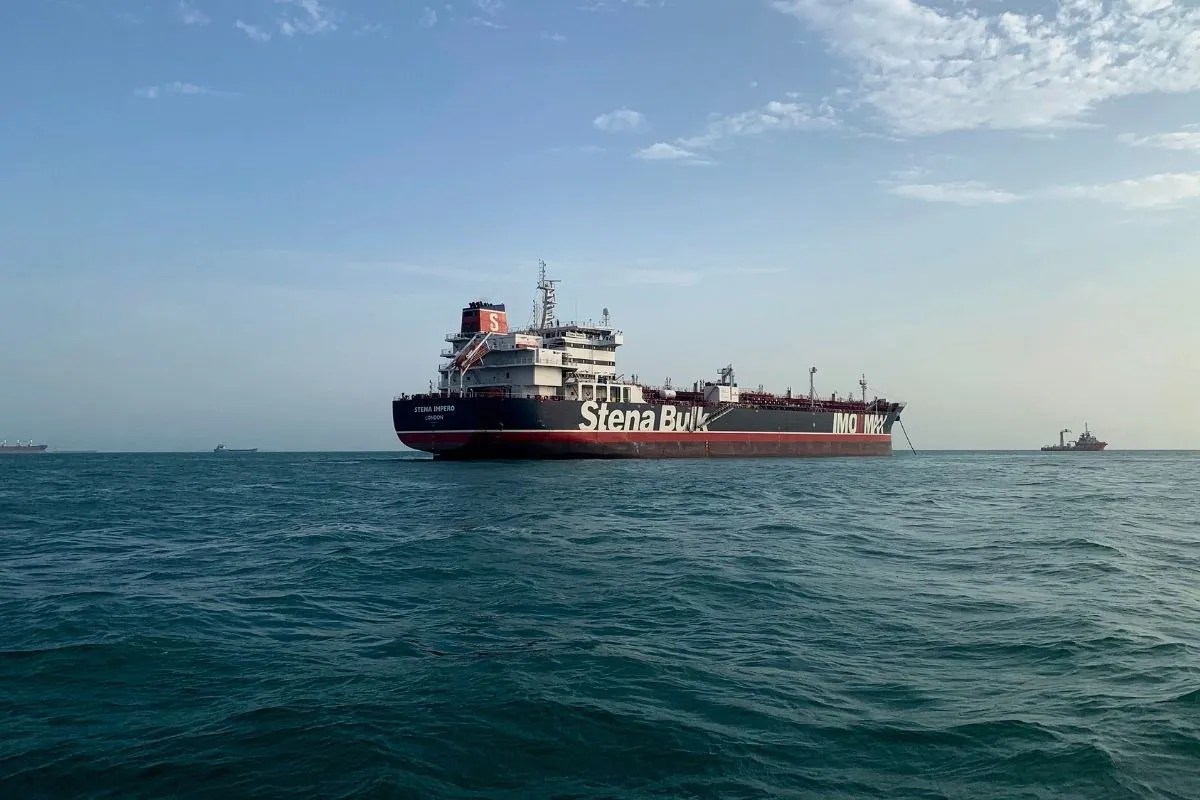
The lights in Tokyo’s Shinjuku district never truly sleep, but the energy that feeds them is a fragile thing. Imagine a giant tanker, a vessel the size of a horizontal skyscraper, moving through a narrow slit of water thousands of miles away. This is the Strait of Hormuz. It is a choke point where twenty percent of the world’s petroleum passes, a carotid artery for the global economy. If that artery blocks, the pulse of cities like Tokyo, Seoul, and Berlin begins to falter.
In the quiet halls of the Japanese Prime Minister's office, the air is thick with a different kind of tension. Chief Cabinet Secretary Yoshimasa Hayashi stands before a room of journalists, his expression a practiced mask of diplomatic neutrality. The question on everyone’s mind isn’t about domestic policy or local taxes. It is about mines. Specifically, the explosive, rusted, or high-tech sentinels that could be floating beneath the waves of the Middle East. You might also find this similar story interesting: Why the Chagos Islands deal just hit a massive wall.
Japan has been asked, or perhaps expected, to send its Self-Defense Forces to help clear these waters. It sounds like a simple request of a global power. But for Japan, history is a heavy anchor.
The Ghost of Article 9
To understand why Hayashi hesitated, you have to understand the ghosts that walk the streets of Hiroshima and Nagasaki. After World War II, Japan adopted a constitution that renounced war. Article 9 isn't just a legal clause; it is a national identity. For decades, the idea of Japanese military hardware—even for something as humanitarian as clearing mines—operating in foreign combat zones has been a political third rail. Touch it, and your career ends. As extensively documented in recent articles by TIME, the implications are widespread.
Consider a hypothetical sailor on a Japanese minesweeper. Let’s call him Kenji. Kenji is highly trained. He uses acoustics and magnetics to find the "horns" of a sea mine. If he succeeds, a trade route stays open. If he fails, or if his presence is seen as an act of aggression by a regional power like Iran, Japan is no longer a neutral merchant. It becomes a combatant.
This is the razor's edge Hayashi is walking. He told the press that no final decision has been made. He didn't say "no," but he certainly didn't say "yes." This hesitation is a story of a nation trying to reconcile its pacifist soul with its absolute dependence on foreign oil.
The Invisible Stakes of the Pump
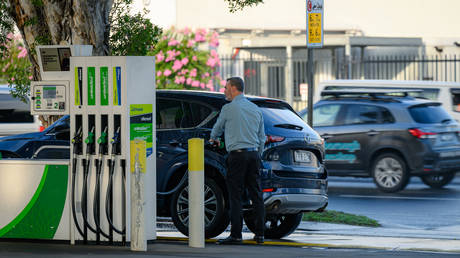
While politicians debate in marble rooms, the reality of the Strait of Hormuz hits the average person at the gas pump or the grocery store. Japan imports nearly 90 percent of its oil from the Middle East.
If the Strait closes, or even if the threat of mines spikes insurance premiums for tankers, the ripple effect is instantaneous. The cost of transporting a head of lettuce from a farm in Hokkaido to a market in Tokyo rises. The price of heating a small apartment in the freezing winters of Tohoku climbs beyond reach. This isn't just about geopolitics. It is about whether a pensioner can afford to keep their heater on through February.
The "baroodi surunge" (landmines or sea mines) mentioned in the reports are more than just explosives. They are economic lockdowns. One single mine, bobbing silently in the dark water, can freeze billions of dollars in trade. It turns the ocean into a graveyard of logistics.
A Calculation of Risks
The Chief Cabinet Secretary mentioned that the government would "comprehensively" evaluate the situation. In political speak, that means weighing the anger of the United States—who wants Japan to step up—against the anger of the Japanese public, who fears a return to militarism.
There is also the matter of the "Three Conditions" for the use of force. Under current Japanese law, the government can only send the military into such a situation if Japan’s own survival is at stake. Is a rise in gas prices a threat to "survival"? Some say yes. Others argue that unless there are literal bombs falling on Osaka, the threshold hasn't been met.
The world is watching Japan because Japan is the canary in the coal mine. If the world’s third or fourth-largest economy won’t help secure the routes it relies on, it signals a shift in the global order. It suggests that the era of "policing the commons" is fracturing.
The Silence of the Decision
Hayashi’s refusal to give a definitive answer is, in itself, a definitive act. It is a pause. A deep breath.
The ships are still moving for now. The tankers are cutting through the turquoise waters of the Gulf, their crews scanning the horizon for anything that looks out of place. Back in Tokyo, the neon signs flicker on, powered by oil that traveled through a gauntlet.
The decision remains in a state of flux, hidden behind the polite bows and the carefully scripted briefings. It is a reminder that in the modern world, peace isn't just the absence of war. It is the exhausting, daily work of keeping the valves of civilization open without losing your soul in the process.
Underneath the waves, the mines wait. In the office of the Cabinet Secretary, the clock continues to tick. The decision, when it finally comes, won't just be about minesweepers. It will be about who Japan decides to be in a century that is increasingly unforgiving of those who stand in the middle of the road.