The steel hull of a Maersk Triple-E freighter is so vast it creates its own weather. Standing on the bridge of a vessel like that, you don't feel like you’re on a ship; you feel like you’re commanding a floating city. Beneath your feet sit twenty thousand colorful steel boxes, each packed with the mundane and the vital—refrigerators, semiconductors, life-saving antibiotics, and perhaps a million cheap plastic toys destined for a warehouse in Rotterdam.
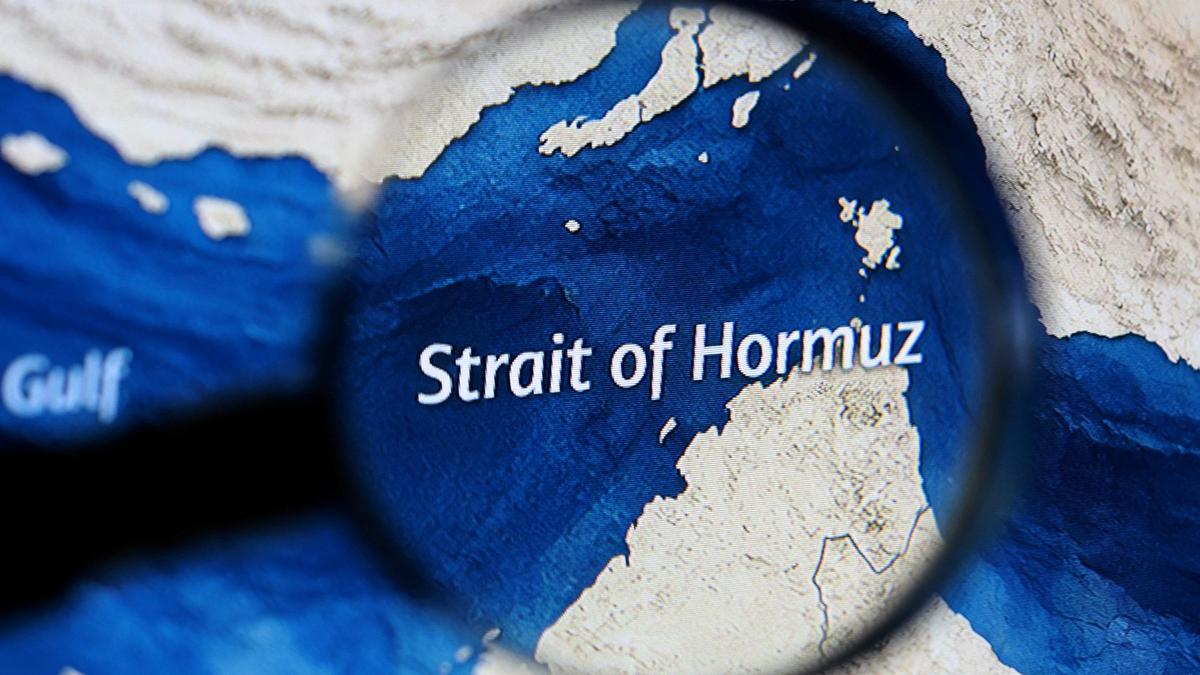
To get those goods from the humming factories of Asia to the living rooms of Europe, that ship must pass through a throat of water only twenty-one miles wide at its narrowest point. This is the Strait of Hormuz. It is the world’s most sensitive jugular vein.
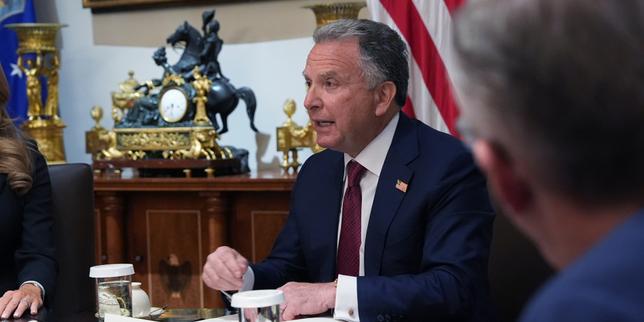
For decades, the unspoken rule of the sea was that the water belonged to everyone and no one. You sailed through, you kept your eyes on the radar, and you prayed for calm weather and clear politics. But the wind in Tehran is shifting. The Iranian Parliament is currently drafting a bill that seeks to do the unthinkable: put a price tag on the passage.
Imagine a toll booth appearing overnight on the only road leading out of your town. You didn’t ask for it, you don't benefit from it, but if you don't pay, you don't move.
The Ledger of the Deep
The legislative movement inside the Majlis—Iran's parliament—isn't just a dry bureaucratic exercise. It is a fundamental rewriting of how the world’s oceans are used. The proposal suggests that commercial vessels passing through the Strait should pay a "transit fee" to the Iranian government. The justification offered by Tehran is rooted in the costs of maintaining security and protecting the maritime environment.
On paper, the logic is seductive. If a nation provides the security that allows a global supply chain to function, shouldn't the users of that chain contribute to the upkeep?
But the reality is far more jagged.
Consider a hypothetical captain named Elias. He has spent thirty years navigating the Gulf. To Elias, the Strait isn't a line on a map; it’s a high-stress corridor where the heat is thick enough to chew and the radar screen is always cluttered with the silhouettes of fast-moving patrol boats. If this bill passes, Elias isn't just worried about his company's bottom line. He’s worried about what happens when a payment is delayed, or a fee is disputed.
Does the ship get seized? Do his sailors become pawns in a geopolitical audit?
Money is rarely just about currency. In the Strait of Hormuz, money is leverage.
The Invisible Tax on Everything
We often talk about global trade as if it’s an abstract concept, something for economists to fret over in windowless rooms. It isn't. Global trade is the reason your coffee is affordable and your smartphone exists.
Approximately twenty percent of the world’s total petroleum consumption passes through this narrow stretch of water every single day. If Iran imposes a fee, they aren't just taxing a shipping company. They are taxing the commuter in Ohio filling up their sedan. They are taxing the farmer in France who needs diesel for a tractor. They are taxing the very energy that keeps the modern world spinning.
The proposed bill targets "hostile" nations or those who support sanctions against Iran, but in the tangled web of maritime law, nothing is that simple. A ship might be owned by a Greek company, flagged in Panama, insured in London, and carrying cargo for a Japanese conglomerate.
Who pays? Who decides who is "hostile"?
The uncertainty is the point. When you introduce a cost to a previously free passage, you introduce friction. In the world of logistics, friction is more expensive than the fee itself. It leads to higher insurance premiums, longer routes to avoid the area, and a general sense of dread that trickles down to the price of a gallon of milk.
A History Written in Salt
To understand why this is happening now, we have to look past the ink on the bill and into the history of the water. Iran views the Persian Gulf as its front yard. For years, they have watched foreign navies—most notably the United States—patrol these waters. To Tehran, the Strait is a strategic chokepoint that represents their greatest defensive asset and their most potent offensive threat.
The 1982 United Nations Convention on the Law of the Sea (UNCLOS) generally protects "transit passage" through international straits. However, Iran has signed but never ratified this treaty. They operate on a different set of rules, one governed by "innocent passage," which gives a coastal state more power to regulate who comes and goes.
This legal gray area is where the current bill lives. It is a challenge to the status quo. It is an assertion of sovereignty in a place where the world expects a vacuum.
The Ghost in the Machine
Let’s look at the mechanics of the tension. If the bill moves from a draft to a law, the implementation would likely fall to the Islamic Revolutionary Guard Corps (IRGC) Navy. These are not the bureaucratic tax collectors you find in a suburban office. These are the men in fast-attack craft who have spent the last decade playing a high-stakes game of chicken with Western destroyers.
The "human element" here is the potential for a catastrophic misunderstanding.
Picture a bridge crew at 3:00 AM. They are tired. The humidity is ninety percent. Suddenly, a radio call comes in demanding a digital transfer of "transit fees" before the ship can proceed. The shipping company’s headquarters is in a different time zone. The captain is told to drop anchor. In that moment, the entire global economy holds its breath. One nervous finger on a trigger, one misunderstood command, and the price of oil doesn't just go up by a few cents; it explodes.
The bill is a reminder that the "global commons"—the air we fly through and the seas we sail—are only common as long as everyone agrees they are. When one player decides to put a fence across the ocean, the agreement shatters.
The Weight of the Water
There is a specific kind of silence that happens on a ship when the engines stop. It’s an unnatural, heavy quiet. It feels like the world has ceased to function.
If this legislation becomes the law of the sea, that silence might become more common in the Strait of Hormuz. We are moving into an era where the flows of energy and goods are being weaponized in ways we haven't seen since the age of empires. The "fee" is a symptom of a deeper fever. It’s a sign that the era of frictionless globalization is ending, replaced by a world of toll booths, barriers, and hard-nosed regionalism.
The Iranian parliamentarians debating this bill aren't just looking at a balance sheet. They are looking at a map and realizing they hold the world's most valuable gate.
Whether they choose to open it, close it, or charge for the key, the result is the same. The cost of being connected to one another just went up. We will all feel it the next time we turn on a light, start a car, or wait for a package that has to cross twenty-one miles of water that suddenly has a price.
The ocean has always been a place of danger, but now it is becoming something else: a ledger where the debt is never quite settled.