The appointment of a former police officer to the board of Legal Aid Queensland is not a simple administrative oversight. It is a fundamental shift in the architecture of the state's justice system. By placing a career law enforcement figure in a seat designed to safeguard the rights of the accused, the Queensland government has effectively blurred the line between prosecution and defense. This move undermines the institutional independence required for a fair trial and signals a preference for "tough on crime" optics over the integrity of the legal process.
Legal Aid exists to provide a counterweight to the massive resources of the state. When a citizen is charged with a crime, they face the full power of the police and the prosecution. Legal Aid ensures that the scales do not tip entirely toward the powerful. To have a former high-ranking police officer—someone whose professional life was dedicated to investigation and arrest—overseeing the strategic direction of defense services is a conflict of interest that no amount of personal integrity can bridge. It is about the perception of impartiality as much as the reality of it.
The Blue Shadow Over Legal Defense
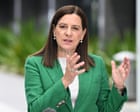
The controversy centers on the appointment of former Deputy Commissioner Steve Gollschewski to the board of Legal Aid Queensland. While Gollschewski’s service record within the Queensland Police Service is extensive, the skill set required to manage a police force is diametrically opposed to the mission of a legal defense organization. The board of Legal Aid makes critical decisions regarding funding, policy, and the prioritization of cases. These are the very cases where the conduct of police officers is often the primary subject of scrutiny.
The structural integrity of the legal system relies on distinct roles. The police investigate. The prosecution tries the case. The defense protects the rights of the individual. When you start swapping the players between these teams, the game becomes rigged. Critics from the legal fraternity argue that this appointment creates an environment where the defense's strategy could be subtly influenced by an "enforcement-first" mindset. This isn't just a matter of hurt feelings among lawyers; it is about the rights of every Queenslander who finds themselves in a courtroom.
Why the Police Perspective Fails at the Defense Table
There is a common argument used by the government to justify such appointments. They claim it brings a "diverse perspective" or "frontline experience" to the board. This is a fundamental misunderstanding of what diversity means in a legal context. Diversity on a board should involve varying legal expertise, lived experience of the justice system, or financial management skills. Bringing a police perspective to a defense board is like asking a predator to consult on the design of a bird sanctuary. The goals are inherently at odds.
A police officer’s primary objective is to secure evidence and support a conviction. A Legal Aid board member’s objective is to ensure that the accused receives the best possible representation, regardless of the charges. If the board is tasked with deciding whether to fund a systemic challenge against police search warrants, can a former deputy commissioner truly be expected to remain objective? The pressure to protect "the thin blue line" does not vanish the moment a badge is handed back.
The Political Strategy of Encroachment
This appointment does not exist in a vacuum. It is part of a broader trend where the Queensland government has consistently prioritized law and order rhetoric over civil liberties. By installing police figures in oversight or adjacent roles, the executive branch tightens its grip on the narrative of the justice system. It makes it harder for Legal Aid to be the "thorn in the side" of the state that it was meant to be.
The government’s defense of the move has been dismissive. They point to the appointee's management experience. However, Queensland is not short on experienced managers who haven't spent decades in a police uniform. The choice was deliberate. It sends a message to the public that the government is "cracking down" and it sends a message to the legal profession that their independence is no longer a priority.
The legal profession thrives on the "cab-rank rule" and the fierce independence of its practitioners. When the governing body of a primary legal service provider is seen as an extension of the state's enforcement arm, trust evaporates. For the marginalized communities who rely most heavily on Legal Aid—Indigenous Australians, those experiencing homelessness, and people with mental health struggles—this trust is already fragile. Seeing a high-ranking "cop" at the top of the organization designed to protect them is a deterrent to seeking help.
A Systemic Imbalance of Power
To understand the gravity of this, one must look at the funding gap. Legal Aid in Australia is perennially underfunded. Lawyers working for the service often handle staggering caseloads for a fraction of what their private counterparts earn. They are the underdogs. In contrast, the police service receives massive budgetary increases year after year.
When the government places a police-aligned figure on the Legal Aid board, they are placing someone who is accustomed to the resource-heavy environment of law enforcement into a world of scarcity. There is a very real risk that the board will begin to view "efficiency" through the lens of the prosecution. This could lead to a focus on quick guilty pleas and "streamlining" the process, rather than the rigorous, often time-consuming defense that the law requires.
The Precedent of Erosion
If this appointment stands unchallenged, it sets a precedent for further incursions. What stops the government from appointing a former prosecutor to lead the Parole Board? Or a former corrections officer to oversee human rights monitoring in prisons? Each of these moves chip away at the checks and balances that prevent an autocracy.
The legal system is not a machine that just needs to run faster. It is a delicate ecosystem of competing interests. When the government decides that one of those interests—the state's power to punish—should have a seat at every table, the ecosystem dies. We are left with a system that looks like justice but functions as an assembly line for convictions.
The Real Cost to the Taxpayer
Supporters of the move might argue that this is all "lawyer talk" and doesn't affect the average person. That is a dangerous mistake. An unbalanced justice system is an expensive one. When defense services are weakened or compromised, the number of wrongful convictions rises. The number of successful appeals increases. The duration of trials expands because of procedural errors.
Every time a trial miscarries because the defense wasn't properly supported or because the oversight was flawed, the taxpayer picks up the bill. More importantly, the social cost of a community that loses faith in its courts is immeasurable. Once the public believes the courts are just an annex of the police station, the rule of law begins to crumble.
Comparing the Models of Governance
In other jurisdictions, the independence of legal aid is protected by strict statutes that prevent the appointment of anyone with a recent conflict of interest. These models recognize that the board must be a sanctuary for the principles of defense.
| Governance Feature | Independent Model | Queensland's Current Direction |
|---|---|---|
| Board Composition | Legal experts, community advocates, academics. | Law enforcement figures, political appointees. |
| Primary Goal | Ensuring fair trial and access to justice. | Efficiency and alignment with state policy. |
| Public Trust | High, viewed as a check on power. | Declining, viewed as state-controlled. |
| Operational Focus | Robust defense and systemic advocacy. | Caseload management and cost reduction. |
The table shows a clear drift. Queensland is moving away from a model of checks and balances toward a model of executive convenience. This isn't an evolution; it's a regression.
The Myth of the Neutral Professional
We are often told that professionals can "wear different hats." This is a comforting myth used to justify appointments that would otherwise be scandalous. Human beings are shaped by their environments and their decades-long careers. A deputy commissioner of police has spent a lifetime viewing the world through the lens of risk, criminality, and order. To suggest they can suddenly pivot to a mindset that prioritizes the rights of the defendant over the convenience of the state is naive at best.
It is also an insult to the people who have spent their lives in the defense space. There is a specific expertise in understanding the vulnerabilities of the accused. There is a specific skill in identifying when police have overstepped their bounds. These are not skills learned at the police academy. By ignoring this, the Queensland government suggests that defense work is something anyone can supervise, while police work remains a specialized, protected guild.
Restoring the Firewall
The solution is simple but requires political courage. The appointment must be rescinded, and a clear legislative barrier must be established. No individual who has held a senior role in law enforcement or prosecution within the last five to ten years should be eligible for a seat on the Legal Aid board. This "cooling-off period" is standard in many industries to prevent the appearance of impropriety. Why should the justice system be any different?
Furthermore, the process for these appointments needs to be moved out of the backrooms of the Attorney-General's office and into the light. A public, merit-based selection process overseen by an independent body would go a long way in restoring confidence. The legal profession, through the Law Society and the Bar Association, should have a formal role in vetting these candidates.
The Danger of Silence
The legal community in Queensland has been vocal, but the broader public remains largely unaware of the stakes. This is how rights are lost—not in a single moment of crisis, but through a series of "absurd" administrative decisions that slowly normalize the presence of the state in every corner of the law.
If the defense of the vulnerable is directed by those who used to arrest them, the very concept of a "fair go" becomes a relic of the past. The government isn't just appointing a board member; they are redefining what justice looks like in Queensland. And right now, it looks like a precinct.
Challenge the government to release the full selection criteria used for this appointment and demand a public inquiry into the independence of statutory legal bodies before the next board cycle begins.