The steak on your dinner table is becoming a luxury item, and a picket line in Greeley, Colorado, is the latest proof that the American food supply chain is fraying at the seams. This week, nearly 4,000 meatpacking workers at the JBS USA plant—one of the largest beef processing facilities in the country—walked off the job. This is not just a local labor dispute; it is a high-stakes collision between a global corporate monopoly, a shrinking national cattle herd, and an administration desperate to curb food inflation before the next election cycle.
When operations at a facility responsible for roughly 7% of the nation's beef slaughter capacity grind to a halt, the ripples move fast. The Greeley plant processes up to 6,000 cattle every day. Without those workers, those animals back up in feedlots, becoming more expensive to maintain by the hour. Meanwhile, at the grocery store, the "meat gap" begins to widen, pushing retail prices for ground chuck and ribeyes even further into record territory. Recently making headlines lately: The Cuban Oil Gambit Why Trump’s Private Sector Green Light is a Death Sentence for Havana’s Old Guard.
The Invisible Economics of the Picket Line
For the 3,800 members of UFCW Local 7, the decision to strike was a last resort after eight months of stalled negotiations. The core of the grievance sounds like a relic from a grittier era of industrial history. Workers allege they are being charged upwards of $1,100 for their own personal protective equipment (PPE)—the chainmail tunics and specialized knives required to survive a shift on a high-speed disassembly line.
In an environment where line speeds have been cranked up from 390 to 420 animals per hour, the physical toll is immense. The company, a Brazilian-owned behemoth that recently went public on the New York Stock Exchange with a $30 billion valuation, has offered wage increases that the union claims fall short of Colorado’s 2026 inflation rates. It is a classic squeeze. On one side, a corporation under intense pressure from Wall Street to maintain profit margins; on the other, a workforce—largely comprised of immigrants and refugees—finding their paychecks can no longer cover the cost of living in the Mountain West. Additional information on this are explored by Investopedia.
A Supply Chain of Brittle Links
The timing of this strike could not be worse for the broader economy. The U.S. cattle inventory is currently at a 75-year low. Years of persistent drought across the Plains, combined with high feed costs, forced ranchers to liquidate their herds. We are operating with just 86 million head of cattle nationwide.
When the supply of raw material is this low, the entire system becomes brittle. Meatpackers like JBS, Tyson, and Cargill—who together control about 85% of the market—are already grappling with excess capacity. They have more hooks than they have cows. In January, Tyson shuttered a major plant in Lexington, Nebraska, citing these exact pressures.
A strike in Greeley effectively creates a bottleneck in the middle of a drought-stricken desert. While JBS claims it can reroute cattle to other facilities in its network, like its plant in Cactus, Texas, the logistics of moving thousands of live animals on short notice are a nightmare of fuel costs and weight loss. Every mile a steer travels in a trailer is a mile where it loses "bloom" and value.
The Political Beef with Big Protein
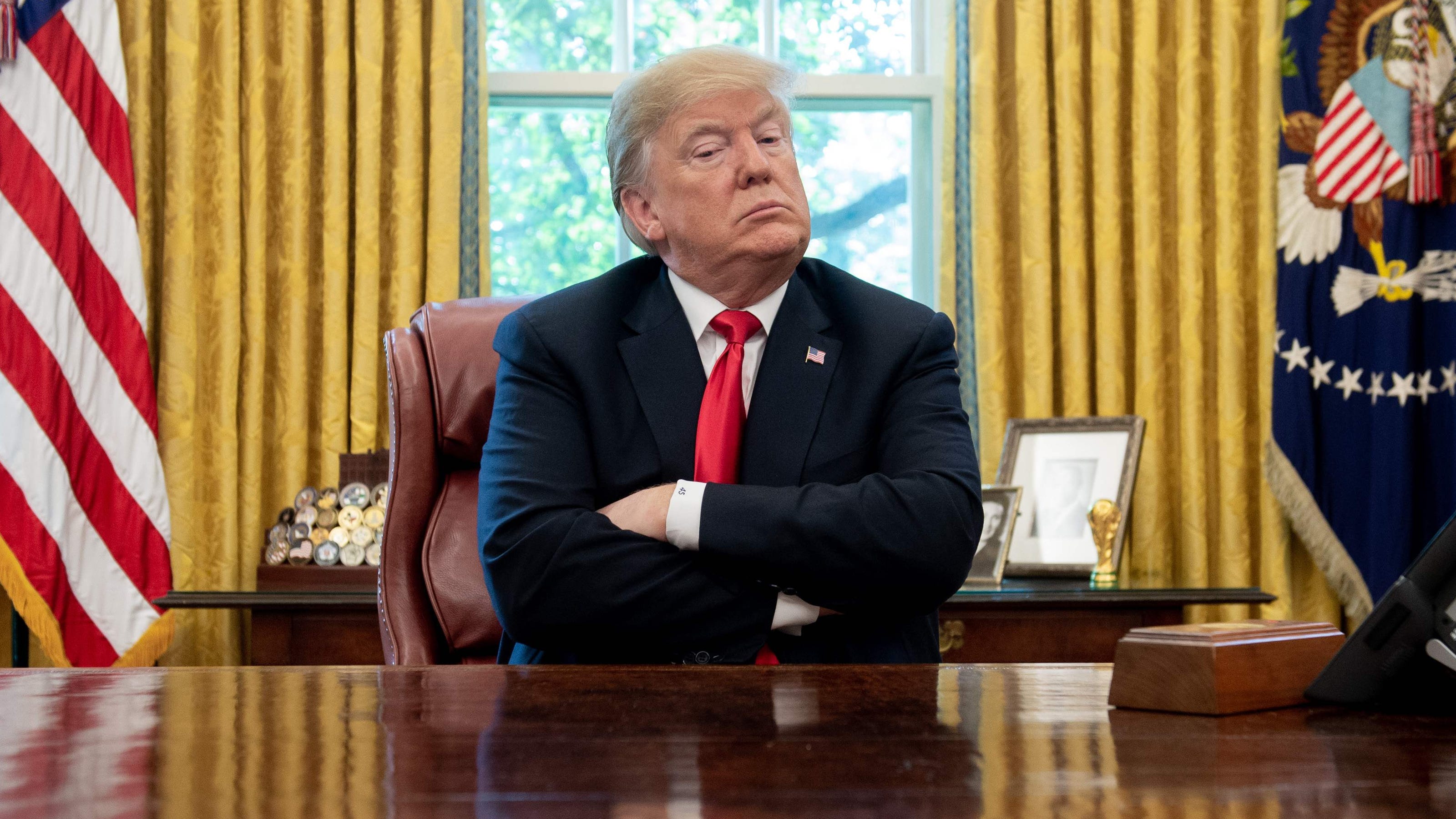
The White House has watched these developments with growing anxiety. After significant losses in the November midterms, the administration has pivoted toward a populist "affordability" agenda. President Trump recently directed the Department of Justice to investigate whether the big four meatpackers are using their market dominance to artificially inflate prices.
It is a difficult needle to thread. The administration has imposed heavy tariffs on Brazilian beef to protect domestic ranchers, yet those same tariffs have contributed to the record-high prices at the checkout counter. Now, the Greeley strike highlights a secondary consequence of the administration’s immigration stance. Many of the workers on the picket line are Haitian immigrants holding Temporary Protected Status—a status the current administration has threatened to revoke.
There is a deep irony in the federal government pressuring meatpackers to lower prices while simultaneously targeting the very labor force that keeps the lights on in the slaughterhouses. Without these workers, the American "cheap food" model ceases to function.
The Myth of the Automated Solution
For years, industry analysts have pointed to automation as the "get out of jail free" card for the meatpacking industry. If humans are expensive and prone to striking, the logic goes, replace them with robots.
The reality is far more complex. Unlike car manufacturing, where parts are uniform, every cow is shaped differently. Disassembling a carcass requires a level of tactile feedback and precision that current AI-driven robotics struggle to replicate at scale. The Greeley plant relies on a workforce that speaks over 50 different languages because the "knifework" remains a fundamentally human skill.
Until technology can handle the biological variability of livestock, the industry remains tethered to its labor force. This gives the union significant leverage, even as JBS tries to wait them out. The company’s recent guilty plea to bribing officials in Brazil to secure financing for its U.S. expansion has already soured its reputation with federal regulators, making it a convenient target for a Department of Justice looking to score points on "corporate greed."
The Cost to the Consumer
If the strike persists through its scheduled two-week window, the impact on your grocery bill will be immediate. Market analysts at Colorado State University suggest that local beef prices could jump by 10 to 20 cents per pound almost instantly. Nationally, the effect will be more subtle but more persistent.
Retailers are already anticipating the shortfall and are likely to raise prices now to manage demand through April. This creates a "sticky" price environment—once the price of ground beef hits $7.00 a pound, it rarely drops back to $5.00, even after the labor dispute is resolved.
A Breaking Point for Global Agribusiness
The Greeley strike is a symptom of a larger shift in how we produce food. The era of hyper-centralized, high-speed meat processing is hitting a wall. Between the climate-driven reduction in cattle numbers and an emboldened labor movement, the "efficiency" that once made American beef the cheapest in the world is disappearing.
For JBS, the calculation is simple. They are testing whether their "flexible capacity" can bypass a hub as large as Greeley. If they succeed, it signals a permanent decline in union power. If they fail, and the shelves at major retailers like Walmart begin to go empty, they will be forced to the table.
This isn't just about a 60-cent-an-hour raise or the cost of a chainmail glove. It is a battle over who bears the cost of a changing climate and a volatile economy. As the strikers in Greeley huddle under blankets in 20-degree weather, the rest of the country is about to find out exactly how much that steak is worth.
Stock your freezer now, because the days of predictable beef prices are over. The bottleneck in Colorado is not an anomaly; it is the new blueprint for an industry that has run out of room to squeeze.