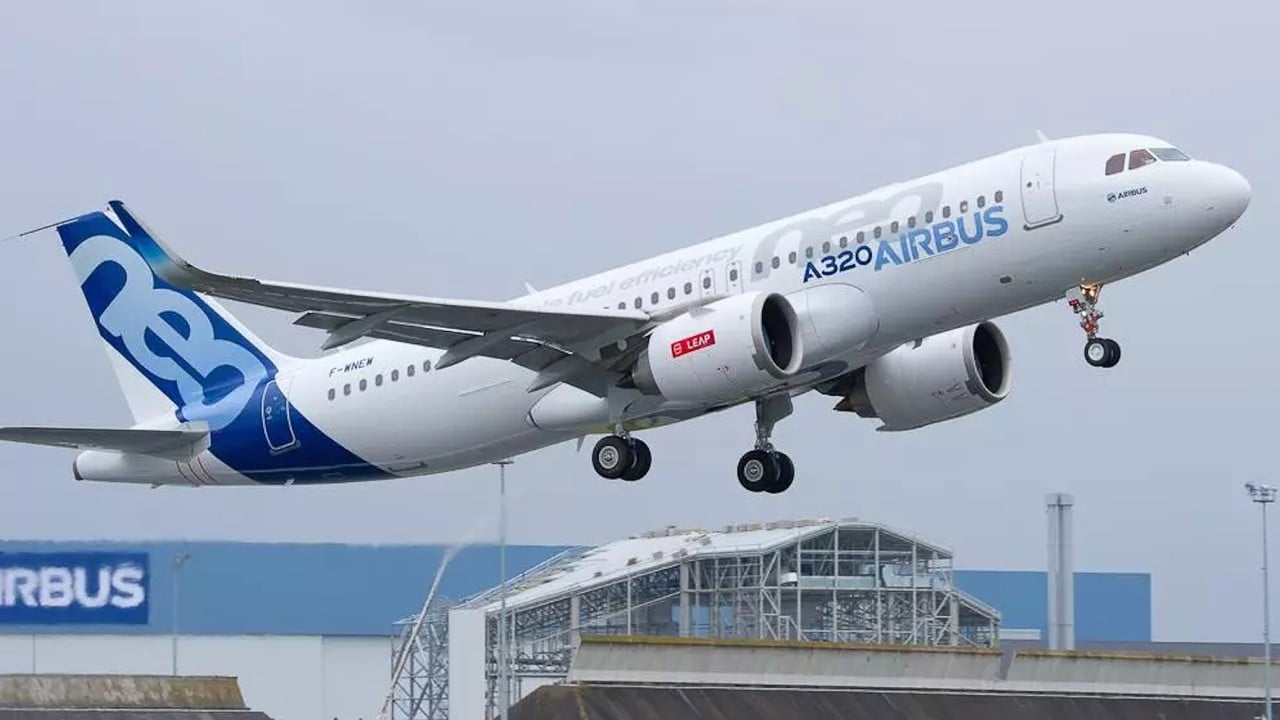
China Southern Airlines just handed Airbus a $21 billion lifeline, and the silence from Seattle is deafening. On Wednesday, the Guangzhou-based carrier confirmed a massive order for 142 A320neo family aircraft—102 for itself and 40 for its subsidiary, Xiamen Airlines. While the headline figures suggest a standard fleet renewal, the subtext is a brutal indictment of Boeing’s current standing in the world’s most critical aviation market.
This isn’t just about fuel efficiency or seat counts. It is a calculated geopolitical and industrial pivot. For years, Boeing has waited for a "rumored" breakthrough in China that never quite materializes. Meanwhile, Airbus is no longer just a foreign vendor; it has become an integrated part of the Chinese industrial ecosystem. By doubling down on the A320neo, China Southern is signaling that the era of the Boeing-Airbus duopoly in the mainland is effectively over. If you found value in this post, you might want to read: this related article.
The Illusion of the Level Playing Field
The aviation industry likes to pretend that aircraft purchases are purely technical decisions based on $Operating Cost/Seat$ or $MTOW$ (Maximum Takeoff Weight). In reality, China’s "Big Three" airlines—China Southern, China Eastern, and Air China—operate as extensions of state policy.
When China Southern commits to 102 Airbus jets, it isn’t just buying wings and engines. It is buying into a relationship where Airbus has a Final Assembly Line (FAL) in Tianjin. Airbus didn't just sell planes; it sold local jobs, local manufacturing, and a "made-in-China" optics shield that Boeing simply cannot match while its primary manufacturing hubs remain firmly in South Carolina and Washington state. For another perspective on this event, refer to the recent coverage from MarketWatch.
The technical math for the A320neo versus the 737 MAX is close, but the political math isn't even in the same ballpark. Boeing is currently hamstrung by a toxic combination of:
- Production bottlenecks that have made delivery timelines a guessing game.
- Geopolitical friction that turns every Boeing jet into a potential bargaining chip in trade wars.
- Safety perception issues that, while largely addressed by regulators, still provide a convenient narrative for Chinese officials looking to favor European or domestic alternatives.
Selling the Dreamliner to Buy the Neo
In a move that caught many analysts off guard earlier this year, China Southern began offloading its fleet of Boeing 787-8 Dreamliners. In February 2026, the airline finalized a deal to sell 10 of these wide-body jets to Avolon, with many of them reportedly destined for Thai Airways.
It is a rare and telling sight. Usually, an airline with aggressive growth plans—like China Southern’s push to dominate the Oceania-Europe corridor—clings to its long-haul capacity. Instead, they are purging older Boeing wide-bodies while simultaneously signing massive checks for Airbus narrow-bodies. This suggests a total "re-shuffling" of the deck. China Southern is simplifying its logistics around the Airbus A320 and A350 platforms, leaving Boeing as a shrinking minority in their future hangar.
The Comac Shadow
While the world watches the Airbus-Boeing fistfight, the real threat is the plane that isn't quite ready yet. The Comac C919 is the third player in this room.
China Southern is expected to take delivery of roughly 30 C919s over the next two years. Currently, the C919 is a domestic novelty, but every Airbus order placed today is a bridge to a future where China no longer needs the West at all. The $21 billion order for Airbus jets acts as a "buffer." It provides the capacity China Southern needs to expand its Guangzhou hub into a global transit point while Comac works through the inevitable growing pains of a new airframe.
Airbus is winning today because it is willing to be the "useful partner" in China’s transition toward self-reliance. Boeing, meanwhile, is being treated as an outsider—a legacy provider whose presence is tolerated but no longer prioritized.
The Cost of Waiting
For Boeing, the "rumor" of a Chinese deal is becoming a dangerous substitute for actual revenue. Every month that passes without a firm, state-sanctioned order from Beijing erodes Boeing’s market share in a way that may take decades to repair.
We are seeing a divergence in the "Big Three" strategies. While China Southern achieves record-breaking traffic and returns to profitability, it is doing so by leaning into European and domestic metal. The risk for Boeing is no longer just a "bad year." The risk is that the Chinese market is fundamentally restructuring itself to function without them.
When an airline as massive as China Southern decides that its $21 billion future is painted in Airbus colors, it isn't just a purchase. It is a divorce.
Stop looking for a Boeing comeback in the next quarterly report. The window is closing, and Airbus just bolted the door from the inside.