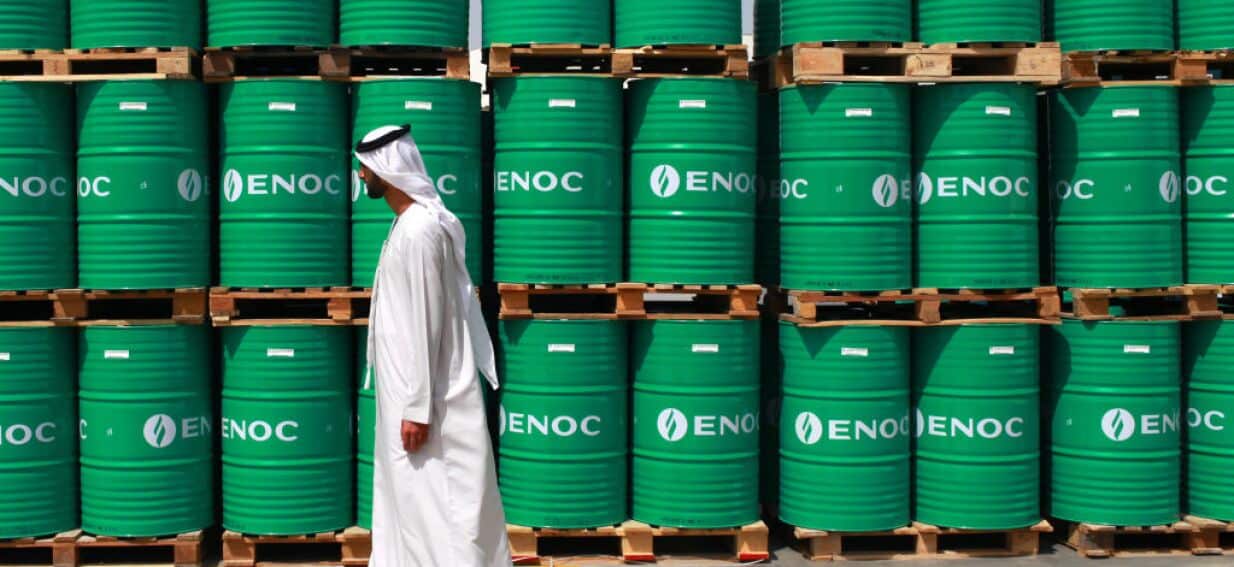
The announcement that the United Arab Emirates will officially exit OPEC on May 1, 2026, is not just another diplomatic ripple in the Middle East. It is a seismic break from sixty years of tradition that signals the end of the oil cartel’s ability to dictate global energy prices. By walking away, Abu Dhabi is prioritizing its own massive infrastructure investments over the collective preservation of high prices, a move that effectively hands a victory to major energy consumers and the United States.
For decades, the Organization of the Petroleum Exporting Countries functioned as a unified front, albeit a fractious one. But the math no longer works for the UAE. While Riyadh has consistently pushed for production cuts to keep Brent crude propped up, the UAE has spent billions of dollars expanding its capacity to nearly 5 million barrels per day. Staying in OPEC meant those new wells had to remain capped, a luxury a diversifying economy can no longer afford.
The Production Trap
The friction between the UAE and Saudi Arabia has been building for years, rooted in a fundamental disagreement over the "right" price of oil. Saudi Arabia needs high prices to fund its ambitious Vision 2030 projects. Abu Dhabi, conversely, has adopted a "volume-first" philosophy. They want to monetize their reserves as quickly as possible before the global energy transition renders them less valuable.
State-run Adnoc has hit a wall with OPEC quotas. The UAE is currently capable of pumping roughly 4.85 million barrels daily, yet its membership in the cartel forced it to keep output significantly lower to satisfy the group's price-fixing strategy. This forced idleness is viewed by Emirati leadership as a direct tax on their national growth. By exiting, they gain the sovereign right to flood the market when demand spikes, rather than waiting for a committee in Vienna to grant permission.
A Strategic Pivot to the West
There is a distinct geopolitical scent to this departure. The timing aligns perfectly with a shift in UAE foreign policy that leans heavily toward Washington and Beijing over the collective interests of the Gulf bloc. Being outside OPEC allows the UAE to negotiate bilateral supply deals that are more attractive to major importers like China and India, offering them stability and volume that the cartel’s rigid system cannot match.
Furthermore, this move aligns with the interests of the Trump administration, which has long viewed OPEC as a hostile entity to American consumers. By breaking ranks, the UAE cements its status as the favored diplomatic and economic partner for the West in the region. This is about more than just oil; it is about positioning the Emirates as the primary "balancing producer" in a world where Saudi influence is increasingly viewed with caution.
The Myth of Market Stability
OPEC has always claimed its mission is to ensure market stability. Critics, however, have long argued the group merely creates artificial scarcity. The UAE’s exit exposes this tension. With one of the few members capable of significant "spare capacity" now operating independently, the cartel loses its most effective lever for cooling down an overheated market.
When the Strait of Hormuz is blocked or regional conflict flares, the UAE’s independent ability to ramp up production—partially bypassed through the Adcop pipeline—becomes a lifeline for the global economy. Before, this would have required a grueling OPEC+ consensus. Now, it requires a single phone call to Abu Dhabi.
Consequences for the Consumer
For the average person at the pump, this is the most significant supply-side news in years. While the ongoing war in Iran and shipping disruptions have kept prices volatile, the long-term outlook has shifted. A UAE untethered from quotas is a UAE that wants to sell more oil. Increased supply from a major producer almost always exerts downward pressure on prices over a twelve-to-eighteen-month horizon.
- Lower Baseline Prices: As the UAE ramps toward its 5 million barrel-per-day goal, the global supply floor rises.
- Reduced Cartel Influence: Every barrel the UAE adds outside of OPEC control makes Saudi production cuts less effective.
- Increased Competition: Other OPEC members may feel the pressure to cheat on their own quotas to maintain market share against a surging UAE.
The End of the Riyadh-Abu Dhabi Consensus
The personal relationship between UAE President Mohamed bin Zayed and Saudi Crown Prince Mohammed bin Salman has been the bedrock of Gulf policy. That bedrock is cracking. While public statements from Emirati Energy Minister Suhail al-Mazrouei emphasize "respect" for Saudi leadership, the reality is a divorce over economic survival.
Saudi Arabia is trying to manage the decline of the oil era by squeezing every cent out of each barrel. The UAE is trying to win the race to the bottom, ensuring they are the last ones standing by offering the most reliable, high-volume supply in a competitive market.
This exit effectively kills the OPEC+ alliance in its current form. Without the UAE’s compliance, Russia and Saudi Arabia are left holding a smaller, less influential bag. The "Group of Two" may continue to meet, but their ability to shock the market into submission has been permanently diminished.
Abu Dhabi has made its choice: it would rather be a global energy powerhouse on its own terms than a compliant member of a fading club. The world’s consumers will likely be the ones to thank them for it.


