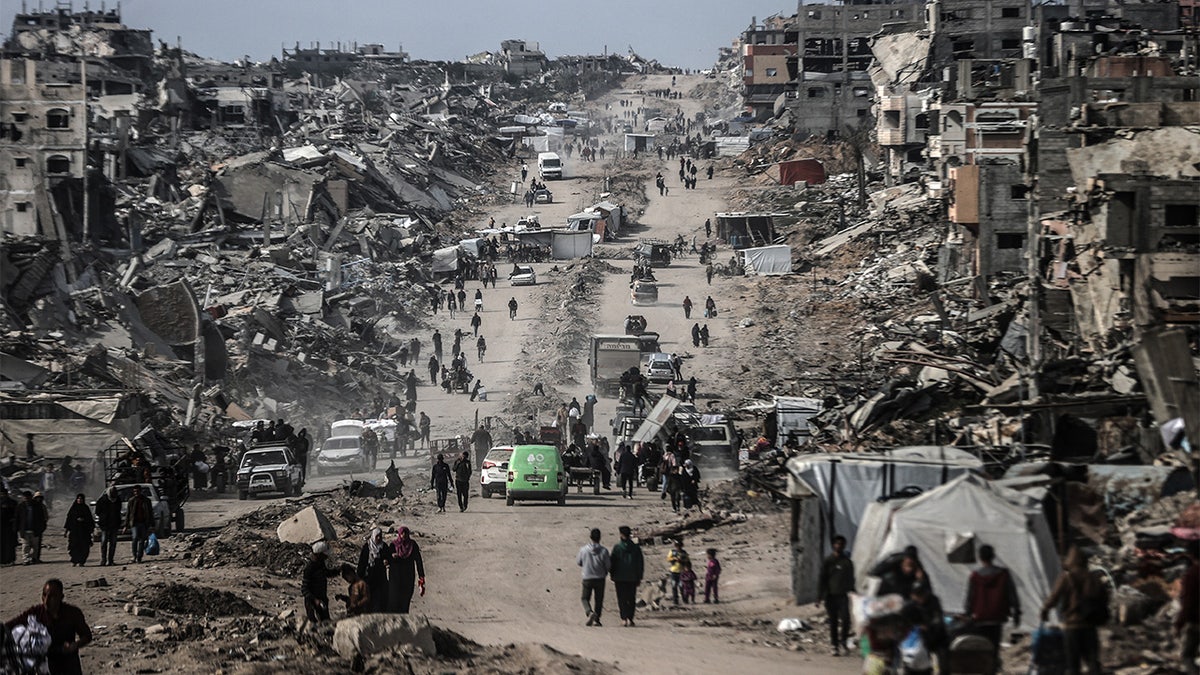
The sky over the Port of Hodeidah didn’t just turn orange; it turned a violent, bruised purple as the fuel tanks ignited. For those watching from the Yemenite coastline, the Israeli airstrikes weren't just a military headline. They were a physical vibration in the chest, a reminder that the distance between the Levant and the Arabian Peninsula has shrunk to the length of a drone's flight path.
But as the smoke cleared and the satellite images began to circulate in the situation rooms of Riyadh, Washington, and Tehran, a strange, heavy silence followed. No massive retaliatory swarm crossed the water the next morning. No immediate declaration of total war echoed from the Houthi leadership. Instead, we are witnessing a calculated pause, a moment where the regional players are checking their cards before the next betting round begins.
To understand why a group known for its "Death to America, Death to Israel" slogan is suddenly practicing restraint, you have to look past the missiles. You have to look at the fragile, invisible threads of the Iranian proxy network and the cold reality of what happens when a regional bully finally hits back.
The Weight of the Rubble
Imagine a mid-level Houthi commander standing on a pier, looking at the charred remains of vital infrastructure. To him, the strike isn't just about geopolitics; it’s about the electricity that won't reach his neighborhood and the fuel that will now cost three times as much on the black market.
The Houthis, or Ansar Allah, have spent years perfecting the art of the asymmetric sting. They are the hornet that can harass the lion because the lion is too big to effectively swat it. But the Israeli strike on Hodeidah changed the math. It proved that the lion is willing to reach across the map and claw at the very things that keep the Houthi "state" functioning.
Since the October 7 attacks and the subsequent war in Gaza, the Houthis have played the role of the ultimate disruptor. They hijacked the $GALAXY LEADER$, turned the Bab al-Mandab Strait into a shooting gallery, and forced global shipping giants like Maersk to take the long way around Africa. They did this under the banner of Palestinian solidarity, a move that skyrocketed their popularity in the Arab street, even among those who previously despised them.
Then came the drone that hit Tel Aviv. It was a single, low-flying craft that bypassed some of the most sophisticated air defenses on Earth. It killed a civilian. It brought the war to a city that had largely felt insulated from the chaos of the southern front.
Israel’s response was a message written in fire. By hitting the port, they didn't just destroy fuel; they destroyed the Houthi sense of invulnerability.
The Invisible Script from Tehran
The restraint we see now isn't a sign of peace. It's a sign of coordination.
The Houthis are not a rogue element acting in a vacuum. They are a critical node in Iran’s "Axis of Resistance." Think of this network not as a formal army, but as a nervous system. Tehran is the brain, and the various groups—Hezbollah in Lebanon, the militias in Iraq, and the Houthis in Yemen—are the limbs.
Right now, the brain is sending a signal: Freeze.
Iran is currently navigating its own internal transition following the death of Ebrahim Raisi and the election of Masoud Pezeshkian. More importantly, Tehran is watching the northern border of Israel, where Hezbollah and the IDF are locked in a high-stakes staring contest that could ignite a full-scale invasion of Lebanon at any moment.
If the Houthis escalate too far, too fast, they risk dragging the entire network into a regional conflagration before the timing is right. They are being told to hold the line, to keep the pressure on the Red Sea, but to avoid the kind of knockout blow that forces a direct, catastrophic American or Israeli intervention in Sana’a.
It is a agonizing balance. To remain relevant, they must fight. To survive, they must wait.
The Human Toll of the Chessboard
Behind the maps and the technical specifications of the long-range "Samad" drones lies a human cost that rarely makes the evening news. Yemen is a country that has been broken and glued back together a dozen times over. The people living under Houthi control are caught in a pincer movement between their leaders' ideological ambitions and the crushing reality of economic collapse.
When a port is hit, food prices jump. When shipping lanes are closed, the aid that millions rely on slows to a trickle.
Consider a hypothetical merchant in Sana’a. We will call him Ahmad. Ahmad doesn't care about the range of a ballistic missile. He cares that the container of electronics he ordered six months ago is sitting on a ship in the Gulf of Aden because the insurance rates became too high for the captain to enter the Red Sea. He cares that his customers have no money because the local economy is being cannibalized to fund a war of choice.
Ahmad watches the television as Houthi spokesmen brag about hitting ships. He sees the crowds cheering in the square. But he also sees the empty shelves in his shop. This is the "invisible stake" of the Houthi strategy. They are gambling with the survival of a population that is already at its breaking point.
The Houthis are banking on the idea that the West and Israel will eventually tire of the cost. They believe that if they can hold out just a little longer, the world will grant them the legitimacy they crave. But as the rubble in Hodeidah cools, the question remains: how much of their own country are they willing to burn to prove a point?
The Myth of the Short Memory
There is a dangerous assumption in many Western capitals that if the Houthis stop firing for a week, the "problem" is solved. This is a fundamental misunderstanding of the group's DNA.
The Houthis are survivors of a brutal civil war and a decade-long bombing campaign by a Saudi-led coalition. They don't view a tactical pause as a defeat; they view it as a recharge. They are currently using this window of relative "restraint" to analyze why their defenses failed to stop the Israeli F-35s. They are digging deeper tunnels, moving their missile launchers into more densely populated civilian areas, and refining their drone guidance systems.
The "avoidance of escalation" is a mirage. It is the indrawn breath before a scream.
Regional experts point to the fact that the Houthis have managed to do what the Soviet Union and even the United States have struggled with: they have effectively contested the freedom of navigation in a primary global artery with relatively cheap, off-the-shelf technology.
They have tasted the power of global relevance. They have seen the world's largest navies struggle to swat down $20,000 drones with $2 million interceptor missiles. That kind of leverage is not something a group gives up because of one bad day at the docks.
The Fractured Front
While the Houthis wait for their next opening, the internal politics of Yemen continue to rot. The country is split between the Houthi-controlled north and the internationally recognized government in the south. This division is the primary reason the Houthis can afford to be so aggressive. They have no real domestic opposition that can challenge their military might, and they use the "Zionist-American aggression" as a tool to silence any local dissent.
If you complain about the lack of water, you are a traitor. If you ask why the schools are closed, you are a spy for the coalition.
The war in Gaza provided the Houthis with the ultimate political shield. It allowed them to transform from a provincial rebel group into a pan-Islamic vanguard. But shields break.
The strategy of "calculated escalation" only works if the other side follows the same rules. Israel, historically known for its "mowing the grass" philosophy of containment, seems to have lost its patience for the game. By hitting Hodeidah, they signaled that the "rules" of the Red Sea have changed.
This leaves the Houthis in a precarious position. If they retaliate too weakly, they look like paper tigers to their supporters. If they retaliate too strongly, they risk the total destruction of the remaining infrastructure they need to rule.
The Silence of the Strait
The Red Sea is currently a graveyard of sunken ships and shattered assumptions. The $SOUNION$, an oil tanker targeted by the Houthis, sat leaking in the water for weeks—a ticking environmental time bomb that threatened the very coastlines the Houthis claim to protect. It was a perfect metaphor for the current state of affairs: a massive, looming disaster that everyone is looking at, but no one is quite sure how to disarm without triggering an explosion.
We are in the "in-between" time.
The Houthis are waiting for a signal from Tehran. Iran is waiting for the outcome of the war in Gaza. Israel is waiting for the next provocation. And the sailors on the cargo ships, the merchants in Sana’a, and the families in Tel Aviv are all waiting to see if the next drone will be the one that finally tips the world over the edge.
The pause isn't peace. It’s a tension so tight it hums.
In the coming weeks, the Houthis will likely return to their "standard" level of harassment—just enough to keep the insurance rates high, but not enough to trigger another squadron of Israeli jets. They will continue to play the long game, betting that the world's attention span is shorter than their own.
But as any gambler knows, the problem with a long game is that eventually, the house raises the stakes.
The fires in Hodeidah have been extinguished, but the heat remains. It’s a dry, crackling heat that permeates the air from the hills of Sana’a to the beaches of Eilat. The next move won't be a mistake or an accident; it will be a choice. And in this corner of the world, choices are written in blood and fire.
The Red Sea is calm for now. But it is the calm of a held breath, not the calm of a deep sleep.
Would you like me to analyze the specific economic impact these maritime disruptions have had on Mediterranean trade routes since the Hodeidah strikes?