The sky over the Gulf of Aqaba doesn't just hold the sun; it holds a silence that feels increasingly brittle. On a typical Tuesday, the water is a deep, bruised purple, rippled only by the passage of massive container ships—the silent, steel pulse of global trade. But lately, that pulse has been skipping beats. People in Eilat, Israel’s southernmost tip, have learned to look up. They aren't looking for rain in a desert that rarely sees it. They are looking for a specific kind of streak against the blue, a mechanical intruder birthed from the rugged mountains of Yemen, over a thousand miles away.
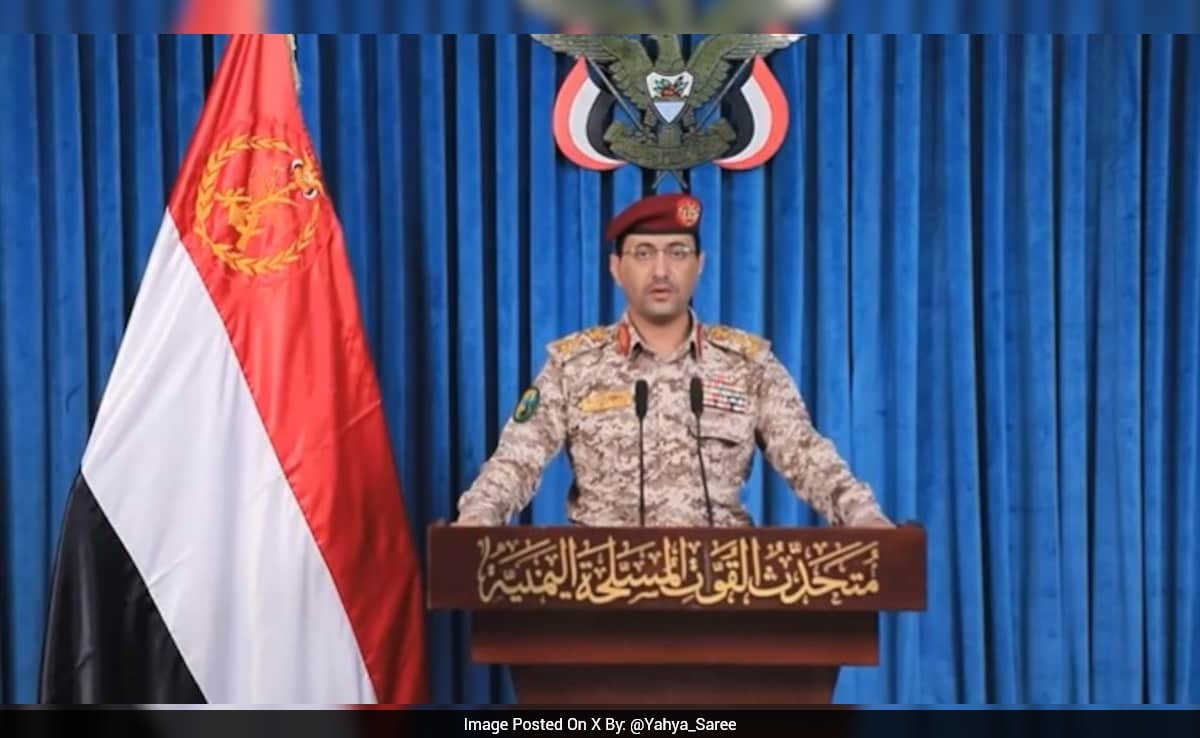
The news cycles call it the "third joint missile operation." It sounds clinical. It sounds like a line item in a corporate ledger. In reality, it is a symphony of fire and guidance systems launched by the Houthi movement, targeting the port of Eilat with a persistence that defies the sheer geographic distance. This isn't just about ballistics; it is about the shrinking of the world.
The Geography of a Grudge
To understand why a group in the southern tip of the Arabian Peninsula is obsessed with a small Israeli resort town, you have to look past the maps and into the mechanics of modern leverage. Yemen is a land of jagged peaks and deep history, currently home to one of the most resilient insurgent-turned-governing forces in the Middle East. For the Houthis, every missile launched is a message sent through a very specific medium: the Bab el-Mandeb Strait.
Imagine a needle’s eye. That is the strait. Nearly ten percent of the world’s maritime trade squeezes through that gap. When the Houthis claim a "joint operation," they aren't just talking about their own internal divisions working together. They are signaling a deepened coordination with what they call the "Islamic Resistance in Iraq." This is a bridge of intent that spans across the heart of the Middle East, bypassing traditional borders to strike at a singular point of pressure.
The tech behind these strikes isn't primitive. We are talking about long-range drones and cruise missiles that navigate via satellite, skimming the waves or hugging the terrain to avoid the watchful eyes of multi-billion dollar radar systems. It is a David and Goliath story where David has figured out how to make his stones fly at supersonic speeds.
The Invisible Toll at the Port
In Eilat, the impact isn't always measured in craters. It is measured in the absence of sound. The cranes at the port, which once swung with the rhythmic certainty of an industrial heartbeat, now stand still more often than they move. Shipping companies are faced with a choice that feels like a relic of the 19th century: brave the Red Sea and risk a drone strike, or sail around the entire continent of Africa.
The "Cape of Good Hope" route adds ten days to a journey. It burns millions of dollars in extra fuel. It delays the arrival of everything from car parts to grain. When the Houthis claim a successful operation, they are effectively taxing every consumer on the planet. They have found a way to turn the global supply chain into a nervous system, and they are pinching a nerve.
Consider the sailor on a merchant vessel. A hypothetical engineer named Elias, perhaps, who has spent twenty years on the water. He isn't a soldier. He’s a man who misses his daughter’s birthdays and drinks too much instant coffee. Now, his morning shift includes scanning the horizon for a gray shape that doesn't belong. He knows the ship’s hull is thin. He knows that a "joint operation" in a far-off desert means his workplace has become a front line. This is the human cost of the headline—the slow-burning anxiety of thousands of civilians caught in a geopolitical crossfire.
A Coalition of Dust and Silicon
The Houthis’ recent claims suggest a shift in strategy. By collaborating with Iraqi factions, they are attempting to create a pincer effect. It is a "swarm" mentality applied to regional politics. One missile might be intercepted by the Arrow defense system—an incredible feat of engineering that catches a bullet with a bullet in the vacuum of space—but a dozen missiles from different directions create a different kind of math.
The Israeli defense response is a marvel of physics.
The Arrow 3 is designed to intercept ballistic missiles outside the atmosphere. It is the pinnacle of "high ground" technology. Yet, there is a fundamental imbalance at play. A Houthi drone might cost twenty thousand dollars to assemble in a hidden workshop. The interceptor missile used to destroy it can cost millions. This is the "asymmetric" trap. The Houthis don't need to destroy Eilat to win; they only need to make the cost of defending it unsustainable.
The desert in Yemen is hot, dry, and unforgiving. It seems like the last place on earth that would dictate the price of electronics in London or the availability of fruit in Tel Aviv. But the Houthis have mastered the art of the long-distance reach. They have used the silence of the desert to mask the roar of their engines.
The Echo in the Air Raid Siren
There is a specific sound that defines life in a targeted city. It isn't the explosion; it’s the climb of the siren. It is a mechanical wail that strips away the pretenses of modern life. In Eilat, that sound has become a recurring character in the city’s story. It interrupts dinners, halts school lessons, and freezes the movement of tourists on the beach.
The Houthis state their motive clearly: the operations will continue as long as the conflict in Gaza persists. This ties the fate of a Red Sea port to the rubble of a Mediterranean enclave. It creates a chain of cause and effect that defies traditional diplomacy. When the "third joint operation" was announced, it wasn't just a military update. It was a declaration that the regional map has been redrawn by technology.
Distance used to be a shield. Mountains and seas were barriers that protected civilizations from the grievances of their neighbors. That shield is gone. We live in an era where a group with a focused ideology and a modest budget can project power across a continent. The Houthis are proving that you don't need a traditional air force to dominate the skies. You just need enough persistence to keep the sirens wailing.
The Weight of the Next Horizon
The international community watches the Red Sea with a mixture of frustration and impotence. Naval task forces with names like "Operation Prosperity Guardian" patrol the waters, but the drones keep coming. It is like trying to swat mosquitoes with a sledgehammer. You might hit one, but the swarm is vast, and the swamp that produces them remains untouched.
What happens when the "third" operation becomes the thirtieth? The "joint" nature of these attacks suggests a learning curve. Each launch is a data point. Each interception is a lesson for the attackers on how to tweak their guidance software or change their flight paths. They are iterating in real-time, treating a conflict like a software update.
The real tragedy isn't just the potential for a direct hit. It is the normalization of the threat. It is the way the world slowly adjusts to the idea that international waters are no longer international, and that a vacation town can become a target for a war it isn't fighting.
The silence of the Gulf of Aqaba is a lie. Beneath it, and above it, there is a constant, invisible struggle. It is a struggle between the old world of borders and the new world of blurred lines. The Houthis, standing on the sun-scorched earth of Yemen, have realized that they don't need to win a war in the traditional sense. They only need to ensure that the silence never feels safe again.
As the sun sets over the Red Sea, the water turns from purple to black. The lights of Eilat flicker on, defiant against the dark. Somewhere in the distance, a radar screen sweeps a green line across a void, searching for a ghost. The desert is long, the mountains are high, and the horizon is no longer a limit. It is a launchpad.


