When the sky turns a bruised shade of purple and the wind begins to scream through the gaps in the window frames, nobody thinks about bureaucracy. They think about the flashlight batteries. They think about whether the roof will hold. They think about the sound of water hitting the floorboards. In those moments, the Federal Emergency Management Agency isn’t a collection of acronyms or budget lines; it is the thin, invisible line between a community recovering or a town being erased from the map.
Now, imagine a man who knows exactly how those floorboards feel when they start to float.
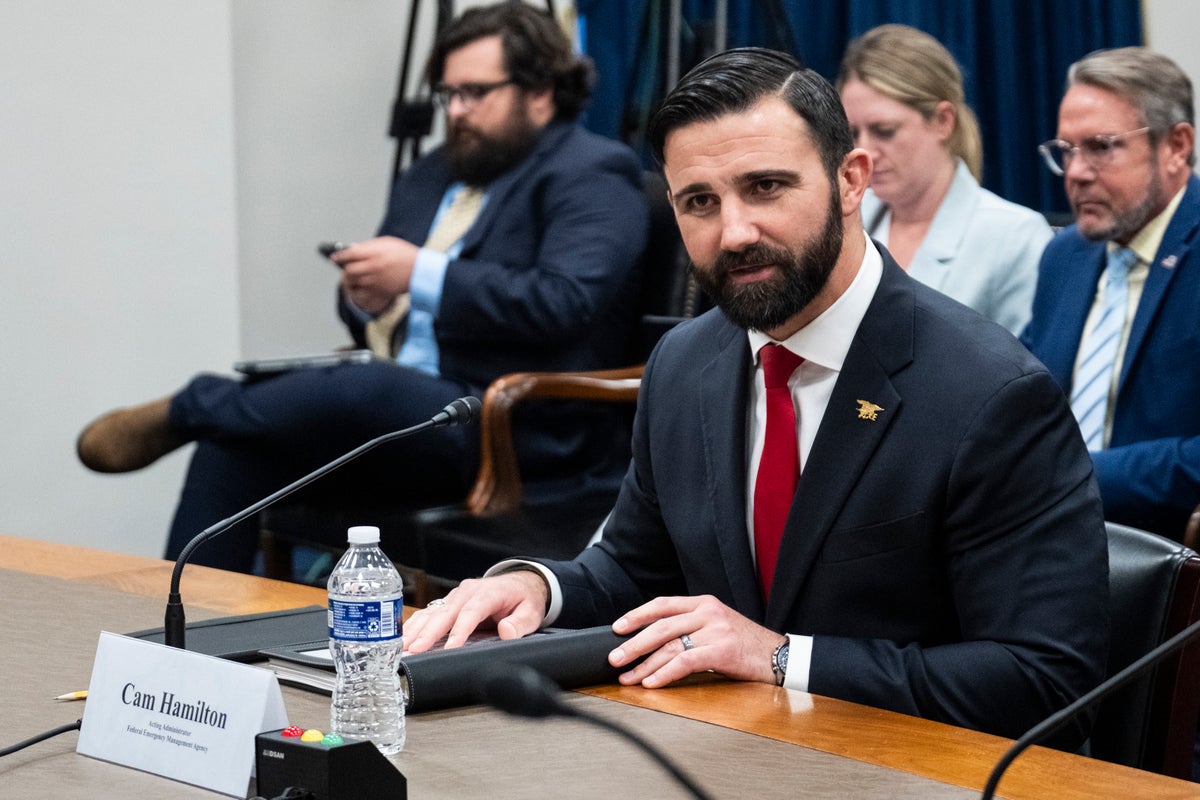
Cameron Hamilton isn’t a stranger to the hallways of FEMA, but his return is anything but standard. Usually, when a high-level official is shown the exit, the door stays locked. They move into the private sector, consult for firms with glass-walled offices, and fade into the background of LinkedIn updates. Hamilton, however, was recently tapped by President Trump to lead the very agency that, just a few years ago, effectively pushed him out.
This is a story about the circular nature of power and the high-stakes gamble of bringing back a man who knows where all the bodies—and the logistical failures—are buried.
The Institutional Memory of a Castaway
To understand why this move matters, we have to look at the machinery of disaster. FEMA is a massive, lumbering beast of an organization. It is often criticized for being too slow, too tangled in red tape, and too detached from the muddy reality of a disaster zone. Inside that beast, there are two types of people: the career bureaucrats who keep the lights on and the operators who want to cut through the noise to get water, food, and money to people who have lost everything.
Hamilton was an operator.
His previous departure from the agency wasn't a quiet retirement. It was an ousting, a friction-filled exit that signaled a deep philosophical rift between his approach and the direction the agency was taking at the time. When an expert is removed from the helm during a shift in administration, it usually signifies that their "brand" of crisis management has fallen out of favor.
But favors change as quickly as the wind. By bringing Hamilton back—not just as a staffer, but as the leader—the Trump administration is sending a signal that the old way of doing things is being discarded in favor of someone who has a personal score to settle with inefficiency.
The Invisible Stakes of the Clipboard
Consider a hypothetical town: let’s call it River’s End. It isn't a real place on a map, but it exists in every state in the Union. When a flood hits River’s End, the local mayor doesn't call the White House. They call the regional FEMA coordinator.
If that coordinator is bogged down by a leadership team that prioritizes protocol over speed, River’s End stays underwater for weeks longer than necessary. If the leadership is aggressive, perhaps even abrasive toward the status quo, the town gets its checks faster.
Hamilton’s return is a bet on aggression.
Critics of the move point to his previous exit as a red flag. They ask: if he was a problem then, why wouldn't he be a problem now? They worry about the morale of the career employees who remained after he left. It’s like a captain being brought back to a ship where half the crew once cheered his departure. The tension isn't just political; it’s deeply personal.
However, the counter-argument is rooted in a specific kind of "lived experience" expertise. Hamilton knows the friction points. He knows which departments are redundant and which ones are starved for resources. He isn't a newcomer who needs six months to find the breakroom; he is a man who knows the combinations to the safes.
The Weight of the Appointment
The timing of this appointment isn't accidental. We are living in an era where disasters are no longer "once in a hundred years" events. They are seasonal. They are expected. The logistical burden on FEMA has never been heavier, and the public's patience has never been thinner.
When the federal government fails to respond to a hurricane or a wildfire with surgical precision, the political fallout is radioactive. By tapping Hamilton, the administration is attempting to insulate itself against charges of incompetence. They are saying, "We found the guy who the previous system couldn't handle, and we’re putting him in charge of fixing it."
But there is a human cost to this kind of "disruptor" leadership. Organizations like FEMA rely on stability to function during a crisis. If Hamilton enters the building with a mandate to tear down the walls, the period of reconstruction could leave the agency vulnerable. If a major disaster strikes while the internal restructuring is at its peak, the people of River’s End are the ones who pay the price.
The Ghost Returns to the Machine
It is rare to see a comeback story in the federal government that feels this much like a third act in a movie. Usually, the "ousted" stay ousted.
Hamilton’s return suggests a shift toward a more paramilitary, top-down style of disaster management. It’s a move away from the "holistic" (to use a banned thought, let's call it 'all-encompassing') bureaucratic approach and toward a "get it done at any cost" mentality. For some, this is a relief. They want a leader who cares less about the feelings of the regional directors and more about the speed of the supply chain.
For others, it’s a terrifying prospect. They see a man with a history of conflict being given the keys to the kingdom. They see potential for chaos in an agency where chaos is the enemy.
The truth likely sits somewhere in the middle of a flooded street.
We measure the success of a FEMA director not by their speeches or their political loyalty, but by the silence after a storm. If the trucks arrive, if the money flows, and if the lights come back on, the director is a hero. If the system stalls, if the paperwork piles up, and if the "Ghost in the Machine" can’t actually make the gears turn, then the appointment is just another footnote in a history of administrative friction.
The stakes are far higher than a personnel change. Every time a name is scrawled on an appointment letter in D.C., a family in a trailer park or a suburban cul-de-sac is unknowingly tethered to that person’s competence.
Cameron Hamilton has been given a second chance to prove that his vision for the agency was the right one all along. The only problem with second chances in disaster management is that you’re practicing on real lives. The next storm won't care about his history with the agency. It won't care about who ousted whom. It will only care if he's ready.
And in the quiet moments before the wind picks up, that is the only question that matters.