Roche is effectively outgrowing its own home. While CEO Thomas Schinecker publicly laments the "punishing" strength of the Swiss franc, the reality is far more clinical. The pharmaceutical giant is executing a massive, multi-year pivot toward the United States that goes far beyond simple currency hedging. By committing $50 billion to U.S. R&D and manufacturing over the next five years, Roche is acknowledging a hard truth: Switzerland has become a luxury boutique for a company that needs a continental engine.
The math is unforgiving. In 2025, Roche grew its sales by 7% at constant exchange rates, a performance that should have signaled a blowout year. Instead, once the accountants converted those global earnings back into the surging Swiss franc, that growth shriveled to a mere 2%. For every dollar earned in its largest market—the U.S.—Roche effectively lost a chunk of the value just by bringing the money home to Basel.
The Currency Trap
The Swiss franc acts as a tax on success for companies like Roche. Because the company reports in CHF but earns the vast majority of its revenue in USD and EUR, a strong franc acts as a persistent drag on the bottom line. Schinecker has been blunt about the "currency headwind," but the deeper issue is the cost of doing business in Switzerland.
Operating in Basel means paying some of the highest salaries in the world in one of the world's most expensive currencies. When your competitors—Pfizer, Eli Lilly, and Merck—operate in a USD-denominated environment where they can match their costs to their revenues, Roche is constantly fighting with one hand tied behind its back.
The $50 billion U.S. investment is not a "bet" on America. It is a structural realignment designed to move the company’s cost base closer to its revenue base. By building massive R&D and manufacturing hubs in Indiana, Massachusetts, and California, Roche is creating a "natural hedge." If they spend dollars to make drugs that sell for dollars, the fluctuations of the Swiss National Bank become an academic concern rather than a quarterly crisis.
Why Basel is Losing the R&D War
Switzerland has long prided itself on being the world’s pharmacy, but the gravity of the biotech industry has shifted. The U.S. is no longer just the primary market for drug sales; it is the undisputed capital of the "innovation ecosystem" that Roche needs to survive.
Recent acquisitions prove the point. The $2.7 billion purchase of Carmot Therapeutics and the $7.1 billion Telavant deal were not just about buying molecules; they were about buying into U.S.-led breakthroughs in obesity and immunology. Moving 10 potentially life-changing medicines into final clinical phases in 2025—including candidates for Alzheimer’s and Parkinson’s—requires a scale of clinical trial infrastructure and talent that simply does not exist within the borders of a small Alpine nation.
The talent war is equally lopsided. A PhD in molecular biology in Boston or San Francisco is surrounded by a density of venture capital and startup energy that Basel, for all its history, cannot replicate. By promising to create 12,000 new jobs in the U.S., Roche is following the talent to the source.
The Manufacturing Exit
Perhaps the most telling sign of the shift is the commitment to export more from the U.S. than it imports. This is a fundamental reversal of the traditional Swiss model. For a century, the plan was simple: invent in Switzerland, manufacture in Switzerland, and ship to the world.
That model is broken. Supply chain risks and the threat of aggressive U.S. tariffs have made "local for local" manufacturing a strategic necessity. Roche is currently expanding facilities in Pennsylvania and Massachusetts to ensure that its most advanced biologics are produced within the trade walls of its biggest customers.
The geopolitical landscape has made global supply chains a liability. You cannot run a $60 billion company on the hope that international trade remains frictionless and the franc remains stable.
A Legacy in Peril
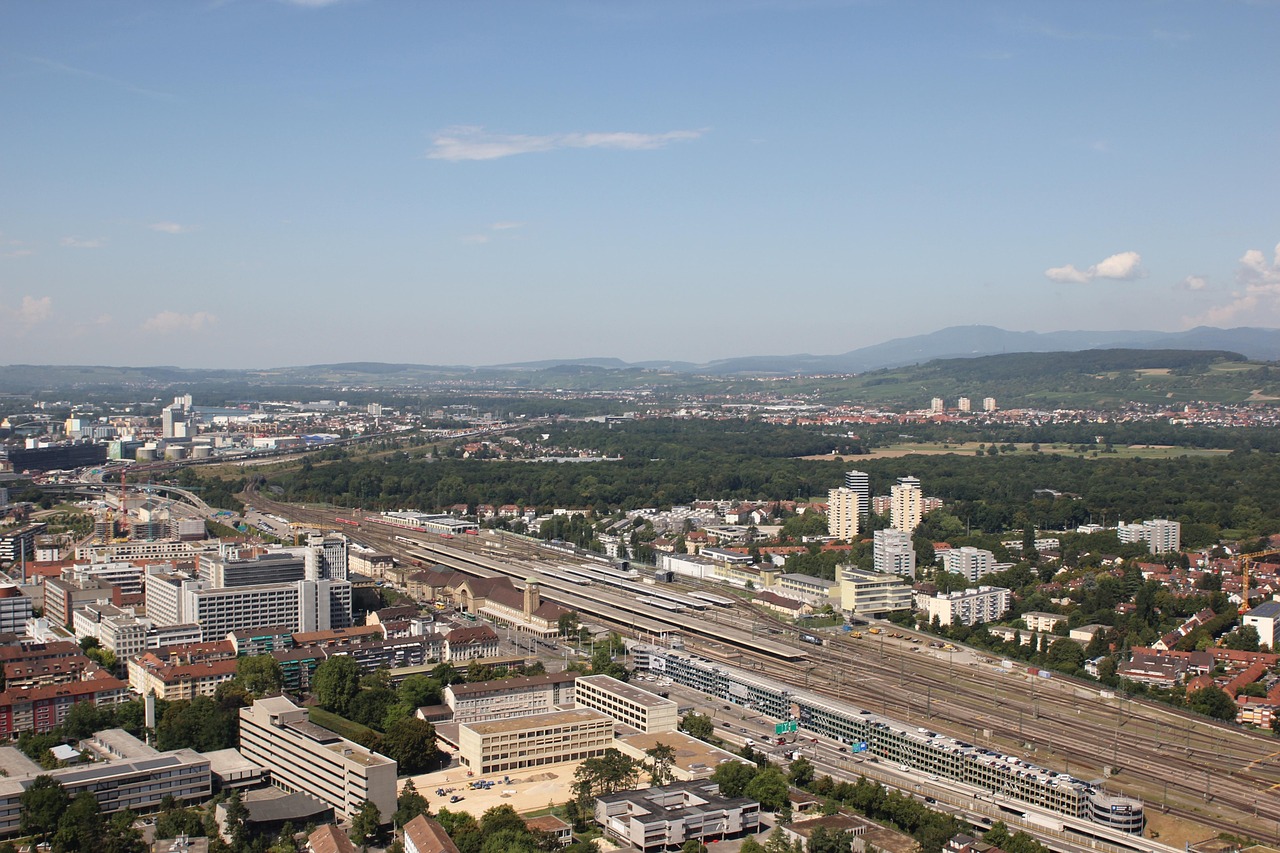
Despite the outward migration, Roche recently broke ground on a new $500 million R&D center in Basel. Schinecker calls this a "clear commitment" to Switzerland. In truth, it looks more like a high-end embassy.
The Basel headquarters will remain the emotional and administrative heart of the company, but the muscles are being built elsewhere. The board of directors is proposing its 39th consecutive dividend increase, but the margin for error is thinning. To maintain that streak, Roche must deliver on its obesity pipeline to compete with Novo Nordisk and Eli Lilly.
This competition will happen on American soil. The obesity market, expected to exceed $100 billion by 2030, is a U.S.-centric phenomenon. If Roche wants to be a "top three player" in this space, it cannot afford to be viewed as a foreign entity struggling with exchange rates. It must act, spend, and hire like an American powerhouse.
The transition is painful and expensive, but the alternative is to remain a prisoner of the Swiss franc—a currency so stable it is effectively suffocating the country’s greatest industrial icons. Roche isn't leaving Switzerland, but it is certainly moving out.
The definitive move for investors is to stop watching the SNB interest rate and start watching the construction permits in Indiana. That is where the future of the company is being built.