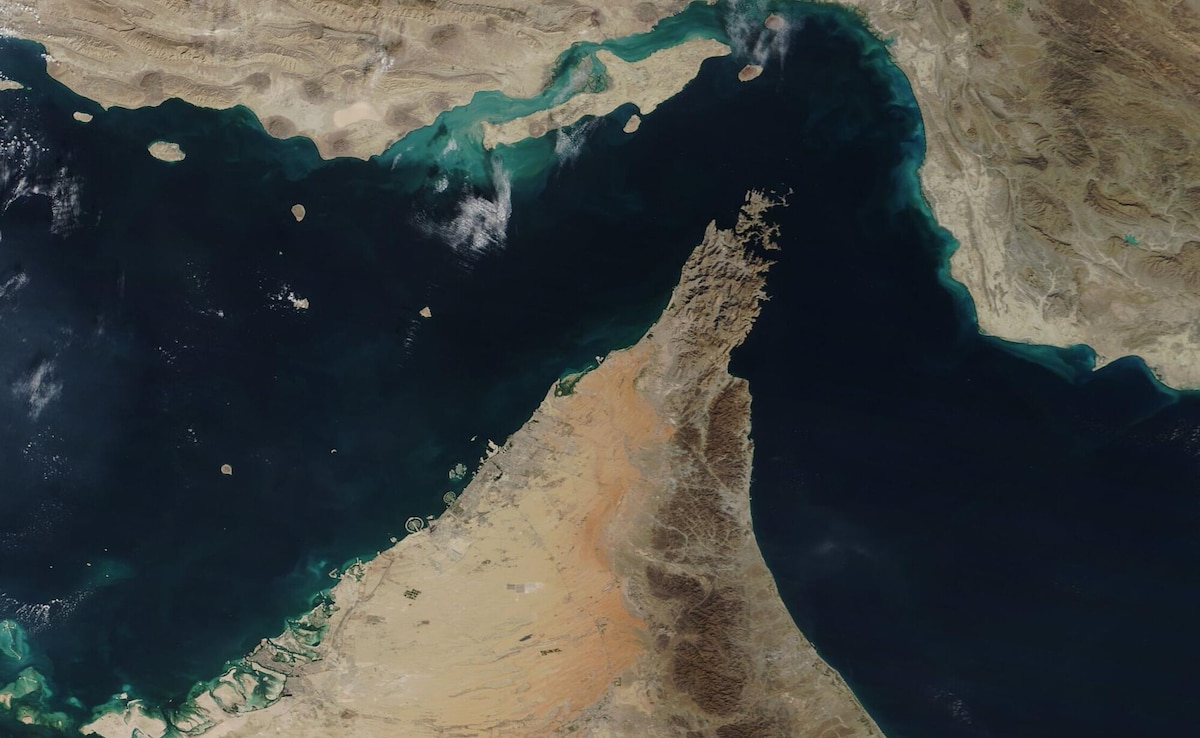
The stability of the global energy market hinges on a 21-mile-wide choke point: the Strait of Hormuz. When the UK Prime Minister signals the assembly of a 35-nation coalition to ensure the reopening and continued security of this waterway, the objective transcends simple naval escort duties. This move represents a large-scale coordination of maritime power designed to mitigate a systemic risk that, if left unaddressed, could trigger a global inflationary spiral. The effectiveness of this coalition will not be measured by the number of hulls in the water, but by its ability to manage the convergence of kinetic deterrence, electronic warfare, and the insurance mechanics of global trade.
The Calculus of Choke Point Vulnerability
The Strait of Hormuz facilitates the transit of approximately 20% of the world's total petroleum liquids and nearly 25% of global liquefied natural gas (LNG). Unlike broader oceanic routes, the narrowness of the strait dictates that deep-draft tankers must adhere to specific Traffic Separation Schemes (TSS). This geographical constraint creates a predictable target profile.
The strategic threat to this corridor is tiered:
- Kinetic Interference: The use of fast-attack craft, limpet mines, or anti-ship missiles to physically disable vessels.
- Asymmetric Denial: Utilizing Unmanned Aerial Vehicles (UAVs) and loitering munitions to create a high-risk environment for civilian crews.
- Electronic Disruption: The spoofing of Automatic Identification Systems (AIS) and GPS jamming, which forces manual navigation and increases the probability of accidental collisions in high-traffic zones.
A coalition of 35 nations seeks to distribute the operational burden of monitoring these threats. By internationalizing the response, the UK and its allies aim to shift the risk profile from a bilateral confrontation to a multilateral defense of the "freedom of navigation" principle.
The Logistics of Multilateral Interoperability
Assembling 35 nations is a logistical undertaking that introduces significant friction. The primary challenge is not a lack of hardware, but the integration of disparate Command, Control, Communications, Computers, Intelligence, Surveillance, and Reconnaissance (C4ISR) systems.
For the coalition to function as a singular deterrent, it must resolve three technical bottlenecks:
- Data Fusion Protocols: Member nations utilize different encryption standards and data links (e.g., Link 11 vs. Link 16 vs. Link 22). Establishing a Common Operational Picture (COP) requires a centralized hub capable of translating these feeds in real-time. Without this, the risk of "friendly fire" or gaps in sensor coverage increases.
- Rules of Engagement (ROE): Each sovereign nation operates under its own legal framework regarding the use of force. The coalition must establish a unified "ladder of escalation" that defines exactly when a threat—such as a shadowing drone—warrants a kinetic response.
- Sustainment and Bunkering: Maintaining a persistent presence requires advanced logistics. The coalition must secure "hub-and-spoke" supply lines from regional ports to ensure that vessels remain on station without frequent returns to home ports.
The Insurance Function and the Cost of Risk
While the military focus is on the physical reopening of the strait, the economic objective is the stabilization of "war risk" premiums. When a maritime corridor is deemed contested, the cost of shipping rises exponentially, not just due to fuel or labor, but because of the increased cost of hull and machinery insurance.
The mechanism is direct: as the perceived probability of seizure or damage rises, Lloyd’s Joint War Committee (JWC) may expand the list of "listed areas." This forces shipowners to pay additional premiums for every transit. If these premiums become prohibitive, shipping companies will divert vessels, even if the strait is technically "open."
The 35-nation coalition acts as a non-commercial underwriter. By providing state-sponsored escorts and surveillance, the coalition reduces the actuarial risk for private insurers. The goal is to drive the risk premium back toward baseline levels, ensuring that the cost of energy at the pump or the factory gate remains linked to supply and demand rather than geopolitical friction.
Strategic Asymmetry: Drones and Cyber Latency
Traditional naval doctrine emphasizes the power of the Carrier Strike Group (CSG). However, in the confined waters of the Strait of Hormuz, high-value assets face the "swarming" problem. Low-cost, autonomous systems can be deployed in numbers that overwhelm the fire-control channels of modern destroyers.
The coalition’s technological superiority is being tested by the cost-curve of modern warfare. A $2 million interceptor missile used to down a $20,000 drone is an unsustainable economic trade. Therefore, the coalition is likely prioritizing directed-energy weapons (DEW) and advanced electronic warfare (EW) suites to neutralize threats at a lower cost-per-kill.
This shift moves the conflict from a battle of ballistics to a battle of the electromagnetic spectrum. Success depends on the ability to jam the control frequencies of hostile assets without disrupting the navigation systems of the very tankers the coalition is protecting.
The Geopolitical Signaling of the "35"
The specific number of 35 nations is a calculated diplomatic signal. It suggests a coalition that extends beyond the traditional Western alliance (NATO) to include regional partners and emerging economies that are the primary consumers of Persian Gulf energy.
This broad participation serves to:
- Legitimize Interventions: High-seas operations are governed by the United Nations Convention on the Law of the Sea (UNCLOS). A broad coalition argues that their actions are not a violation of sovereignty but a defense of international law.
- Isolate Adversaries: When 35 nations act in concert, any attempt to close the strait is framed as an act of aggression against the global community, rather than a specific regional rival.
- Distribute Financial Burden: The operational cost of a sustained naval presence is immense. Sharing the cost of fuel, maintenance, and personnel allows for a longer-term deployment that single nations could not sustain indefinitely.
Structural Constraints of the Coalition Model
Despite the projected strength, multi-national maritime task forces face inherent limitations. The "lowest common denominator" effect often plagues such groups, where the mission is limited by the most cautious member's ROE. Furthermore, the presence of 35 different navies increases the risk of "signal noise" where conflicting commands or misidentified radar returns lead to tactical errors.
The coalition also faces the "shadow fleet" problem. Thousands of tankers operate under flags of convenience with opaque ownership structures. Protecting these vessels, which may be actively trying to avoid international sanctions or oversight, complicates the mission profile. The coalition must decide if its protection extends to every hull in the water or only those that comply with specific transparency standards.
The Shift Toward Persistent Autonomous Surveillance
The future of the Hormuz mission lies in the transition from manned patrols to persistent autonomous surveillance. The deployment of Unmanned Surface Vessels (USVs) and long-endurance High-Altitude Pseudo-Satellites (HAPS) allows the coalition to maintain "eyes on" the strait 24/7 at a fraction of the cost of a destroyer.
These systems provide:
- Early Warning: Detecting small-craft launches from coastal installations minutes before they reach the shipping lanes.
- Persistent Monitoring: Tracking the movement of limpet mine layers or fast-attack boats over days rather than hours.
- Risk Mitigation: Reducing the number of sailors in the "kill zone" of coastal batteries.
The strategic play is to move from a reactive posture—where ships respond to an incident—to a predictive posture. By using AI-driven pattern recognition on maritime traffic data, the coalition can identify anomalies that precede an attack.
The Strategic Recommendation for Energy Markets
Market participants should view the formation of this 35-nation coalition not as a guarantee of peace, but as a commitment to manage the volatility of the strait. The presence of the coalition does not eliminate the risk of "gray zone" activities—incidents that fall below the threshold of open war but still disrupt trade.
The final strategic move for global energy security is the accelerated diversification of transit routes. While the coalition secures the water, the long-term solution is the expansion of overland pipelines that bypass the strait entirely, such as the East-West Pipeline in Saudi Arabia and the Habshan–Fujairah pipeline in the UAE. The 35-nation coalition buys the time necessary for these structural shifts to occur, acting as a tactical bridge to a more resilient energy infrastructure.