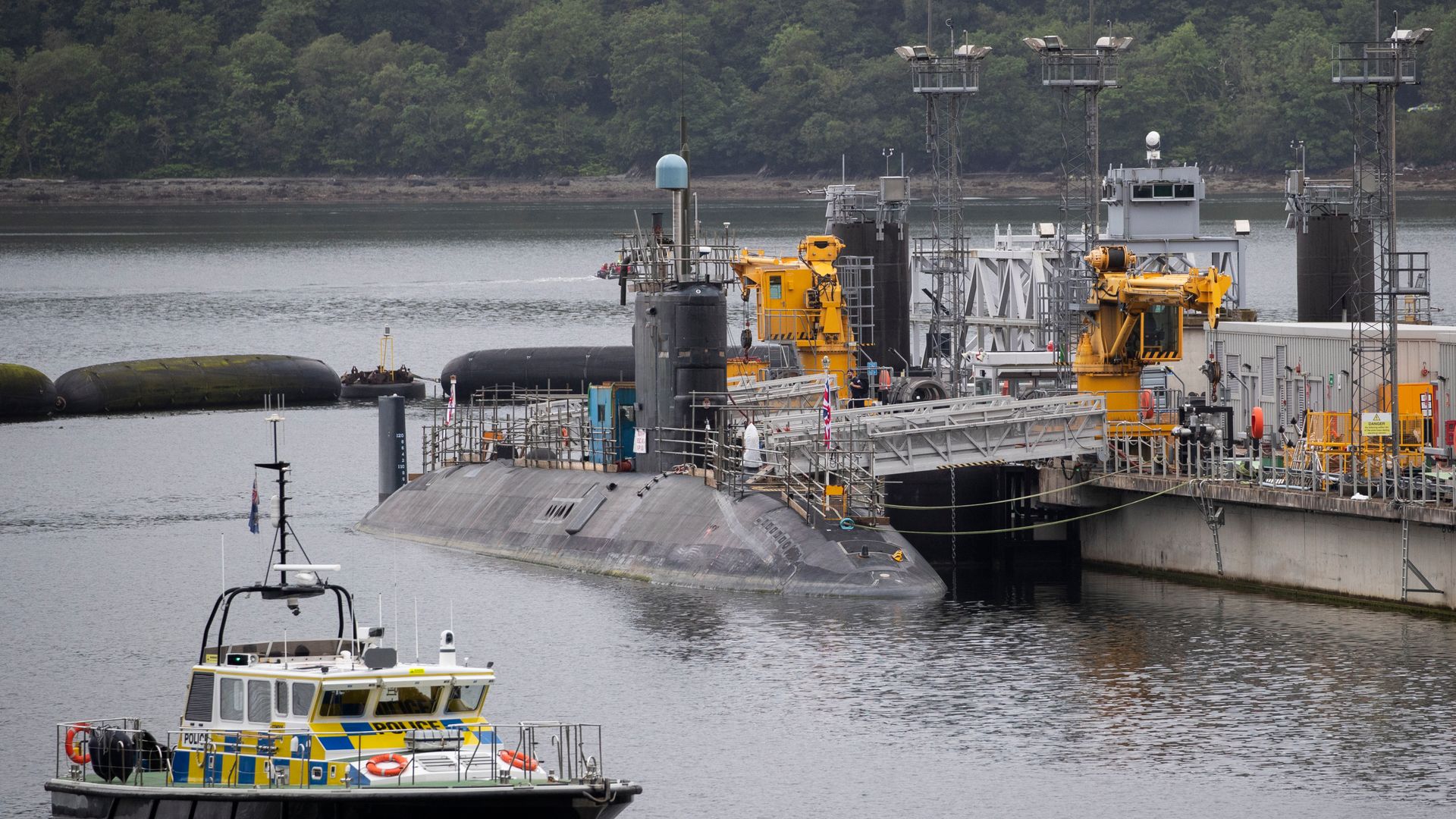
National security is only as strong as the person holding the clipboard at the front gate. When news broke that a man and a woman were arrested after trying to enter HMNB Clyde, the home of Britain's nuclear deterrent, it didn't just rattle the local Ministry of Defence Police. It exposed a terrifyingly simple reality. Even the most sensitive military installations in the world are vulnerable to basic human error or bold, low-tech intrusion attempts.
You'd think a base housing Vanguard-class submarines armed with Trident II D5 missiles would be an impenetrable fortress. It's not. Security at Faslane and Coulport relies on layers of fencing, biometric checks, and armed patrols, but the perimeter is where the most unpredictable variables live. This recent incident near Helensburgh involves a 30-year-old man and a 25-year-old woman who allegedly tried to talk or force their way into a zone where the UK stores its most lethal hardware.
The Faslane security gap is more than a fence problem
HMNB Clyde isn't just a workplace for sailors. It's a massive industrial and military complex tucked into the Gare Loch. The geography itself is a nightmare for security. You have steep hills on one side and deep water on the other. This makes the entry points—the gates—the absolute focal point of any security strategy.
When these two individuals were detained, the Ministry of Defence (MoD) remained tight-lipped about their motives. Were they protesters? Lost tourists? Or something more sinister? In the world of high-stakes intelligence, it almost doesn't matter. The fact that they got close enough to trigger an arrest proves that the "outer ring" of security is constantly being tested.
The MoD Police (MDP) handle the primary security for the base. They aren't your average street cops. They're specialized, carry carbines, and are trained specifically for counter-terrorism. If you're arrested by them at the gate of a nuclear base, you haven't just taken a wrong turn. You've hit a tripwire that's designed to stop state-level actors.
Why people keep trying to get inside nuclear sites
It's easy to dismiss gate-crashers as "crazy" or "uninformed." That's a mistake. Over the last decade, we've seen a surge in different types of people trying to penetrate UK military sites.
First, you have the peace activists. Groups like Faslane Peace Camp have been a permanent fixture since the 1980s. They view the base as an immoral site. Their "intrusions" are often symbolic—cutting a fence or sitting in the road to cause a PR headache. They want to get caught.
Then you have the "urban explorers" and social media clout-chasers. This is a newer, more annoying breed. They think "sneaking into a secret base" will get them a million views on TikTok. They don't realize that the MDP doesn't have a sense of humor about trespassing under the Protected Sites Act.
Finally, there's the genuine threat of foreign intelligence. Adversaries don't always send James Bond. They send "low-level" scouts to test response times. How long does it take for the gates to lock down? How do the guards react to a civilian car? This recent arrest fits a pattern of "probing" that keeps the Royal Navy on high alert.
The reality of the Trident submarine fleet
The submarines at HMNB Clyde are the "Continuous At Sea Deterrent" (CASD). At any given moment, at least one of these boats is hiding in the Atlantic. They carry enough firepower to end civilizations. Because of this, the base isn't just a Scottish naval port. It's a primary target for every major power on earth.
When a breach happens, the protocol is instant. Everything stops. The base goes into a "black" status. This isn't just about protecting the subs; it's about protecting the nuclear warheads stored at nearby RNAD Coulport. If someone gets inside that perimeter with a camera or a device, the intelligence leak could be catastrophic.
What the law says about your "wrong turn"
If you find yourself at the gates of Faslane, don't expect a polite "move along." The base is protected under Section 128 of the Serious Organised Crime and Police Act 2005. This makes it a criminal offense to even be on the site without permission.
- You can be detained without a warrant.
- Your vehicle and electronics can be seized immediately.
- You face up to 51 weeks in prison or a heavy fine.
The man and woman arrested in this latest incident are facing the full weight of this legislation. The police aren't just looking for a motive; they're sending a message. In an era of heightened global tension, there's no such thing as an "accidental" breach of a nuclear site.
Fixing the human element of military security
We spend billions on sonar, hull integrity, and missile guidance. But we often underfund the human side of the gate. Security guards get tired. They get bored. They see thousands of cars a day. A clever intruder relies on that boredom.
The MOD needs to stop relying on just physical barriers. We need better AI-driven behavioral analysis at the perimeter. If a car approaches the gate and the driver's heart rate or eye movement looks off, the system should flag it before they even reach the guard shack.
What you need to do now
If you live near a military installation or work in a sensitive industry, don't be a passive observer. The "See It, Say It, Sorted" mantra is a cliché because it works. Most successful breaches are preceded by "reconnaissance."
Keep an eye out for people taking photos of gate layouts or security patrols. If you're driving near Helensburgh or the A811, stay alert. Report drone sightings immediately. Drones are the new frontline of base security, and the UK's current jamming tech isn't always active for civilian-grade quadcopters.
Don't assume the guys with the guns have everything under control. Security is a collective effort. The moment we get complacent is the moment a "minor arrest" becomes a national tragedy.
Stop thinking about security as a wall. Think of it as a process. If you see someone acting weird near the wire, call it in. Better to be the person who reported a false alarm than the one who watched a breach happen from the sidelines.