The Balochistan Liberation Front (BLF) recently coordinated a series of highway blockades and checkpoint seizures that paralyzed transit across multiple districts, signaling a sophisticated shift in insurgent capabilities. This is no longer a localized skirmish. By effectively severing the M-8 motorway and the N-30 highway, the BLF demonstrated it can dictate the flow of movement across the most resource-rich yet volatile province in Pakistan. These operations targeted the CPEC (China-Pakistan Economic Corridor) supply routes, hitting the state where it is most economically sensitive.
The state’s response has been a mix of media blackouts and reactive troop movements, but the reality on the ground suggests a massive intelligence failure. When insurgents can hold a main artery for hours, searching vehicles and vetting passengers against "target lists," the illusion of government control evaporates. This isn't just about militancy; it is about the collapse of the administrative vacuum in the periphery.
The Mechanics of the Blockade
Insurgents are no longer relying on hit-and-run tactics alone. In the recent surge of activity across Awaran, Kech, and Panjgur, the BLF deployed "flying checkpoints." These are mobile, heavily armed units that take over existing government infrastructure or establish new nodes at strategic bottlenecks.
They don't just stop cars. They conduct forensic audits of the passengers. Using handheld devices and pre-compiled databases, they identify undercover security personnel or "informants." This level of organizational discipline suggests a command structure that has matured far beyond the tribal raiding parties of the early 2000s. They are mimicking the state's own surveillance apparatus to undermine it.
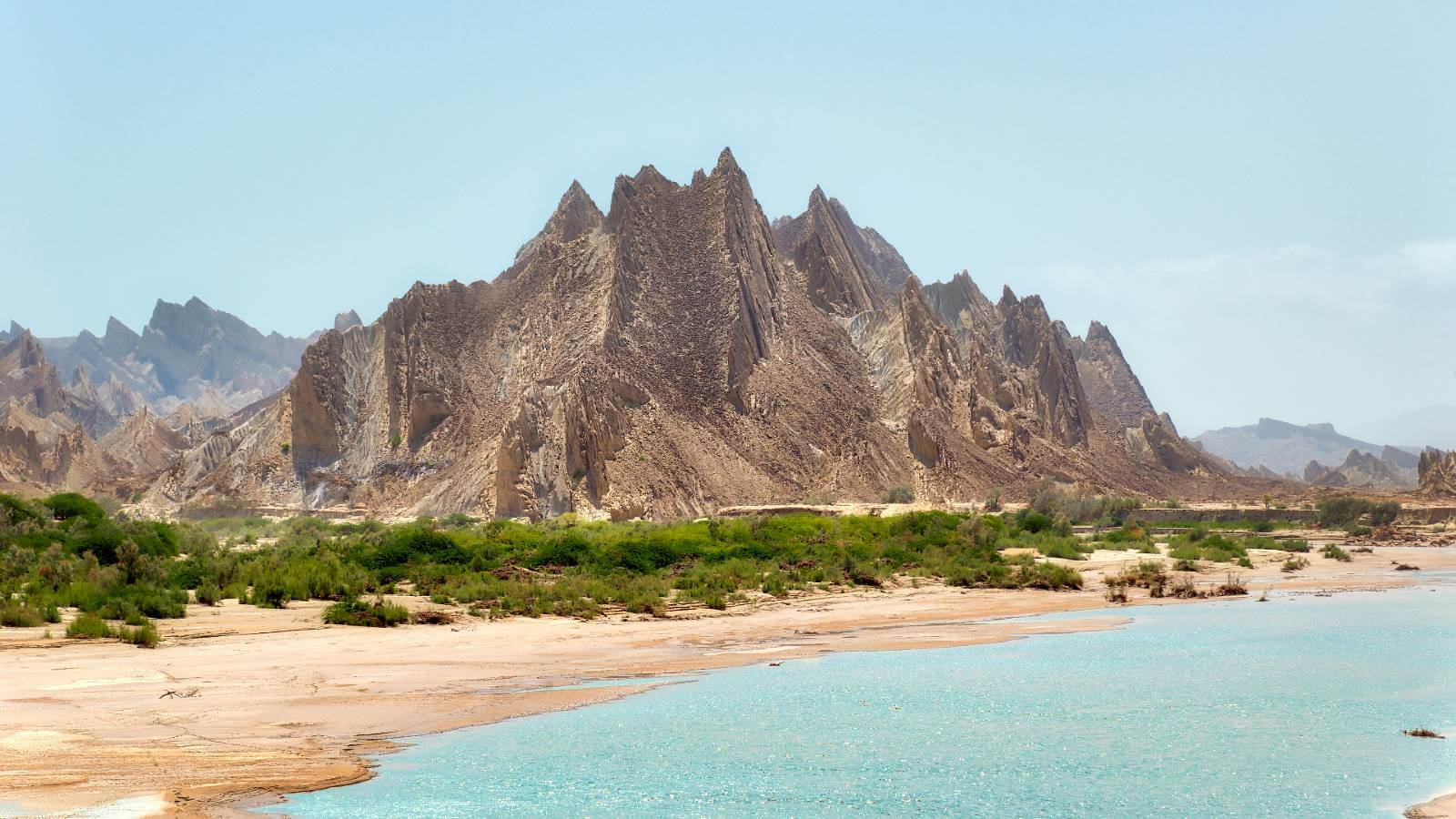
The geography of Balochistan works in their favor. The terrain is a nightmare for conventional logistics. For every kilometer of asphalt the government lays, there are ten thousand square kilometers of jagged, unpoliceable rock. When the BLF seizes a point on the M-8, they aren't just blocking a road; they are cutting a vein. The M-8 is the "central' link of the CPEC project, intended to connect Gwadar to the rest of the country. If the road isn't safe, the project is dead.
The Intelligence Void
Why didn't the Frontier Corps see this coming? The answer lies in the breakdown of the traditional "human intelligence" networks. For decades, the Pakistani state relied on local intermediaries—sardars and influential tribesmen—to keep the peace and provide warnings.
That system is broken.
The younger generation of Baloch militants is often educated, urbanized, and fiercely ideological. They have bypassed the traditional tribal leadership, whom they view as collaborators. Consequently, the military finds itself operating in a blind spot. They are fighting an invisible enemy that enjoys, if not active support, then at least the silent acquiescence of a population weary of being caught in the crossfire.
The BLF’s ability to seize checkpoints also points to a morale crisis within the lower ranks of the paramilitary forces. Many of these outposts are manned by poorly paid recruits from other provinces who have no stake in the local soil and a deep-seated fear of the mountain-dwelling snipers. When a hundred armed insurgents descend on a remote post, surrender or tactical withdrawal becomes the only logical choice for a sergeant who hasn't seen his family in six months.
Economic Sabotage as a Grand Strategy
The targeting of the N-30 and M-8 highways is a deliberate attempt to make the cost of Chinese investment too high to bear. Beijing is notoriously risk-averse. While the Pakistani government promises "foolproof security," the sight of burning trucks and insurgent flags flying over national highways tells a different story.
We are seeing a shift from "symbolic" attacks to "structural" sabotage. In the past, a small IED on a railway track was the norm. Today, it is the systematic seizure of the logistics chain. By controlling the roads, the BLF controls the economy of the province. They can tax local traders, starve government garrisons of supplies, and humiliate the security forces on a global stage.
The CPEC Bottleneck
The China-Pakistan Economic Corridor is often described as a "gift" to the region, but in the coastal and interior districts of Balochistan, it is viewed as an extraction tool. This perception is the BLF's most potent weapon. They frame their blockades as "reclaiming the land."
When they stop a convoy, they aren't just looking for soldiers. They are looking for heavy machinery, coal trucks, and minerals destined for export. By halting these shipments, they demonstrate that the state cannot fulfill its end of the bargain with international partners. This creates a diplomatic friction point between Islamabad and Beijing that is arguably more damaging than the kinetic attacks themselves.
The Failure of the Kinetic-Only Approach
For twenty years, the strategy has been the same: more boots, more checkpoints, more sweeps. It hasn't worked. In fact, the proliferation of static checkpoints has provided the BLF with a target-rich environment. A fixed checkpoint is a sitting duck. It is an invitation for an ambush.
The insurgents have learned to use "swarm" tactics. They move in small, decentralized cells that converge on a single point for a high-impact operation, then vanish back into the civilian population or the mountains before air support can arrive. The Pakistani military's reliance on heavy hardware and slow-moving convoys makes them predictable.
Furthermore, the "disappearances" and extrajudicial measures used to quell the uprising have only served as a recruitment tool for the BLF. Every time a young man vanishes in Quetta or Turbat, three more take his place in the mountains. The insurgency is now self-sustaining, fueled by a deep sense of historical grievance that no amount of asphalt can pave over.
The Information War
The BLF has also mastered the digital front. Within minutes of a highway seizure, high-definition photos and videos are circulating on encrypted apps and social media. They are winning the narrative war by showing the world that the Pakistani state is a "paper tiger" in the hinterlands.
The government’s response is usually to shut down the internet in the affected districts. This is a 20th-century solution to a 21st-century problem. It doesn't stop the militants from communicating—they use satellite phones and runners—but it does alienate the local population, who are cut off from the world and left in a state of constant anxiety. The silence from the capital only amplifies the noise from the mountains.
The Regional Dimension
We cannot ignore the external factors. Balochistan sits at the crossroads of Iran, Afghanistan, and the Arabian Sea. The porous borders allow for a constant flow of weapons and personnel. While Islamabad often blames "foreign hands," specifically India’s RAW, this excuse is becoming thin. External support may exist, but it cannot thrive without a massive, home-grown reservoir of discontent.
The recent border tensions with Iran have added another layer of complexity. If the BLF can use Iranian Sistan-Baluchestan as a sanctuary, the Pakistani military's task becomes nearly impossible. Coordinating a counter-insurgency across a disputed and hostile border is a logistical nightmare that the current administration is ill-equipped to handle.
The Ground Reality in Panjgur and Kech
In districts like Panjgur and Kech, the state's presence is often limited to the main bazaar and the fortified military camps. Once you move five miles off the main road, you are in "no man's land." The BLF has established its own shadow administration in these areas. They settle land disputes, "tax" businesses, and even run basic social services.
This is the most dangerous development of all. It is the transition from a "rebellion" to a "parallel state." When the people start looking to the insurgents for justice or protection because the state is either absent or predatory, the war is already half-lost. The recent highway blockades were a public demonstration of this shadow power. They were telling the residents: "We are the ones who decide who moves and who stays."
Counter-Arguments and State Narratives
The official line from Rawalpindi is that these are "desperate acts" by a "dying" movement. They point to the number of insurgents killed in recent operations as proof of success. However, body counts are a notoriously poor metric in counter-insurgency. If the "killed" insurgents are replaced faster than they are eliminated, the strategy is failing.
There is also the argument that the CPEC projects will eventually bring enough prosperity to "buy" peace. This assumes that the conflict is purely economic. It isn't. It is about identity, autonomy, and the dignity of a people who feel they are being treated as second-class citizens in their own land. A new bridge or a power plant means nothing to someone who feels their culture is being erased and their resources stolen.
The Path to Total Gridlock
If the BLF continues to demonstrate this level of operational security and logistical reach, we are looking at the permanent "Balkanization" of Balochistan's road network. The military will be forced to move in massive, armored convoys, leaving the rest of the province to the insurgents.
The cost of securing the CPEC routes will eventually exceed the economic benefits of the projects themselves. Insurance premiums for freight will skyrocket, and international workers will refuse to go into the interior. At that point, the "corridor" becomes a tunnel—a narrow, expensive, and dangerous passage through a hostile territory.
The state needs to realize that you cannot secure a province against its own people. The highway blockades are a symptom of a much deeper rot. Until the underlying political and social grievances are addressed with genuine sincerity, the M-8 and the N-30 will remain nothing more than targets on a map.
The next time the BLF seizes a checkpoint, the question won't be how they did it, but why anyone thought they couldn't. The frontier is no longer just a line on a map; it is a battleground where the state's authority is being dismantled, one kilometer at a time.
Stop looking at the roads and start looking at the people who live alongside them.