The Kitchen Table Census
The floorboards in the community center hall in a northern town—let’s call it Ashington, though it could be any of a dozen places—creak with a specific kind of weariness. It is 10:00 PM on a Thursday. The polls have just closed. The plastic bins, stuffed with the folded hopes and frustrations of several thousand people, are being carted toward the counting tables.
For the activists in red rosettes, there is a physical sensation that precedes the official numbers. It is the feeling of a door being shut. Not slammed, exactly. Just firmly, quietly closed.
The headlines will talk about "deep losses" and "shifting moods." They will use terms like electoral volatility and demographic realignment. But if you sit in that drafty hall, you realize that politics isn't a spreadsheet. It is a series of conversations that stopped happening. When a party loses its footing in its heartlands, it isn't usually because the voters have fallen in love with the opposition. It’s because the connection has frayed until it snapped.
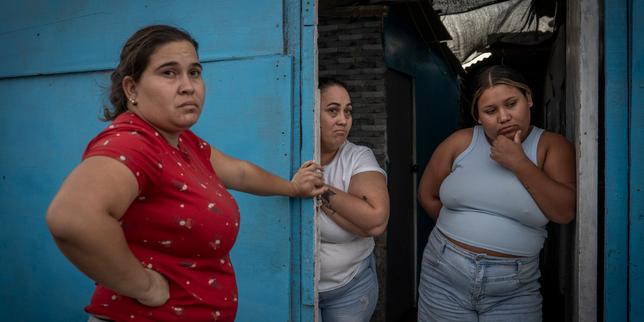
Consider Sarah. She is a hypothetical voter, but she represents a very real statistical anchor in the latest local election data. Sarah has voted Labour since she was eighteen. Her father was a shop steward; her mother worked in the local infirmary. To Sarah, the party wasn't a choice; it was a birthright. It was the movement that looked out for people who worked for a living.
This year, for the first time in three decades, Sarah stayed home. Or maybe she did something she once thought impossible: she ticked a box for a candidate she used to mock.
Why? Because the language has changed.
The political class speaks in the dialect of the university seminar. They talk about "macroeconomic stability" and "structural reform." Sarah talks about the fact that the bus to the hospital only runs twice a day now, and the dentist hasn't taken a new patient since 2019. When she hears the people she used to trust speaking a language she doesn't recognize, she stops listening. The silence that follows is what the pundits call a "shift in the public mood."
The Ghost of Certainty
Power is often held together by nothing more than habit. For a century, the Labour Party relied on the habit of the working class. That habit was a fortress. It survived economic depressions, world wars, and the upheaval of the eighties. But habits, once broken, are notoriously difficult to restart.
The latest local election results show a map that looks like a stained glass window that has been hit with a hammer. Pieces are missing. Colors are bleeding into one another. In areas where "Labour" was once whispered with the same reverence as a religious creed, the results are now a patchwork of frustration.
The mistake the party leadership often makes is assuming that voters are moving toward a specific destination. They think if they can just tweak a policy on green energy or adjust a tax bracket, the stray sheep will return. They are looking at the map, but they are ignoring the weather.
The weather is a cold, biting cynicism.
Voters aren't just changing their minds about which party they like; they are changing their minds about whether politics can solve their problems at all. When the "deep losses" occur in council seats, it hits harder because the council is where the government touches your life. It’s the bins. It’s the potholes. It’s the library that’s now a "community-led hub" that is only open four hours a week.
When a party loses these seats, they lose their nervous system. They lose the councillors who know which streets have a problem with damp and which parks are no longer safe after dark.
The Language of the Disconnected
There is a gap between the "high" politics of Westminster and the "low" politics of the high street. In London, the debate might be about the nuances of international law or the intricacies of the carbon market. In the Midlands, the debate is about why the town center looks like a set from a post-apocalyptic movie.
If you want to understand the shift in the public mood, you have to look at the shopfronts.
Every boarded-up window is a physical manifestation of a political failure. For years, the promise of the left was a collective lift—the idea that we all move forward together. But for many in the former industrial heartlands, the movement has been entirely one-way. The talent leaves. The investment stays in the south. The "levelling up" slogans become a bitter joke told over pints of lukewarm lager.
Labour’s problem in these local elections wasn't just that people didn't like their ideas. It was that people didn't believe they were for them anymore.
The party has become increasingly dominated by what some call the "graduate class." These are well-meaning, highly educated people who live in cities and care deeply about global issues. But their priorities often clash with the instinctive, localist concerns of the traditional base. One group wants to save the planet; the other wants to save the local post office. One group worries about the ethics of trade deals; the other worries about the fact that their son can’t afford a house in the town where he was born.
These aren't irreconcilable differences, but they require a bridge. Right now, that bridge is out.
The Invisible Stakes
We often treat elections like a sporting event. Who is up? Who is down? Who had a "bad night" on the BBC?
But the stakes of these local losses are human. When a council flips, or when a long-standing party loses its majority, the machinery of local life grinds. Policies that were mid-stream get cancelled. Long-term projects are shelved. The uncertainty filters down to the people who rely on those services.
But there is a deeper stake. It is the loss of the "common ground."
When the public mood shifts this dramatically, it suggests a society that is no longer talking to itself. We are retreating into silos of like-minded people. The local election results show a country that is fragmenting. The cities are becoming more radical, more progressive, and more isolated. The towns are becoming more defensive, more skeptical, and more detached.
The Labour Party used to be the thread that stitched these two worlds together. It was the coalition of the intellectual and the laborer. It was the alliance of the university and the factory floor.
When that thread snaps, the whole garment begins to unravel.
The Weight of the Ballot
If you ever get the chance to hold a ballot paper before it’s marked, you’ll notice how light it is. It’s just a slip of wood pulp. It weighs almost nothing.
But once it’s marked, it carries the weight of a person’s dignity.
The losses we saw this week were the result of thousands of people deciding that their dignity was no longer being respected by the party that claimed to represent them. It’s a quiet rebellion. It doesn’t involve barricades or shouting in the streets. It happens in the privacy of the polling booth, behind a thin curtain, with a stubby pencil.
It is the sound of a silent majority saying: "You don't see me."
The shift in mood isn't a temporary glitch. It isn't something that can be fixed with a better social media strategy or a more photogenic leader. It is a fundamental questioning of the social contract.
Voters are looking at the state of their lives—the rising costs, the crumbling infrastructure, the sense of managed decline—and they are looking for someone to blame. For a long time, they blamed the people in power. But now, they are starting to blame the people who are supposed to be the alternative.
That is the most dangerous place for an opposition party to be. When the public decides that "they’re all the same," the party of change loses its only weapon.
The Table is Being Cleared
Back in the counting hall, the sun is starting to come up. The caffeine has worn off, and the adrenaline is being replaced by a cold, sinking realization. The piles of ballots for the other candidates are taller than they should be. The red rosettes are being tucked into pockets.
The volunteers walk out into the morning air, and they see the town they’re supposed to represent. They see the early morning workers waiting for buses that might not come. They see the shutters going up on the cafes.
The mood has shifted because the reality has shifted.
The public isn't fickle. They aren't "low information" voters who have been tricked by a headline. They are people who are tired of being told that things are getting better when their own eyes tell them otherwise. They are people who are tired of being lectured by people who don't know the price of a pint of milk.
The "deep losses" are a warning. It is the sound of the tide going out.
If you stand on the beach, you can see how much ground has been lost. You can see the rocks that were once covered, now exposed and jagged. The water is a long way off.
The question isn't whether the tide will come back in. The question is whether there will be anything left on the shore worth saving when it does.
Politics is the art of belonging. When people feel they no longer belong to a movement, they don't just leave. They take their stories with them. They take their history and their loyalty and their hope. And once those things are gone, all that’s left is a cold, empty hall and the sound of someone sweeping up the discarded papers of a dream that failed to wake up in time.
The shift is real. It is human. And it is far from over.