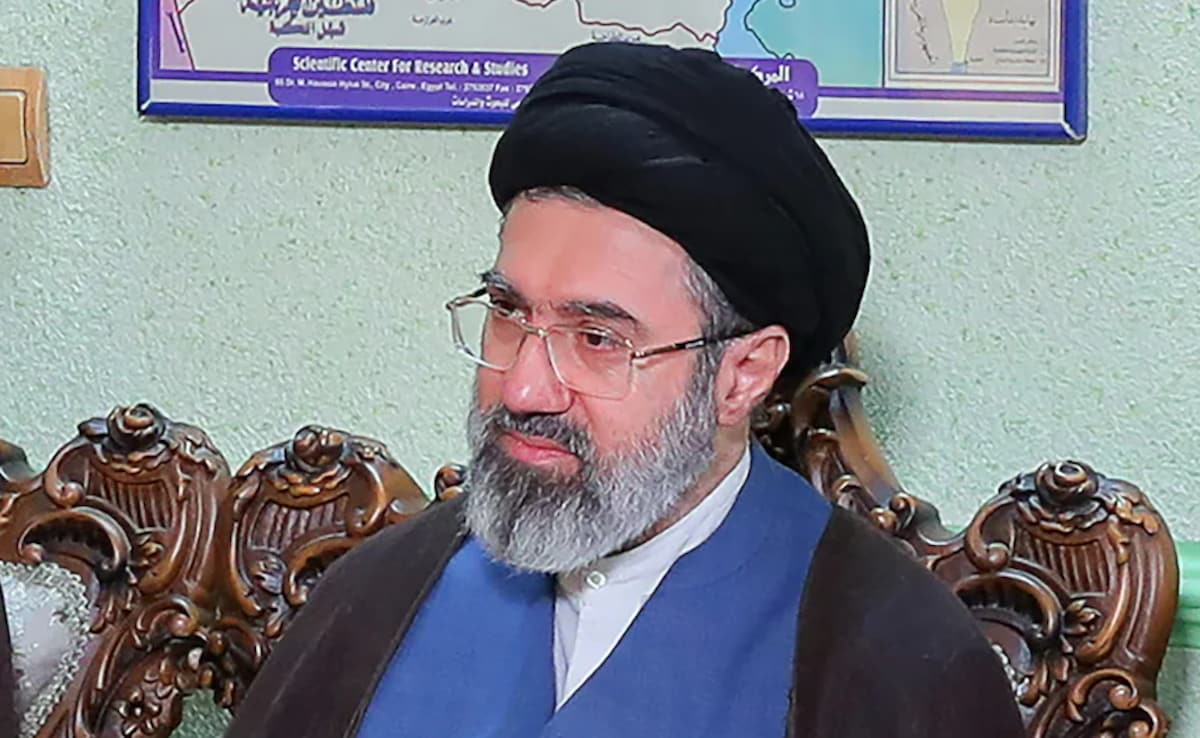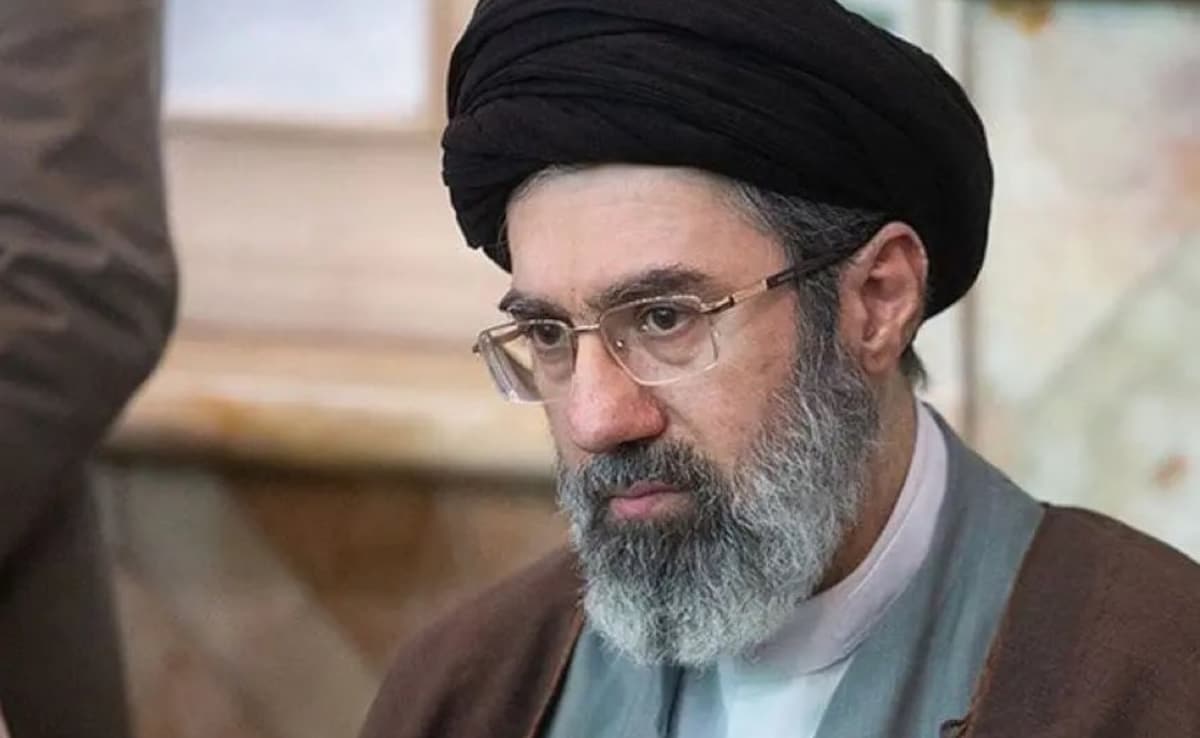
Mojtaba Khamenei is the most powerful man in Iran who does not technically exist within the government’s official organizational chart. While the world watches the public posturing of presidents and foreign ministers, the real mechanics of the Islamic Republic are lubricated by a man who holds no cabinet seat, no elected office, and until very recently, barely any religious rank. This is not an accident of history. It is a deliberate, decades-long masterclass in shadow governance designed to ensure that when the 85-year-old Supreme Leader Ali Khamenei finally departs the stage, the transition of power is not a debate, but a fait accompli.
The death of President Ebrahim Raisi in a 2024 helicopter crash did more than just trigger an emergency election. It cleared the board. Raisi was the ultimate "system man," a loyalist groomed to either succeed the Supreme Leader or provide a reliable shield for the next in line. With him gone, the spotlight—much to his chagrin—has shifted directly onto Mojtaba. To understand how he operates, one must look past the theological debates of Qom and into the brutal pragmatism of the Office of the Supreme Leader (Beit-e Rahbari). This is the nerve center where Mojtaba has spent twenty years building a parallel state that sits quietly above the regular bureaucracy.
The Architecture of Invisible Authority
Power in Tehran is often measured by proximity. In the West, we look for titles, budgets, and legislative authority. In the Iranian theocracy, those things are secondary to access. Mojtaba Khamenei has mastered the art of being the gatekeeper. By controlling who sees his father and what information reaches the top of the pyramid, he has effectively become the Chief of Staff for an absolute monarch.
This influence is not merely administrative. It is deeply financial. Through a network of bonyads—massive, tax-exempt charitable trusts—and the Execution of Imam Khomeini's Order (EIKO), the Office of the Supreme Leader controls an estimated $95 billion in assets. This is the ultimate "dark money" slush fund. Mojtaba doesn't need to be the Minister of Petroleum to move billions into the IRGC (Islamic Revolutionary Guard Corps) or to fund the regional proxies that define Iranian foreign policy. He simply needs to be the one who signs the paper that his father eventually nods at.
This is the central paradox of the Khamenei era. The more the official state—the President, the Majlis (Parliament)—struggles with inflation, corruption, and international isolation, the more the parallel state thrives. By staying in the shadows, Mojtaba avoids the blame for failed policies while maintaining total control over the resources needed to enforce them.
The IRGC Alliance and the 2009 Blueprint
Every ambitious Iranian politician knows they are nothing without the Basij and the Sepah (IRGC). Mojtaba understood this before anyone else. His defining moment came in 2009, during the Green Movement protests that followed the disputed re-election of Mahmoud Ahmadinejad. While the official government panicked and the military hesitated, it was Mojtaba who reportedly took a direct role in the crackdowns, coordinating the Basij militia units to crush dissent with medieval brutality.
That moment forged a blood pact between the Khamenei family and the security apparatus. It proved that Mojtaba was a man of the "Deep State"—a leader who would not flinch if the survival of the regime was at stake. Today, the IRGC’s top brass are not just his allies; they are his business partners and his enforcement arm. This relationship is what makes him the most credible successor.
Is he a popular choice? No. Is he a legitimate one? Even less so. The 1979 Revolution was, in part, a violent rejection of hereditary monarchy. For a son to succeed his father as Supreme Leader would be a ideological betrayal of the highest order. Yet, in the windowless rooms where the Assembly of Experts meets, ideological purity is increasingly losing ground to survival. The IRGC doesn't want a reformer or a weak cleric; they want a continuation of the status quo that keeps their smuggling routes open and their bank accounts full.
The Problem of the Turban
In the Islamic Republic, you cannot be a king without being a priest. This was the largest hurdle for Mojtaba: he was a mid-level cleric, a hojjatoleslam, lacking the credentials of an ayatollah. To sit on the throne, he needed the religious street cred that only the seminaries of Qom can provide.
The promotion to Ayatollah in 2022 was widely seen as a choreographed PR move by the state media. It was a clear signal that the clerical establishment had been brought to heel. However, the move has not been universally accepted. Senior, independent grand ayatollahs in Qom and Najaf view him with suspicion, seeing his rise as a political hijacking of the faith.
This leads us to the most dangerous period in modern Iranian history. When the elder Khamenei dies, a vacuum will open. If the Assembly of Experts attempts to bypass the popular will and install Mojtaba, the resulting explosion of public anger could dwarf the "Woman, Life, Freedom" protests of 2022. The regime would then face a choice: give in and risk a democratic collapse, or unleash a level of violence that would turn Iran into a military dictatorship in all but name.
Why the Shadow Strategy is Failing
The strategy of being an "invisible overlord" has its limits. In a country where the currency is in freefall and the population is younger and more connected than ever, the mystique of the Khamenei family is evaporating. You can’t eat a shadow. You can’t pay rent with the promise of a holy war.
Mojtaba’s great weakness is that he has never had to win a vote. He has never had to answer to a crowd. He has lived his life in the climate-controlled corridors of power, protected by the most sophisticated security detail in the Middle East. This isolation breeds a specific kind of arrogance. It assumes that because you can control the elite, you can control the street.
History is littered with the corpses of regimes that believed their own propaganda about stability. The "Silent Succession" is currently running on fumes, fueled by oil exports to China and the fear of the IRGC’s interrogation rooms. But the transition of power is the one moment where even the most rigid systems become fluid.
The real threat to Mojtaba is not a rival politician, but the very system he has helped build. By centralizing so much power in the Office of the Supreme Leader, he has made himself the target of every grievance in the country. If the lights go out in Tehran, nobody is going to blame the President. They are going to look toward the palace where the son of the Leader sits, wondering how a man who was never elected managed to become the architect of their misery.
The Geopolitical Ripple
If Mojtaba successfully takes the mantle, the world should not expect a "New Iran." He is the product of a siege mentality. His rise would likely mean a more aggressive posture in the Levant, an acceleration of the nuclear program, and a complete end to any hopes of a "Grand Bargain" with the West. He is a hardliner’s hardliner, convinced that any sign of compromise is a sign of weakness.
However, the international community has largely ignored him. We focus on the "moderates" and "pragmatists" who are trotted out for TV interviews in Vienna, while the man actually pulling the strings remains a ghost. This is a massive failure of intelligence and diplomacy. We are preparing for a chess match against a player who has already decided to flip the board.
The transition won't be a televised event with a clear winner. It will be a series of "accidents," sudden arrests of rivals, and closed-door deals in the dead of night. If Mojtaba Khamenei is to be the next Supreme Leader, he will not arrive as a conqueror; he will simply be the last man standing in a room where everyone else was too afraid to speak.
The next time you see a headline about an Iranian election or a cabinet reshuffle, ignore it. Look instead at the appointments within the Office of the Supreme Leader. Look at the promotions within the IRGC Intelligence Organization. That is where the real power lives, and that is where the future of the Middle East is being written by a man who prefers to remain a footnote until the day he becomes the entire book.
Monitor the movements of the Ammar Headquarters and the Sarallah HQ. These are the physical hubs where the shadow state meets the street. If the IRGC moves to secure the capital during a leadership transition, these are the nodes that will blink red first.