The air inside an NHL locker room hours before a Game 7 doesn’t smell like victory. It smells like wintergreen rubbing alcohol, damp leather, stale sweat, and anxiety. It is a quiet so heavy it presses against your eardrums. You can hear the distinct, rhythmic clack-clack-clack of a graphite stick tapping against concrete as a player tries to find a rhythm for his hands because his mind is spinning out of control.
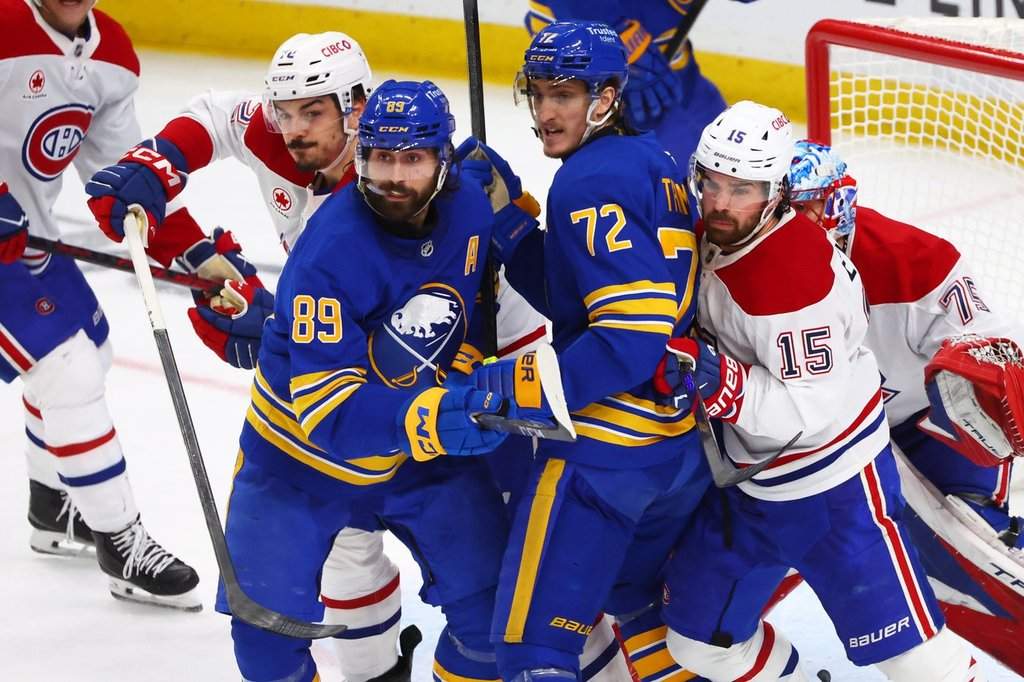
Tonight, the Montreal Canadiens face the Buffalo Sabres. One game. Sixty minutes. The winner moves on to chase the Stanley Cup; the loser goes home to pack their lives into cardboard boxes and wonder what if for the next six months. Read more on a connected topic: this related article.
To the casual observer checking a sports app, it’s just another headline. "Canadiens say 'win one' is sole focus." It sounds like a generic hockey cliché, the kind of canned response players spit out to reporters while staring at a microphone. But beneath that boring sports-page quote lies a terrifying, beautiful psychological truth. When everything is on the line, the human brain cannot handle the big picture. You have to shrink the world until it fits into the palm of your hand.
The Weight of the Logo
Playing hockey in Montreal is not like playing hockey anywhere else. In Buffalo, fans want a win. In Montreal, they expect a religion. More reporting by NBC Sports highlights similar views on this issue.
When you put on that bleu, blanc, et rouge sweater, you aren't just skating against five guys from Western New York. You are skating alongside the ghosts of Maurice Richard, Jean Béliveau, and Guy Lafleur. Twenty-four championship banners hang from the rafters of the Bell Centre like giant, silent judges. For a twenty-two-year-old defenseman or a veteran winger playing on a reconstructed knee, that history is a physical weight.
Consider a hypothetical player. Let’s call him Marc. Marc grew up in Amos, Quebec, shoveling snow off backyard rinks until his toes went numb, dreaming of wearing the Canadiens jersey. Now, he’s thirty-two. His shoulder requires a cortisone shot before every morning skate. His contract is up in July. If Montreal loses tonight, his childhood dream ends in a silent locker room, surrounded by medical tape and discarded sports drink bottles.
If Marc thinks about the historical significance of the night, his hands freeze. If he thinks about his impending free agency, his legs turn to lead. If he thinks about the millions of fans screaming at televisions from Rimouski to downtown Montreal, his chest tightens.
So, he doesn't think about any of it. He focus on his first shift. He focuses on the first hit. Win one. Just one.
The Geometry of Desperation
Hockey is a game of microscopic margins disguised as a chaotic bar fight. A puck is three inches in diameter. A goalpost is two inches wide. At ice level, the game moves at thirty miles per hour, executed on steel blades a fraction of an inch thick.
When a series reaches a seventh game, tactical systems mostly go out the window. The Buffalo Sabres know exactly what the Canadiens want to do on the power play. Montreal knows precisely how Buffalo likes to enter the zone on the rush. There are no secrets left. Six games of physical punishment have turned both rosters into a mosaic of bruises, micro-tears, and hidden fractures.
At this point, execution isn't about talent. It’s about surviving the panic.
When the puck drops, the human survival instinct tells a player to protect himself. To hesitate for a split second before stepping in front of a 95-mile-per-hour slapshot. To take the safer angle toward the boards instead of absorbing a hit to make a play. Game 7 is a war against that instinct.
The strategy the Canadiens are talking about isn't a secret breakout play. It is a mental trick. By reducing the entire season—the 82-game grind, the injuries, the media scrutiny—down to a single, isolated goal, they strip away the paralyzing fear of failure.
The Locker Room Divide
The public sees a unified team, a monolith of focus. The reality is far more fractured. A hockey team in this moment is a collection of distinct human dramas happening simultaneously.
In one corner sits the starting goaltender. He is an island. Nobody talks to him. Nobody even looks at him. He is listening to music, his eyes fixed on a spot on the floor, visualizing the trajectory of a piece of vulcanized rubber flying through a screen of bodies. If he fails, the entire city blames him. The weight of his isolation is immense.
In another corner are the rookies. They have too much energy. They joke too loudly, their laughter carrying an edge of hysteria. They haven't been broken by the league yet. They don't know enough to be terrified.
Then there are the older players. The ones who know this might be their last shot. They sit quietly, taping their sticks with obsessive precision. Every wrap of the black cloth must be perfectly overlapping. It is the only thing in their universe they can completely control.
When the coach walks in, he doesn't give a speech like the ones in Hollywood movies. There are no tears. There is no swelling orchestral music. He looks at twenty men who have bled for each other since September and says something simple. He reminds them that tomorrow does not exist.
Sixty Minutes to Decide a Legacy
The siren will wail. The crowd will erupt into a deafening, single-toned roar that vibrates through the soles of your skates. The white ice will look blindingly bright under the television lights.
For the first ten minutes, the game will be ugly. Passes will miss sticks. Players will overskate the puck because their adrenaline is pumping so hard their fine motor skills have evaporated. It will look less like poetry and more like a demolition derby.
But then, the game will settle. The exhaustion will take over, and when players are too tired to think, they will rely entirely on what they have done every day of their lives since they were five years old. Muscle memory becomes salvation.
The Sabres are young, fast, and hungry. They don't care about Montreal’s history. They want to create their own. To beat them, the Canadiens cannot play to avoid losing. They have to play with a desperate, reckless freedom.
When the final horn sounds tonight, one team will jump over the boards, throwing their gloves and helmets into the air, screaming until their throats are raw. The other team will stand frozen for a moment, looking at the scoreboard as if it made a mistake, before slowly skating toward the handshake line.
Marc will take off his helmet. He will shake the hands of the men who have spent the last two weeks trying to break his ribs. He will look at the ice, chopped up and covered in snow from sixty minutes of warfare, and he will finally know if his season is alive or dead.
Until then, the clock keeps ticking toward puck drop. The sticks keep tapping against the concrete. The world stays incredibly, terrifyingly small. Just win one.