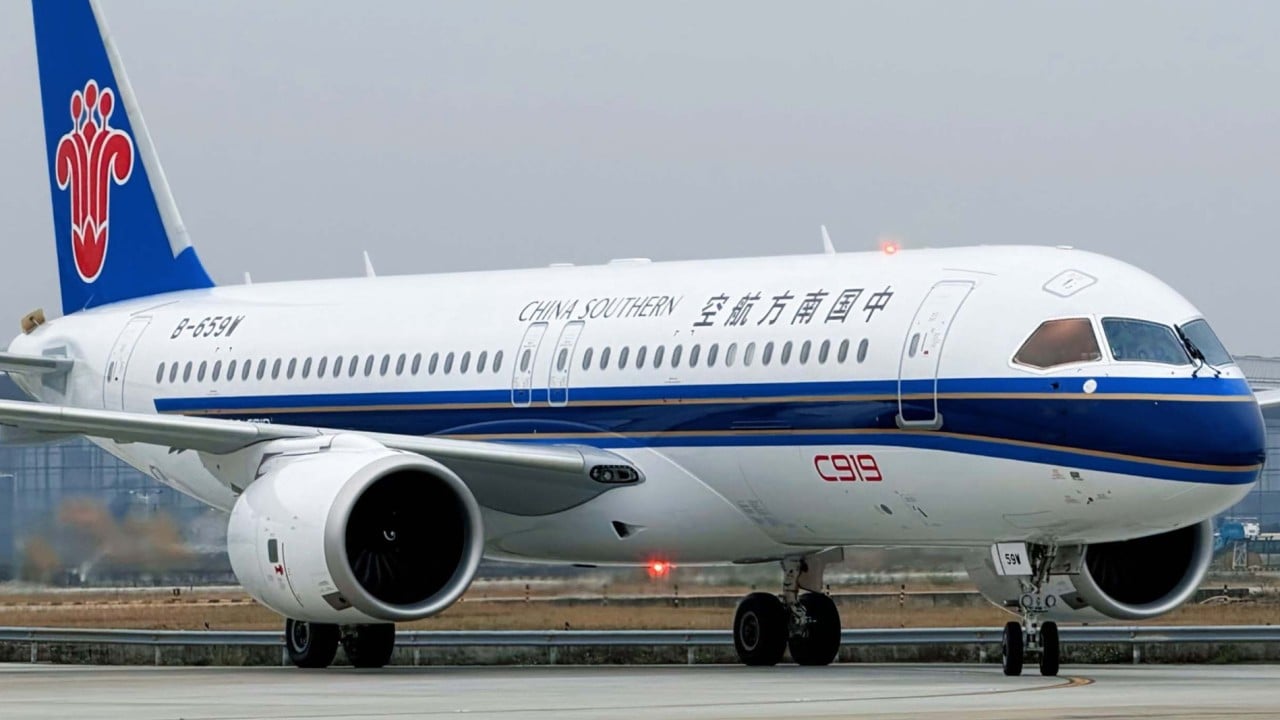
The headlines are bleeding with "delays." Analysts are clutching their pearls because COMAC only pushed out three units in the first quarter of 2026. They call it a bottleneck. They call it a failure of the supply chain. They are looking at the aviation industry through a 1990s lens that no longer applies to the geopolitical reality of aerospace manufacturing.
Stop measuring COMAC against the delivery cadence of Boeing or Airbus. That is the wrong metric. Those giants are optimized for quarterly earnings and shareholder appeasement. China is optimizing for something entirely different: total industrial sovereignty.
Three planes in three months isn't a sign of weakness. It is a sign of a high-stakes, methodical scrubbing of Western dependency.
The Myth of the Assembly Line Failure
Mainstream financial media treats aircraft manufacturing like a toaster factory. If the belt slows down, the factory is broken. In reality, the C919 is currently a laboratory for a radical transition.
Every delay you see right now is likely a conscious choice to swap out a Honeywell or GE component for a domestic alternative that isn't quite "plug-and-play" yet. I have watched Western firms lose sleep over these "delays" because they know what it actually means. It means the window of opportunity to be a primary supplier to China is slamming shut.
If COMAC wanted to hit "target" numbers, they could simply keep importing the guts of the plane. They aren't doing that. They are intentionally slowing the roll to ensure that by the time the C929 wide-body hits the tarmac, the supply chain is bulletproof and, more importantly, "sanction-proof."
Aviation Is No Longer About Physics It Is About Logistics
The Boeing 737 MAX and the Airbus A320 are incredible feats of engineering, but they are logistical nightmares. They rely on a globalized, fragile web of suppliers that can be disrupted by a single regional conflict or a trade tariff.
China isn't building a competitor to the 737. They are building a competitor to the Western supply chain model.
When you see a delivery report stating "only 3 units," you should be asking: What percentage of those 3 units was manufactured within a 500-mile radius of Shanghai? The "lazy consensus" says China is struggling with precision engineering. The reality? They are perfecting the CJ-1000A engine integration. While the Leap-1C engine from CFM International is the current heart of the C919, the delay in 2026 is the friction of moving toward the domestic CJ-1000A. You don't rush an engine swap on a commercial airframe unless you want a PR disaster. You move slowly. You move with agonizing precision.
The False Premise of the "Duopoly"
We love the word "duopoly." It suggests a balanced scale. But Boeing is currently a company run by accountants who forgot how to build planes, and Airbus is a subsidized collective that is hitting its own production ceiling.
The C919 doesn't need to be better than a 737 today. It just needs to be available and sovereign.
Consider the "People Also Ask" obsession: Will the C919 ever fly in the US or Europe? The answer is: Who cares? The global South and the domestic Chinese market represent the largest growth sector in aviation history for the next two decades. China doesn't need FAA or EASA certification to win. They need CAAC certification and a line of credit for airlines in Southeast Asia, Africa, and the Middle East. By the time the West realizes the C919 has eaten the growth market, the delivery "delays" of 2026 will be a footnote in a history book about the shift of the aerospace axis.
The Cost of the "Slow" Approach
Let’s be brutally honest. There are downsides to this strategy.
- Capital Burn: Keeping a massive workforce active while producing three planes a quarter is a financial black hole.
- Airline Frustration: Domestic carriers like China Eastern and Suparna Airlines have schedules to keep. They are currently eating the cost of China's industrial pride.
- Pilot Training: A slow rollout means a slower adoption of the type rating, which keeps the workforce tethered to Boeing and Airbus systems longer than the government would like.
But in a state-backed economy, capital burn isn't a death sentence—it's an investment in R&D. While Boeing is forced to do stock buybacks to keep investors from jumping ship, COMAC is allowed to fail, iterate, and slow down until the product is exactly what the state needs it to be.
Stop Asking if They Can Build It
The question isn't whether China can build a narrow-body jet. They’ve already done that. The question is whether they can build a narrow-body jet without a single American-made bolt.
Every time a delivery is pushed back, assume a Western component was just fired from the manifest.
The 2026 "slump" is the sound of a superpower decoupling. If you’re waiting for COMAC to hit Boeing-level production numbers before you take them seriously, you’ve already lost the game. The value isn't in the volume; it’s in the independence.
When the ramp-up eventually happens—and it will—it won't be a gradual climb. It will be a vertical line, backed by a fully verticalized, domestic supply chain that no trade war can touch.
The delay isn't a bug. It's the most important feature of the C919 program.
Check the manifest. The components are changing. The leverage is shifting. The clock is ticking, and it’s not ticking in Seattle’s favor.