The transition from terrestrial cell towers to space-based cellular broadband represents a fundamental shift in the physics of telecommunications. While traditional satellite telephony relied on proprietary handsets and specialized hardware, the current race—led by AST SpaceMobile—targets the existing two billion LTE and 5G handsets globally. This ambition bypasses the "walled garden" of satellite hardware but introduces a massive engineering debt: the requirement for unprecedentedly large phased-array antennas to capture the weak signals emitted by standard smartphones from Low Earth Orbit (LEO).
The Signal-to-Noise Constraint in Satellite Direct-to-Cell
The primary bottleneck for any direct-to-cell (D2C) service is the link budget. A standard smartphone is designed to transmit to a tower three to five miles away. In a D2C architecture, that same device must transmit to a satellite orbiting at approximately 500 kilometers. The inverse square law dictates that signal strength diminishes significantly over this distance, necessitating a satellite aperture large enough to provide sufficient gain.
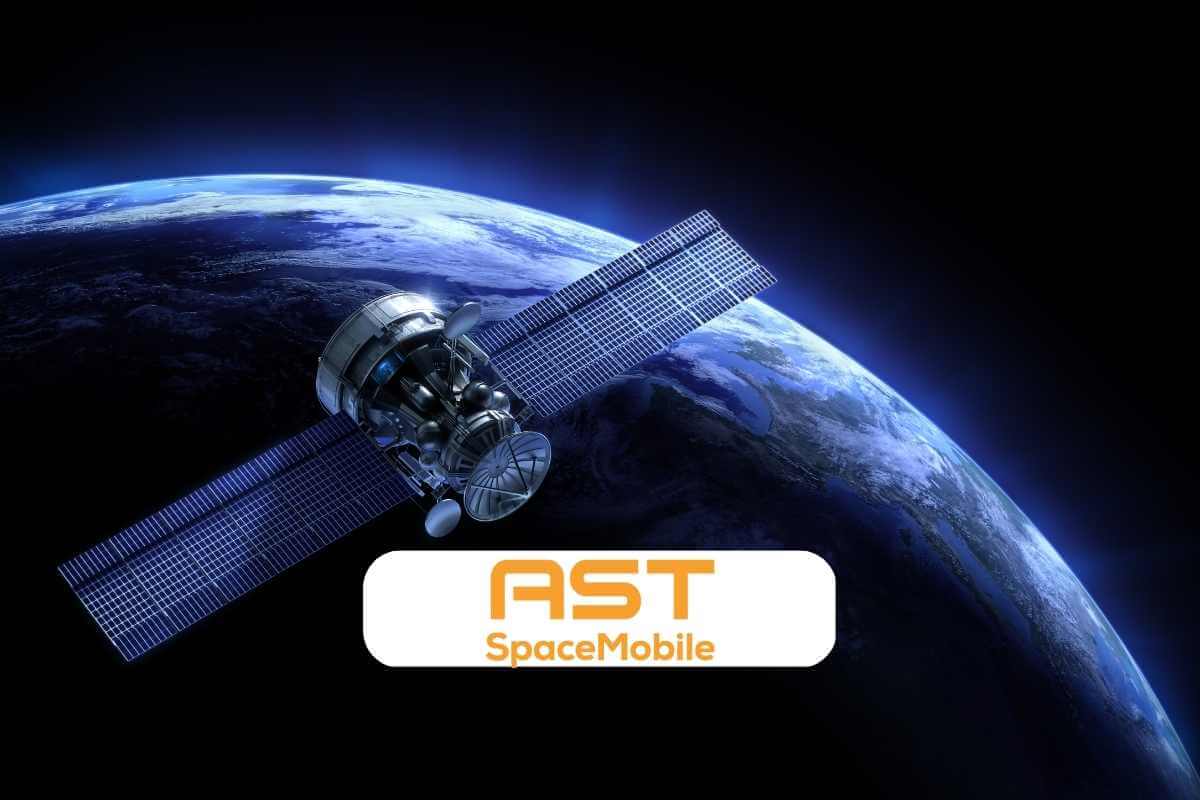
AST SpaceMobile’s BlueWalker 3 and the subsequent BlueBird satellites address this through sheer scale. Their 693-square-foot arrays are designed to function as "towers in the sky," but this scale creates three specific operational risks:
- Atmospheric Drag and Orbital Decay: The large surface area of these arrays increases atmospheric drag in LEO. Maintaining orbital altitude requires more frequent station-keeping maneuvers, which consumes onboard propellant and limits the operational lifespan of each bird.
- Structural Rigidity during Deployment: Unfolding a massive, thin-film antenna in microgravity presents mechanical failure points. Any deviation from a perfectly flat plane degrades the beamforming capabilities, reducing the spectral efficiency of the satellite.
- Launch Mass and Economics: Heavy, voluminous payloads increase launch costs. While SpaceX’s Falcon 9 and Starship may lower the price per kilogram, the volume-constrained nature of fairings limits how many large-aperture satellites can be deployed per launch.
Theoretical Spectral Efficiency vs. Real-World Throughput
A critical distinction must be made between "connecting" to a satellite and "streaming" via a satellite. AST SpaceMobile claims the capability to deliver broadband speeds, but the actual throughput per user is governed by the Shannon-Hartley theorem.
$$C = B \log_2(1 + \frac{S}{N})$$
Where $C$ is the channel capacity, $B$ is the bandwidth, and $S/N$ is the signal-to-noise ratio. In a terrestrial environment, $B$ is high because cells are small and frequency can be reused frequently. In a satellite environment, the "cell" or beam footprint is much larger, meaning the available bandwidth must be shared across a higher density of users. For AST SpaceMobile to provide a true broadband experience, they must execute high-order MIMO (Multiple Input Multiple Output) from space, a feat that requires precise synchronization of the ground-based gateway stations and the satellite array.
The CAPEX Treadmill and Revenue Realization
The business model of AST SpaceMobile rests on a wholesale partnership strategy with Mobile Network Operators (MNOs) like AT&T and Vodafone. This avoids the cost of direct customer acquisition but leaves the company dependent on the MNOs' willingness to market the "add-on" service to their existing subscriber base.
The valuation of the company is currently a function of its "De-risking Events" rather than its Free Cash Flow (FCF). These events include successful unfolding of the arrays, successful 5G calls, and the securing of regulatory approvals from the FCC. However, the long-term viability is tied to the Cost per Gigabyte. If the cost to deliver data via space remains significantly higher than terrestrial roaming or fiber-backed small cells, the service will remain a niche "emergency" or "dead zone" filler rather than a primary connectivity layer.
Regulatory and Geopolitical Hurdles
The FCC’s Supplemental Coverage from Space (SCS) framework is the regulatory bedrock for this industry. It allows satellites to use terrestrial spectrum, provided they do not interfere with adjacent terrestrial networks. This creates a "Coordination Complexity" that the market often underestimates.
- Interference Mitigation: The satellite must be able to "null" its signal over areas where the MNO does not have the rights to the spectrum.
- National Sovereignty: Landing rights must be negotiated on a country-by-country basis. A satellite passing over a border might be transmitting on a frequency owned by a different carrier in the neighboring nation, leading to potential signal bleed and legal disputes.
- Orbital Debris: The size of the BlueBird satellites increases the "collision cross-section," making them targets for space debris and increasing the likelihood of Kessler Syndrome scenarios if a collision occurs.
The Competition: Starlink’s Incrementalism vs. AST’s Leap
SpaceX’s Starlink is approaching the D2C market through an iterative process, starting with narrowband (texting) via their acquisition of Swarm technology and the deployment of smaller D2C-enabled V2 Mini satellites.
AST SpaceMobile is attempting a "Broadband-First" approach. This is higher risk but offers a higher potential "Moat." If AST can prove that its large-aperture strategy is the only way to achieve true 5G speeds on unmodified phones, it renders the Starlink/T-Mobile partnership a secondary, low-bandwidth service. If, however, Starlink’s smaller, more numerous satellites can achieve comparable speeds through software optimization and sheer constellation density, AST’s hardware-heavy approach becomes an expensive liability.
Institutional Financing and Dilution Risks
The capital intensity of building and launching a constellation of 100+ large satellites is immense. AST SpaceMobile has utilized a mix of strategic investment (AT&T, Google, Verizon) and public equity offerings. Investors must monitor the Burn Rate vs. Launch Cadence.
The "Gap to Cash Flow Break-Even" is the most dangerous period for a space-tech firm. Any launch failure or deployment malfunction creates a six-to-twelve-month delay in revenue generation, often necessitating dilutive capital raises at unfavorable valuations. The recent investment from major US carriers suggests that the "Strategic Value" of the spectrum and the coverage is recognized, but this does not guarantee "Shareholder Value" if the dilution required to reach a full constellation is too high.
Strategic Execution Framework
To assess the future performance of AST SpaceMobile, analysts should look past the "Lightning Round" endorsements and focus on three quantifiable metrics:
- Kilobits per Second per Square Meter ($kbps/m^2$): This measures the efficiency of the antenna array. If this ratio does not improve with subsequent satellite generations, the company will struggle to scale.
- The "Handover" Success Rate: The ability of a device to move from a terrestrial tower to a satellite beam without dropping a VoIP or data session. This is the "User Experience" (UX) benchmark that will determine MNO adoption.
- Launch Slot Certainty: In a constrained launch market, having the capital is irrelevant if there are no rockets available. AST’s relationship with launch providers is the single point of failure for their timeline.
The technical moat is real, but it is built on the edge of physical limits. The success of the enterprise depends on whether the 20-meter array becomes a standardized piece of space infrastructure or remains a one-off engineering marvel that is too fragile for the rigors of mass-market telecommunications.
Investors should focus on the upcoming launch of the first five commercial satellites. This is the transition from "Experimental Phase" to "Operational Beta." If these units achieve sustained 5G throughput without significant signal degradation or thermal issues, the company moves from a speculative venture to a foundational utility. The primary risk remains the "Re-entry of Reality"—the moment when the theoretical capacity of the satellites meets the actual demand of millions of terrestrial users.
The most aggressive strategic move for AST SpaceMobile is not just providing "coverage" but capturing the "Backhaul" market. If they can use their satellites to provide high-speed backhaul for remote terrestrial towers, they create a dual-revenue stream that mitigates the risk of low D2C adoption. This would transform them from a consumer-facing service provider into a core infrastructure backbone for global MNOs.