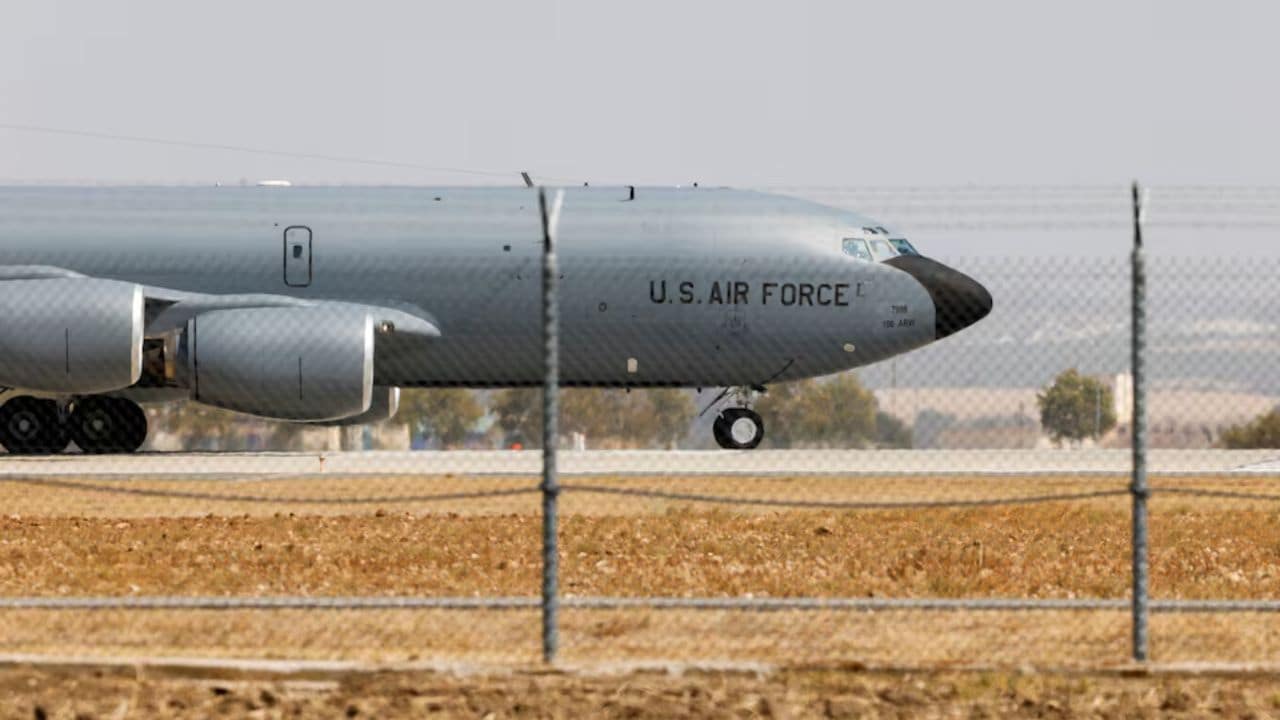
The runway at Rota isn't as busy as it was last week. The sudden departure of several US military aircraft from Spanish soil signals a massive shift in how European allies are handling American entanglement in the Middle East. It isn't just a logistical hiccup. It’s a loud, public refusal by the Spanish government to let its territory become a launchpad for a war it doesn't want.
Spanish officials recently made it clear that permanent bases at Rota and Morón de la Frontera cannot be used for offensive operations against Iran. This move forced the US to scramble. Within 48 hours, specialized transport and support aircraft were seen heading toward alternative hubs in the Mediterranean and the Persian Gulf. You might think this is just standard military movement, but it’s actually a rare moment of a NATO ally pulling the leash on Washington.
Why Spain is drawing a line in the sand
For decades, the United States has viewed its presence in Spain as a flexible "lily pad" for projecting power into Africa and the Middle East. The 1988 Agreement on Defense Cooperation gives the US significant leeway, but it isn't a blank check. Spain's current administration, led by Pedro Sánchez, has become increasingly vocal about Mediterranean stability. They don't see an escalation with Iran as a "defense" of Spanish interests. They see it as a liability.
The refusal centers on a specific legal interpretation of the bilateral treaty. Spain argues that while the bases support NATO missions and regional security, unilateral US strikes don't fall under that umbrella. If the US wants to hit targets in Iran, Spain won't provide the gas or the runway. This forced the relocation of several heavy-lift assets and refueling tankers that are essential for long-range strike missions.
Moving these planes isn't cheap. It's a logistical nightmare that involves rerouting fuel chains, moving hundreds of personnel, and renegotiating airspace rights with other countries like Italy or Greece. It also sends a message to Tehran: the West is not a monolith.
The strategic ripple effect across the Mediterranean
When Spain says no, it puts a massive strain on other regional hubs. You have to look at the map to see the problem. With Rota effectively sidelined for this mission, the US has to rely more heavily on Sigonella in Italy or Souda Bay in Greece. But those countries are watching Spain. They’re facing similar domestic pressure to avoid being dragged into a regional conflagration that could spike energy prices and trigger new waves of migration.
The US Air Force operates with a "Global Reach" mentality. They assume that if they have a base, they can use it. Spain just shattered that assumption. This isn't the first time this has happened—think back to 2003 when Turkey refused to let US ground troops cross its border for the invasion of Iraq. That decision fundamentally changed the opening weeks of that war. Spain’s move could do the same for any planned operations in the Persian Gulf.
Specific aircraft involved in the departure reportedly include C-17 Globemasters and KC-135 Stratotankers. These are the workhorses of any aerial campaign. Without them, the "pointy end of the spear"—the fighter jets—can't get to the target. By removing these assets, the US is essentially admitting that the diplomatic cost of staying in Spain while defying the Spanish government is too high.
Domestic politics vs global military needs
Pedro Sánchez is walking a tightrope. He has to balance a complicated coalition at home that includes very skeptical left-wing elements. For many in his government, the US presence is a relic of the Cold War that brings more risk than reward. They don't want to wake up to news that a drone launched from Spanish soil just triggered a missile exchange in the Strait of Hormuz.
The Spanish public is also wary. Anti-war sentiment remains high, and the memory of the 2004 Madrid train bombings—often linked to Spain's involvement in the Iraq War—still looms large in the national psyche. By telling the US "no," Sánchez is playing to his base and asserting Spanish sovereignty in a way we haven't seen in years.
It's also about the European Union's broader "strategic autonomy" goal. Many European leaders are tired of being the junior partner in every American military venture. They want a say in when and where their resources are used. Spain is just the first one to put it in writing and back it up by clearing out the hangars.
Where those aircraft are headed now
The planes didn't just disappear. Satellite imagery and flight tracking data suggest a heavy migration toward Incirlik in Turkey and various sites in the United Arab Emirates and Qatar. But those locations come with their own political baggage. Turkey is a wildcard, and the Gulf states are desperate to avoid a direct hit from Iranian missiles.
The US is finding its options shrinking. The more the US pushes for a "maximum pressure" campaign against Iran, the more its traditional allies start looking for the exit. Spain’s decision proves that having a base is not the same as having permission.
This shift will likely lead to a permanent change in how the Pentagon plans for the region. We’re going to see more investment in sea-based assets—like aircraft carriers—that don't require a host nation's signature for every takeoff. But carriers are expensive and vulnerable. Losing land-based access in Spain is a genuine blow to the US military's efficiency.
How this changes the Iran equation
If you're sitting in Tehran, you're watching this with a grin. Every time a NATO ally denies the US support, the "united front" cracks. It gives Iran more diplomatic breathing room. It also suggests that any US strike would be a much smaller, more limited affair because the logistics simply won't support a sustained, multi-front campaign without European bases.
The US State Department is likely doing damage control behind the scenes. They’ll call this a "scheduled rotation" or a "rebalancing of forces." Don't believe it. You don't move that many tankers and transports in a hurry unless the host country has made life impossible for you.
Watch the upcoming bilateral meetings between US and Spanish defense officials. If the language is cold and focused on "sovereignty," you know the rift is deep. If the US starts cutting back on joint exercises or military aid to Spain, it’s a sign of retaliation.
The immediate reality is simple: the US military footprint in Europe is no longer a given. It's a negotiation. If you're following regional security, keep your eyes on the flight paths coming out of Rota. Those planes are telling a story that the official press releases won't.
For those tracking defense movements, the next logical step is to monitor the deployment of Carrier Strike Groups toward the Eastern Mediterranean. Since land-based options are narrowing, the US will have to lean on its "floating bases" to maintain any kind of credible threat. If those carriers don't show up soon, it means the US is backing down—at least for now. Keep an eye on the US Sixth Fleet’s official logs for the most accurate picture of where the power is actually shifting.


