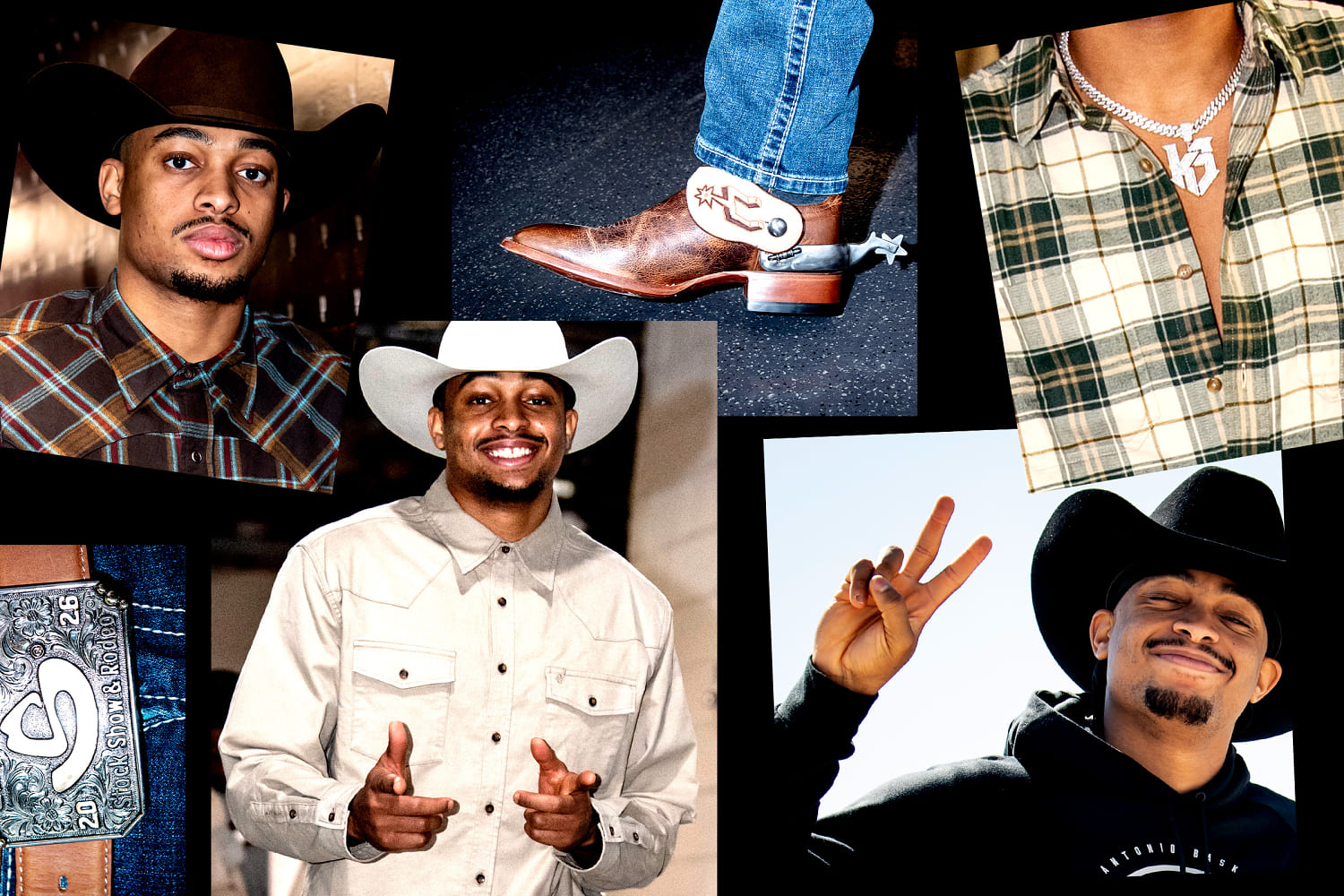
The sports media machine loves a caricature. It’s easy. It’s digestible. It fits neatly into a thirty-second social media clip between betting ads and highlight reels. This is exactly why every major outlet missed the mark on the San Antonio Spurs’ so-called "cowboy" sixth man. They see a guy in a Stetson and actual spurs, and they write a puff piece about Texas "culture" or "quirky fan bases."
They are dead wrong.
If you think this is about a man wearing a costume to support a basketball team, you aren't paying attention to the mechanics of modern sports branding. This isn't a mascot. This isn't a "super-fan" in the vein of some guy wearing face paint in a cold parking lot. This is a masterclass in hyper-local psychological anchoring. It is a calculated, perhaps even accidental, subversion of the sterile, corporate identity that is currently killing the soul of the NBA.
The Myth of the Authentic Fan
Let’s dismantle the "lazy consensus" first. Most articles suggest that having a cowboy as a mascot-adjacent figure "celebrates the roots" of San Antonio.
Please.
The modern NBA is a billion-dollar laboratory of sanitized experiences. Go to an arena in Miami, then go to one in Salt Lake City. You’ll hear the same trap music during warm-ups, see the same LED ribbon boards, and eat the same overpriced artisan tacos. The "cowboy" is not a tribute to the past; he is a biological glitch in a digital system.
When a man walks into a multi-million dollar arena wearing functional spurs that jingle on the concrete, he isn't participating in the "fan experience." He is disrupting it. The media treats him like a prop. In reality, he is the only authentic element in a building filled with scripted "Kiss Cam" segments and pre-recorded "Defense!" prompts.
The Cognitive Dissonance of Professional Basketball
Basketball is a game of verticality, sleek sneakers, and hardwood. A cowboy is a creature of the horizontal, leather boots, and dirt. On paper, this is a terrible brand fit.
I’ve spent fifteen years watching front offices try to "synergize" their brand identities. They usually do it by hiring a marketing firm out of New York to tell them they need a sleeker logo or a "minimalist" jersey. They want to be global. They want to be "clean."
The Spurs Cowboy is the antithesis of "clean." He is dusty. He is loud. He is inconvenient. And that is exactly why he works.
Why the "Sixth Man" Label is a Lie
The competitor piece calls him the "sixth man." That is an insult to his actual function. A sixth man comes off the bench to provide scoring. This man provides identity insurance.
In an era where star players change teams every three years and loyalty is a punchline, the Spurs Cowboy represents something the NBA can’t buy: permanence. Victor Wembanyama might be the future of the league, but he is a global entity. He belongs to the world. The cowboy belongs to 210.
By centering the narrative on the "quirkiness" of his spurs, journalists overlook the $100 million problem facing every small-market team: How do you remain relevant when your best players inevitably look toward Los Angeles or New York? You do it by rooting the team in a mythology that cannot be exported. You can’t move a cowboy to Brooklyn and expect it to make sense.
The Economics of the Jingle
Let’s talk about the actual spurs.
Most people see them as a gimmick. From a sensory branding perspective, they are a weapon. Every marketing executive talks about "omni-channel engagement." They want to hit your eyes with colors and your ears with a booming sound system.
The spurs provide a rhythmic, analog sound that cuts through the electronic noise of the AT&T Center. It’s a Pavlovian trigger. You don't need to look at the big screen to know he’s there. You hear him.
Imagine a scenario where a team tried to manufacture this. They would hire a foley artist to play "jingle" sounds over the PA system. It would feel fake. It would feel like a Disney World attraction. Because this man is actually a rancher, the sound carries the weight of truth.
- The Sound of Legitimacy: It isn't just noise; it's a frequency that confirms the team’s name isn't just a placeholder.
- The Visual Anchor: In a sea of polyester jerseys, denim is a rebellion.
The Counter-Intuitive Truth About "Fan Groups"
We are told that fan groups should be inclusive and welcoming. The "Spurs Cowboy" is actually quite exclusive. To "get" him, you have to understand the specific intersection of South Texas ranch culture and professional sports.
If you try to explain him to a fan in London, they’ll think it’s a joke. If you explain him to a fan in San Antonio, they’ll tell you he’s a neighbor.
This is what I call Friction-Based Loyalty. Most brands try to remove all friction. They want it to be "seamless" (to use a word I hate). They want anyone to be able to jump on the bandwagon. But true loyalty requires friction. It requires a "you wouldn't understand" barrier to entry. The Cowboy is that barrier. He is the guardian of the San Antonio vibe, making sure the "San Antonio" part of the name stays more important than the "Spurs" part.
Stop Calling It a Costume
The most offensive part of the mainstream coverage is the implication that this is a "character."
When you call a man’s life a costume, you strip away the E-E-A-T (Experience, Expertise, Authoritativeness, Trustworthiness) of the fan base. This man doesn't go home and put on a tracksuit. He lives the brand.
In a world of influencers who change their "passions" based on which brand is paying them this month, a guy who has been wearing the same gear since the Robinson era is a godsend. He is the ultimate "Influencer" because he isn't trying to influence anyone. He’s just there.
The Danger of Commercialization
The moment the Spurs try to put this guy on a T-shirt and sell it for $45, the magic dies.
I’ve seen dozens of teams take a grassroots fan hero and "optimize" them. They give them a contract. They give them a dressing room. They turn them into a mascot.
As soon as that happens, the cowboy becomes a corporate shill. The spurs stop jingling with authenticity and start jingling for the bottom line. The strength of the Spurs Cowboy lies in his independence. He is a stakeholder, not an employee.
If the NBA wants to save its dwindling regional ratings, it needs to stop looking at spreadsheets and start looking at the people who refuse to fit into them.
The spurs aren't just for show. They are a reminder that even in a league of giants, the most powerful person in the room is often the one who refuses to change his clothes for anyone.
Stop looking for the next "game-changing" marketing strategy. It’s already sitting in the front row, smelling like leather and tradition.
Do not "fix" the fan experience. Get out of its way.
The jingle you hear isn't a gimmick; it's the heartbeat of a city that refuses to be "sanitized" for a global audience.
Pay attention.
Listen for the spurs.
If you can’t hear them over the music, you’re in the wrong building.
Go home and change.
The cowboy isn't leaving.