The 10% contraction in Stellantis NV market capitalization following its first-quarter revenue report is not merely a reaction to a top-line miss; it is a clinical repricing of the group's execution risk during a volatile powertrain transition. While headline revenue fell 12% to €41.7 billion, the underlying mechanics reveal a deliberate, albeit painful, destocking strategy in North America and a temporary product vacuum that has left the manufacturer vulnerable to aggressive pricing maneuvers by competitors.
The Dynamics of Revenue Erosion
The decline in net sales is the result of three distinct operational pressures acting in concert. To understand why the market reacted with such volatility, one must decompose the revenue loss into volume, mix, and currency effects.
- Volume Contraction: Consolidated shipments dropped 10% year-over-year. This was driven primarily by a high base effect from Q1 2023, when the company was still fulfilling a massive post-pandemic order backlog.
- Inventory Normalization: In the North American market—the group’s primary profit engine—Stellantis has been forced to aggressively manage dealer inventories. High interest rates have increased the "floorplan" costs for dealerships, making them unwilling to carry excess stock. The reduction of approximately 40,000 units in the quarter represents a direct hit to recognized revenue, as Stellantis records sales when vehicles are shipped to dealers, not when they reach the end consumer.
- Product Gap Analysis: The company is currently in a "trough" between the sunsetting of legacy internal combustion engine (ICE) models and the ramp-up of its new STLA platform vehicles. During this transition, the absence of fresh products in high-volume segments leads to market share attrition.
The North American Margin Bottleneck
North America represents the most significant risk factor for the Stellantis investment thesis. The region's operating margin has historically offset thinner margins in Europe and South America. However, the Q1 data suggests a structural challenge to this dominance.
The core issue is the Cost Function of Transition. Stellantis is attempting to maintain the high margins of its Jeep and Ram brands while simultaneously funding the €50 billion "Dare Forward 2030" electrification plan. This creates a divergence between cash generation and capital expenditure. In Q1, the company faced significant headwinds from a less favorable vehicle mix. When the sales volume of high-margin vehicles like the Grand Cherokee or the Ram 1500 fluctuates, the operating leverage of the North American plants swings violently.
Furthermore, the pricing power that Stellantis enjoyed during the 2021-2022 supply chain crisis has evaporated. Competitors like Ford and GM have been more aggressive with incentives, forcing Stellantis into a defensive posture. To move older inventory, the company has increased spending on "variable marketing," which acts as a direct tax on the gross margin per unit.
The STLA Platform Pivot: 2024 Launch Schedule
The market’s skepticism is rooted in the "Execution Gap"—the period between the announcement of a new strategy and the realization of industrial scale. Stellantis plans to launch 25 new models in 2024, a cadence that is nearly unprecedented in the automotive industry. This creates a high degree of "launch risk," defined by the potential for:
- Software Integration Failure: Modern vehicles are defined by their software stacks. Any delay in the STLA Brain or STLA SmartCockpit deployments will push revenue into 2025.
- Supply Chain Friction: While the global semiconductor shortage has largely abated, the ramp-up of battery cell production through various joint ventures (e.g., ACC with Mercedes and TotalEnergies) remains an unproven variable.
- Cannibalization: As the company introduces Battery Electric Vehicle (BEV) versions of its core models, it must manage the transition without destroying the residual value of its existing ICE fleet.
The 10% stock drop reflects a "wait and see" discount applied to these 25 launches. Investors are effectively pricing in the probability that at least 20% of these launches will face delays or sub-optimal initial quality scores.
Inventory as a Liability
The relationship between "Days of Supply" and corporate valuation is currently inverted for Stellantis. In a low-interest-rate environment, high inventory can be seen as an asset ready to meet demand. In the current macro climate, it is a liability.
Stellantis ended the quarter with total inventory levels that remain elevated relative to the industry average in several key segments. The strategy to reduce this inventory—cutting production shifts and increasing consumer rebates—is the correct long-term move for brand health, but it creates a short-term "Earnings Per Share (EPS) drag." The market is reacting to the realization that the "easy" profits of the post-pandemic era are gone, replaced by a cycle of intense industrial restructuring.
Operational Discipline vs. Market Share
The CEO, Carlos Tavares, has maintained a "value over volume" philosophy. This framework prioritizes the break-even point over raw sales numbers. Stellantis claims one of the lowest break-even points in the industry, often cited at below 50% of peak capacity.
This lean structure provides a safety net during downturns but creates a ceiling during growth phases. In Q1, the market signaled that the "Value over Volume" strategy might be hitting its limit. If Stellantis loses too much market share in the United States, it loses its "voice" in the market, making it harder to launch the 2024 BEV portfolio.
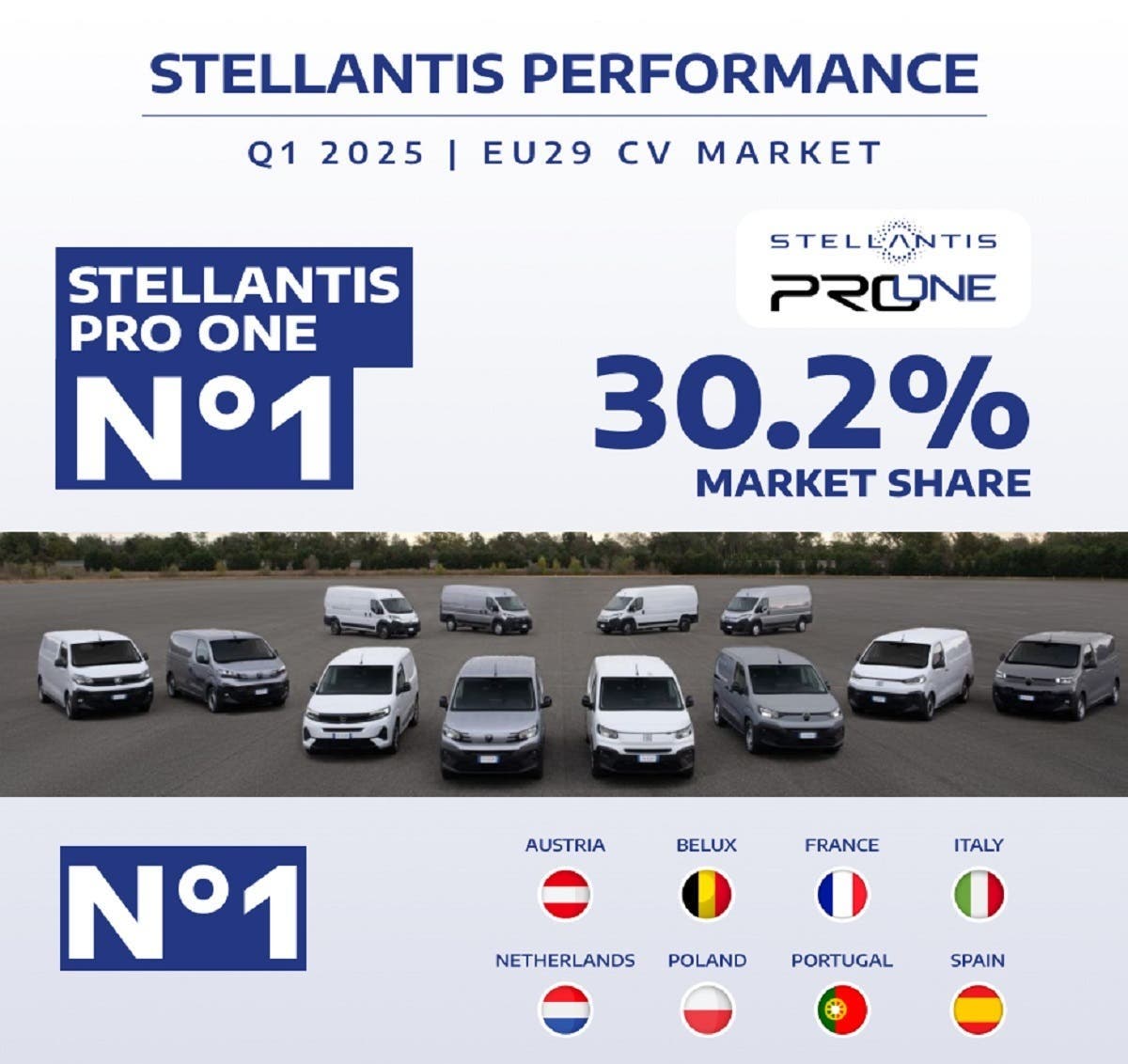
The divergence in performance between the "Pro One" commercial vehicle division and the passenger car segments is telling. The commercial division remains a bastion of strength, with 11% growth in BEV sales and consistent margins. This suggests that the Stellantis problem is specifically a consumer-facing issue—a lack of brand "pull" for their current, aging passenger car lineup.
Strategic Path Forward: The 2H 2024 Inflection Point
The investment case for Stellantis now rests entirely on the second half of 2024. The company has guided for improved margins and revenue growth based on the arrival of new product. To validate the current valuation, the following milestones must be achieved with clinical precision:
- Inventory Equilibrium: Total dealer stock in North America must stabilize at a level that stops the need for incremental incentive spending.
- The Citroën e-C3 Launch: As a high-volume, low-cost BEV in Europe, this model is the litmus test for Stellantis’ ability to compete with Chinese manufacturers on price without destroying its margin profile.
- Ram 1500 Refresh: The update of the Ram lineup must successfully transition customers toward the "Ramcharger" (extended range) and "REV" (full electric) variants while maintaining the loyalty of traditional ICE truck buyers.
The 10% drop serves as a correction of over-optimism regarding the speed of the automotive turnaround. The current objective is not to chase volume at the expense of capital, but to survive the "transition trough" without a permanent loss of market share. The focus must remain on the surgical execution of the 25-model launch plan; any further deviation in shipment timing will likely trigger a deeper re-rating of the stock toward the lower multiples typically reserved for distressed cyclical manufacturers.