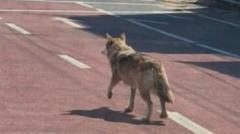
South Korean police just arrested a man for "spreading chaos" after he posted an AI-generated image of a wolf prowling the streets. The media is having a field day. They want you to believe we are entering a post-truth era where math-generated pixels are the ultimate threat to civil order.
They are wrong.
The arrest isn't a victory for public safety; it is a desperate attempt to mask the fact that institutional credibility is already dead. We aren't panicking because the wolf looked real. We are panicking because we no longer trust the gatekeepers to tell us if the wolf is there or not.
The Myth of the Sophisticated Deepfake
The "lazy consensus" among journalists and regulators is that AI imagery is becoming so realistic that the average person is defenseless. This is a patronizing lie.
If you look at the South Korean "runaway wolf" case, the panic didn't stem from a lack of technical literacy. It stemmed from a hyper-reactive digital environment where speed is valued over verification. People didn't get "tricked" by a sophisticated neural network; they were betrayed by their own desire to be the first to share a crisis.
In my years observing how digital misinformation scales, I have seen far more damage done by grainy, out-of-context cell phone videos than by high-resolution AI renders. A low-quality video of a real protest from 2014, captioned as "happening now," triggers more lizard-brain fear than a crisp, slightly-too-perfect AI wolf.
The problem isn't the generative tool. The problem is the distribution incentive.
Why the Arrest is a Distraction
Law enforcement loves a scapegoat. By arresting a prankster with a Midjourney subscription, they signal to the public that they are "on top of the AI threat."
They aren't.
Arresting one man for a fake wolf does nothing to address the systemic decay of information hygiene. If anything, it creates a "Streisand Effect" for digital forgery. It tells every bored teenager with a GPU that they can command the attention of an entire national police force with a single prompt.
We are treating the symptom and ignoring the cancer. The cancer is a public that has forgotten how to wait for a second source. We have replaced "trust but verify" with "react and amplify."
The Logic of the Modern Panic
Let’s dismantle the premise that AI images are uniquely dangerous. Imagine a scenario where the man hadn't used AI. Imagine he was a skilled Photoshop artist who spent ten hours masking a wolf into a photo of a Seoul alleyway.
Would the outrage be the same? Likely not.
We have a bizarre, irrational fear of the automation of deception, rather than the intent of it. We are obsessed with the "how" because the "why" is too painful to address. The "why" is that our digital infrastructure is designed to reward sensationalism. Whether that sensationalism is hand-painted, photographed, or generated by a diffusion model is secondary.
The Cost of Digital Paranoia
There is a downside to my contrarian view. By advocating for a "buyer beware" approach to reality, we risk a "Liar's Dividend." This is a term coined by legal scholars Chesney and Citron. It describes a world where real criminals can claim real evidence is "just AI" to escape accountability.
When we scream "AI!" at every fake wolf, we give the actual wolves a perfect place to hide.
Stop Asking if it is Real
The most common question people ask regarding these incidents is: "How can we tell what is real?"
That is the wrong question. It assumes there is a magical watermark or a software fix that will restore the 1995 version of the truth. There isn't. Metadata can be stripped. C2PA standards can be bypassed. AI detectors are notoriously unreliable and prone to false positives.
The right question is: "Why am I inclined to believe this without a primary source?"
If you see a wolf in the street on your feed, and no local news outlet, no municipal alert, and no neighbor is talking about it—why are you hitting "share"? We are blaming the tool for a failure of basic human skepticism.
The Death of the "Official" Record
Institutional authority used to be the bedrock of truth. In the South Korean incident, the police spent hours "investigating" a photo that could have been debunked by a quick cross-reference of local zoo inventories and animal control logs.
The delay in their response is what allowed the panic to grow.
We are moving toward a world where "truth" is no longer a static property of a file. Truth is now a consensus reached through a network of verified actors. If you are still relying on your eyes to tell you what is real, you have already lost. Your eyes are easily fooled. Your network, if built correctly, is much harder to trick.
The Professional Deceiver’s Advantage
I have watched companies spend millions on "brand safety" tools to detect deepfakes. Most of that money is wasted. They are buying digital snake oil.
The most effective "fake" content isn't the stuff that looks 100% real. It’s the stuff that is 70% real and 30% inflammatory. The South Korean wolf was a crude test case. The real threat isn't a runaway animal; it’s a subtly altered financial chart, a doctored transcript of a closed-door meeting, or a synthetic voice message from a "CEO" to an "accountant."
These don't require high-end AI. They require a lapse in protocol.
Forget Regulation—Start Drills
Governments are rushing to pass laws against AI misinformation. These laws will be as effective as the "War on Drugs." You cannot regulate math. You cannot ban the pixels.
Instead of arresting pranksters, we should be training the public in digital triage. We need to treat information literacy like fire drills. If you see a high-stakes claim, you don't move until you have three points of triangulation.
- Source identity: Who posted it, and what is their track record?
- Contextual consistency: Does this align with known physical realities?
- Institutional corroboration: Is anyone with skin in the game confirming this?
If we don't do this, we are just waiting for the next "wolf" to shut down a city.
The South Korean arrest isn't a sign of a functioning legal system. It’s a sign of a panicked one. They are trying to scare the internet into behaving, which is like trying to yell at the tide to stop coming in.
The wolf wasn't real, but the incompetence it exposed certainly was.
Stop looking for the watermark. Start looking for the motive. If you can't find a source, you are the product. The AI isn't the one lying to you; your desire for a thrill is.
The age of visual evidence is over. Welcome to the age of radical skepticism.
Get used to the wolves. They aren't going anywhere.