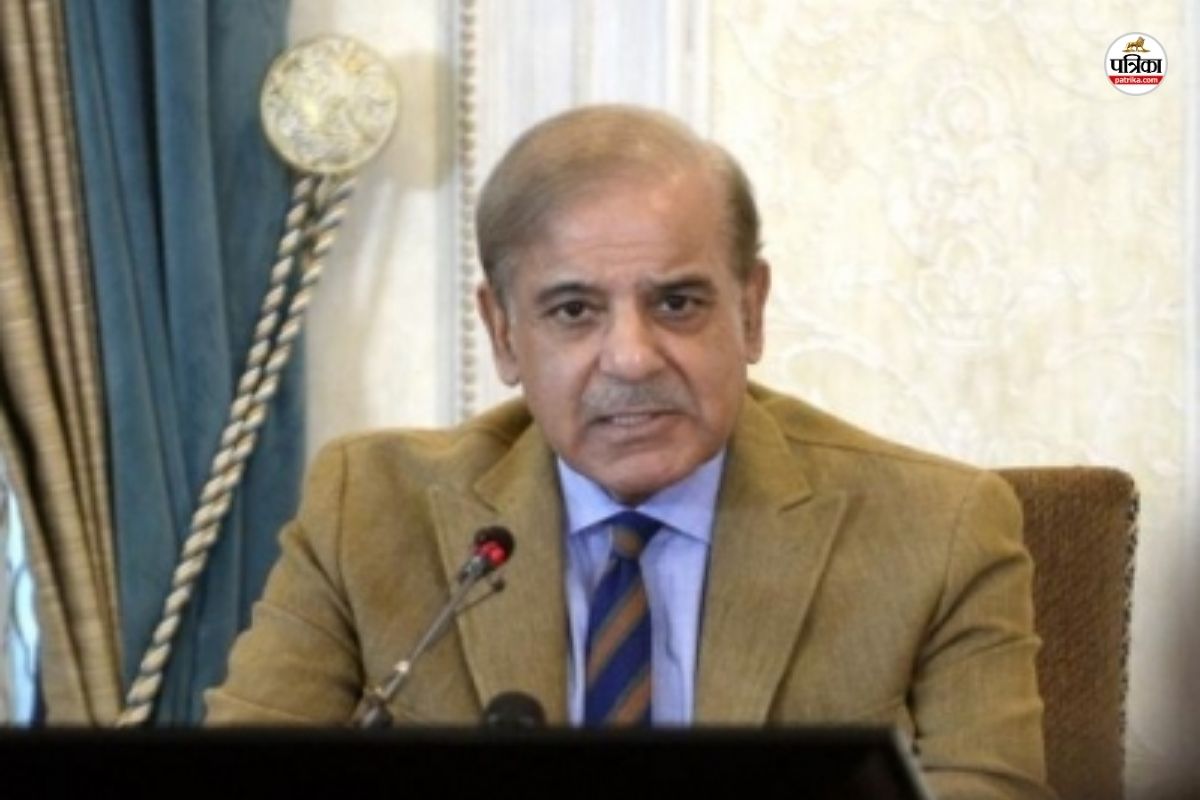
Geopolitical friction is the ultimate get-out-of-jail-free card for failing states. Whenever the Pakistani economy hits a new low, the narrative machine shifts into high gear to find a foreign villain. The current fixation on regional instability—specifically tensions involving Iran—is the latest smokescreen designed to mask a structural decay that has been decades in the making. Prime Minister Shehbaz Sharif’s public lamentations about external shocks breaking the country's back are not an analysis of reality. They are a performance of victimhood.
The "broken back" narrative suggests that Pakistan was standing tall until a neighbor’s conflict knocked it over. This is a fabrication. The spine of the Pakistani economy wasn't broken by recent regional tensions; it was liquified long ago by a refusal to tax the elite, a parasitic energy sector, and a debt-servicing cycle that resembles a Ponzi scheme more than a sovereign fiscal policy. Recently making waves lately: The Empty Pavements of Red Square.
The Myth of the External Shock
Mainstream media loves a simple "cause and effect" story. War in the Middle East equals higher oil prices, which equals Pakistan's ruin. It’s a clean arc. It’s also incredibly lazy.
If external shocks were the primary driver of economic collapse, every emerging market in the region would be in a similar state of cardiac arrest. They aren't. While neighbors are integrating into global supply chains and building foreign exchange reserves through exports, Pakistan remains stuck in a loop of "beggar-thy-neighbor" diplomacy and IMF bailouts. Additional information regarding the matter are covered by The New York Times.
The real math is grim. Debt servicing now consumes the lion's share of the federal budget. When you spend more on interest than you collect in total federal net revenue, you aren't a functioning economy; you are a collection agency for international creditors. Attributing this to a recent flare-up with Iran or instability in the Red Sea is like blaming a raindrop for the collapse of a house that was already gutted by termites.
The Sovereign Subsidy Addiction
The competitor's narrative suggests that the government is a helpless bystander. In reality, the state is the architect of its own misery. Consider the Circular Debt in the power sector. This isn't a "war" problem. This is a "we refuse to fix transmission losses and power theft" problem.
Successive administrations have chosen to subsidize unproductive sectors to maintain political patronage rather than forcing the structural reforms required for a competitive market. They treat the symptoms with borrowed cash while the infection spreads.
- The Landed Elite: They remain largely outside the tax net.
- The Retail Sector: A massive chunk of the GDP that contributes a pathetic fraction of tax revenue.
- The SOEs (State-Owned Enterprises): Black holes like PIA that suck billions of rupees every month just to stay stagnant.
Blaming Iran or any other external actor for the "broken back" of the economy is a deliberate distraction from the fact that no one in Islamabad wants to touch these third rails of domestic politics.
Why the "Oil Price" Argument is a Fallacy
The standard argument is that regional instability spikes oil prices, which destroys Pakistan’s balance of payments. Let’s dismantle that.
Oil volatility is a constant in global trade. Resilience is built through diversifying energy mixes, improving efficiency, and building a robust export base that can absorb price hikes. Pakistan’s exports have hovered around the $25-30 billion mark for what feels like an eternity, while peers have seen exponential growth.
When your export-to-GDP ratio is abysmal, you have no buffer. You are exposed. That exposure is a policy choice. By failing to incentivize value-added manufacturing and instead favoring real estate speculation, the state has ensured that any minor tremor in the global oil market becomes an 8.0 magnitude earthquake at home.
The Math of Mismanagement
Let’s look at the actual numbers. The fiscal deficit isn't a product of the Iranian border situation. It is the result of:
- Revenue Failure: A tax-to-GDP ratio that refuses to budge from the roughly 9-10% range.
- Unproductive Spending: A massive administrative overhead that the country cannot afford.
- Elite Capture: Tax exemptions and amnesties that favor the well-connected.
If the regional tensions vanished tomorrow, the fundamental insolvency of the Pakistani state would remain. The "pain" Shehbaz Sharif describes is real, but the diagnosis is fraudulent.
The IMF Trap and the Illusion of Recovery
Every few months, there is a celebration because a new tranche of IMF money has been "unlocked." This is the equivalent of celebrating a new credit card to pay off the old one. The conditions attached to these loans—hiking electricity tariffs and fuel prices—hit the middle class and the poor the hardest, while the structural reforms (taxing the wealthy and the retailers) are consistently delayed or watered down.
The "contrarian" truth that the establishment ignores is that the IMF isn't the problem, and neither is the war. The problem is that the Pakistani state has no plan for growth that doesn't involve borrowing.
Imagine a scenario where a business owner blames the road construction outside for his bankruptcy, while ignore the fact that his staff is stealing from the till, his product is 20 years out of date, and he hasn't paid his electricity bill in a decade. That is the Pakistani economic narrative in a nutshell.
Geopolitics as an Excuse for Incompetence
The Iranian border tension and the broader regional instability are certainly challenges. They complicate trade and add to the security budget. But they are not "back-breaking."
A healthy economy can pivot. A healthy economy has reserves. A healthy economy has the confidence of its own citizens. Pakistan has none of these because the social contract is broken. People are moving their capital out of the country not because of Iran, but because they don't trust the local managers of the economy.
The "broken back" is a self-inflicted injury.
Stop Asking "How Do We Survive the War?"
The question being asked by the media and the government is: "How do we survive these external shocks?"
It’s the wrong question.
The right question is: "How do we dismantle the internal cartels that prevent us from being resilient to any shock?"
Until the conversation shifts from "woe is us, the world is mean" to "we are failing because we refuse to tax our rich and reform our power sector," nothing will change. The "pain" will continue, the "back" will stay "broken," and the next time a leaf falls in the Middle East, Islamabad will blame it for the next round of hyperinflation.
The tragedy isn't that the economy is failing. The tragedy is that the leadership is using the suffering of millions as a rhetorical tool to beg for more time and more loans, without ever intending to fix the engine.
Stop looking at the border. Look at the budget. Look at the tax rolls. Look at the subsidies. That’s where the "back" was broken.