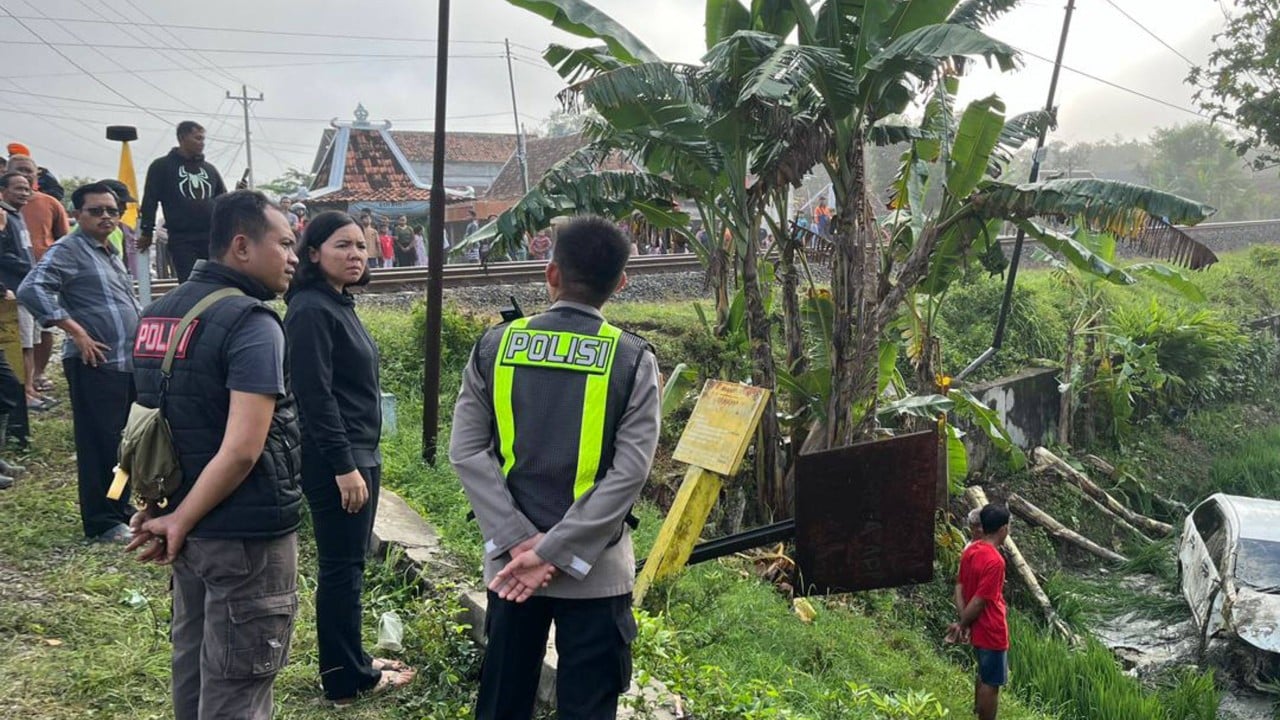
Two crashes. Four dead. Dozens injured. Within days.
The standard news cycle has already shifted into its default setting: mourn the victims, blame the aging infrastructure, and call for "modernization" as if buying a faster train automatically installs a safety culture. It is a lazy, repetitive script that ignores the brutal reality of rail logistics. Meanwhile, you can read other stories here: The Locked Door at the End of the American Dream.
The headlines treat these collisions as tragic anomalies or the inevitable result of a developing nation’s "struggling" grid. They are wrong. These aren’t accidents of fate or simple mechanical failures. They are the logical outcome of a system that prioritizes optics and expansion over the unglamorous, invisible discipline of operational rigor.
If you think better tracks solve this, you don't understand how a railroad actually functions. To see the complete picture, check out the excellent report by TIME.
The Modernization Myth
The most dangerous lie in the wake of the Cicalengka collision is that "new technology" is the panacea. We see the same pattern globally: a government pours billions into high-speed rail or shiny new rolling stock while the signaling systems and human protocols—the literal nervous system of the network—rot from neglect.
Indonesia is currently obsessed with the "Whoosh" high-speed line. It’s a prestige project. It looks great in press releases. But while the elite zoom between Jakarta and Bandung, the backbone of the national network, PT Kereta Api Indonesia (KAI), is left managing a patchwork of single-track lines where human error isn't just possible—it’s baked into the schedule.
When two trains collide head-on on a single track, you aren't looking at a "broken rail." You are looking at a catastrophic breakdown in communication and authority. You are looking at a management structure that has failed to enforce the most basic failsafes.
The Single-Track Trap
Most media reports gloss over the technical bottleneck: much of Indonesia’s rail network still relies on single-track sections. This means trains traveling in opposite directions must share the same physical space, choreographed by a delicate dance of "passing loops" and station masters.
In a high-functioning system, this is managed by Automatic Train Protection (ATP) and Positive Train Control (PTC). These systems don't care about a station master’s fatigue or a radio glitch. If a train enters a block it shouldn't, the system kills the power.
But ATP is expensive. It’s invisible. You can’t hold a ribbon-cutting ceremony for a software update that prevents a crash that hasn't happened yet. Politicians and boardrooms would much rather spend that capital on a new station facade or a faster locomotive.
The "lazy consensus" says Indonesia can't afford these systems yet. The truth is they can't afford not to have them. The cost of a single major derailment—lawsuits, lost rolling stock, infrastructure repair, and the total evaporation of public trust—far outweighs the price tag of a digital signaling overhaul.
Experience from the Trenches: The Culture of Silence
I’ve spent years analyzing industrial safety protocols across Southeast Asia. The "battle scars" aren't from the machines; they’re from the boardrooms. I’ve watched organizations spend millions on "Safety Awareness Weeks" while simultaneously incentivizing drivers to ignore speed restrictions to stay on schedule.
In many state-owned enterprises, there is a pervasive "culture of silence." If a signal is flickering or a protocol is being bypassed to save time, the junior staff rarely feels empowered to stop the line.
When the Investigation Commission (NTSC) eventually releases its report, it will likely cite "human error." This is a cop-out. Human error is a symptom, not a cause. If a system allows one person’s mistake to kill four people, the system is the failure.
Stop Asking "How" and Start Asking "Who"
The "People Also Ask" sections on Google are filled with variations of "Is it safe to travel by train in Indonesia?" and "What caused the Bandung train crash?"
These are the wrong questions.
The right question is: Who is held financially and legally accountable when the failsafes fail?
Until a CEO or a Minister of Transportation faces actual, personal liability for systemic safety lapses, nothing changes. In the aviation industry, every "near miss" is dissected with forensic intensity because the stakes—and the regulatory pressure—are massive. In rail, especially in developing markets, we tend to shrug and blame the "complexity of the terrain."
The Counter-Intuitive Fix: Slow Down to Move Faster
The knee-jerk reaction to a crash is to demand more speed and more "efficiency." That is exactly what leads to the next body bag.
If Indonesia wants to stop killing its passengers, it needs to do the one thing that looks bad on a balance sheet: De-load the system.
- Mandatory Buffer Zones: If your signaling isn't digital, your physical spacing must be draconian. No "optimizing" the schedule until the hardware can support it.
- Signal Primacy: If a signal is dark, the train stops. Period. No "radioing ahead for permission" to bypass a dead block.
- The "Prestige Tax": Take 10% of the budget for every high-speed rail project and divert it exclusively into the signaling maintenance of the legacy lines.
This isn't sexy. It won't win elections. It will likely make the trains run late for a year. But it will stop them from hitting each other.
The Brutal Reality of "Acceptable Risk"
We need to be honest about the trade-offs. Every time a government chooses to expand a network before securing the existing one, they are making a cold calculation on the value of a human life.
The recent incidents in Indonesia are a flashing red light for the entire region. As Southeast Asia races to build a "connected" future, it is building on a foundation of sand. You can buy the fastest trains in the world from China, Japan, or Germany, but if your operational DNA is still stuck in the 1970s, you are just buying a faster way to die.
The downside to my approach? It’s expensive, it’s slow, and it requires a level of transparency that most bureaucracies find allergic. It means admitting that the current "growth at all costs" model is a death trap.
Stop looking at the wreckage on the tracks. Start looking at the spreadsheets in Jakarta. That’s where the real collision happened months ago.
Buy the sensors. Hire the auditors. Stop the trains.
Do it now, or get the body bags ready for next week.