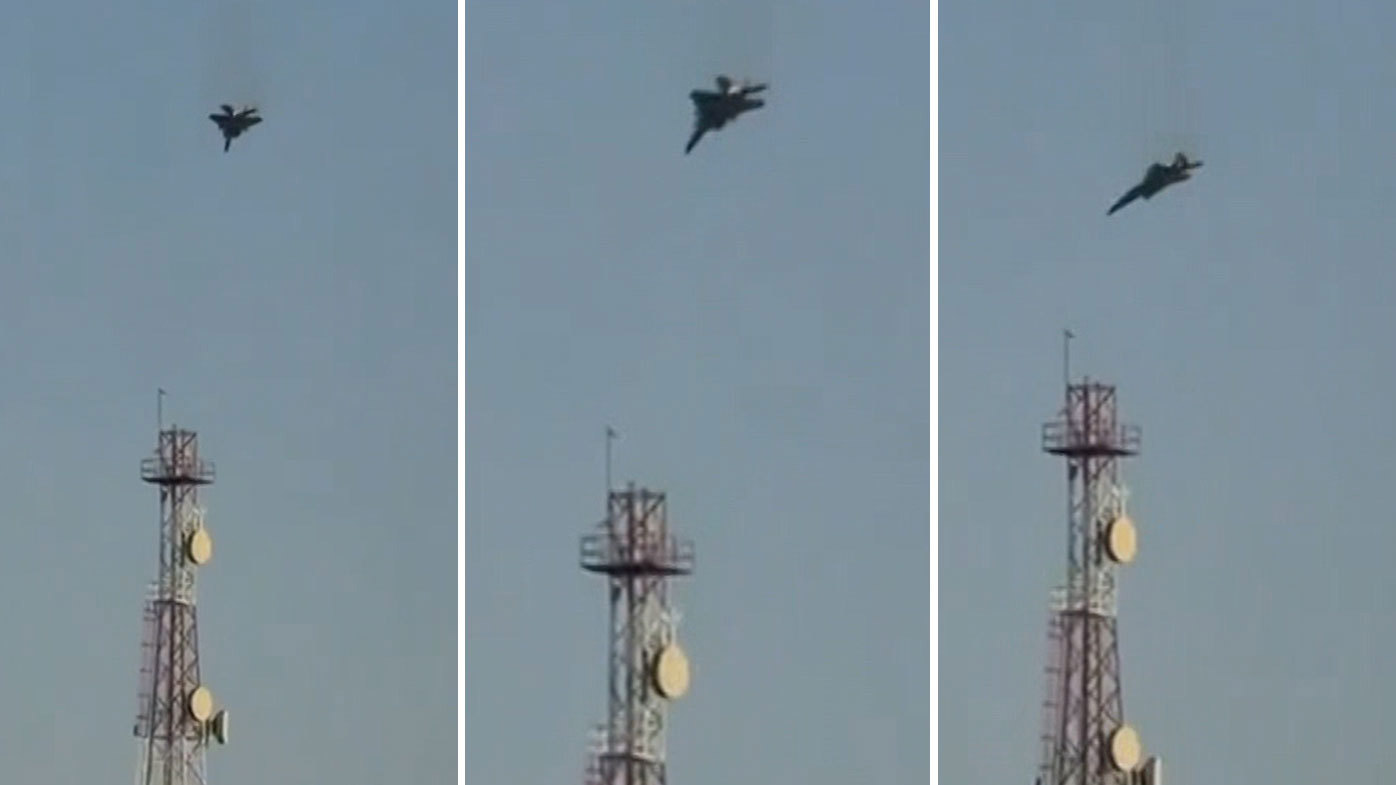
The headlines are bleeding with the word "accident." Three US fighter jets are down, lost to their own side's ordnance, and the media is treating it like a tragic lightning strike—a statistical anomaly that we should mourn and then move past. They are wrong. Calling a fratricide event of this magnitude an "accident" is a lie designed to protect the reputations of defense contractors and the procurement officers who signed the checks.
When a multi-billion dollar Integrated Air Defense System (IADS) identifies its own assets as targets and successfully prosecutes those "targets," the system hasn't failed. It has functioned exactly as it was programmed to, with terrifying efficiency. The problem isn't a glitch in the software; it is the fundamental arrogance of our reliance on automated target recognition and the decaying state of our Identification Friend or Foe (IFF) protocols.
We don't have a pilot problem. We have a complexity problem.
The Myth of the Fog of War
The "lazy consensus" among defense analysts is that "war is chaotic" and "mistakes happen in the heat of battle." This is a convenient shield. It suggests that human emotion or the "fog of war" is the culprit.
In reality, modern air warfare is increasingly a math problem handled by silicon. If three jets were splashed by friendly fire, it means the network failed at a foundational level. Modern combat relies on the Link 16 data exchange. This is supposed to be the "source of truth" for every pilot in the sky. When Link 16 fails, or when a sensor fusion engine decides that a specific radar signature is a threat despite the encrypted transponder signal, that isn't "fog." That is a logic error.
I have watched teams spend years trying to "patch" these issues, only to create new blind spots. Every time you add a layer of automation to "help" the pilot, you add a layer of abstraction that hides the truth. We have traded situational awareness for a clean interface, and now we are paying the price in airframes and lives.
Your IFF is Obsolete and Everyone Knows It
Most people believe that IFF—Identification Friend or Foe—is a simple "handshake" between a radar and a plane. It’s not. It is a fragile dance of cryptographic keys and timing.
- Mode 5 Level 2: This is the current gold standard. It uses lethal-interrogator logic.
- The Reality: In high-density electronic warfare environments, these signals are easily drowned out, spoofed, or simply "dropped" by the processing buffer of the ground-to-air battery.
The "People Also Ask" crowd wants to know: "Why can't they just see who it is on the screen?" Because at Mach 1.5, "seeing" is an act of digital interpretation. The sensor doesn't see a plane; it sees a return. If that return doesn't perfectly match the expected cryptographic pulse within a window of microseconds, the system defaults to "hostile."
We have built a "shoot first, ask questions later" architecture because we are terrified of losing the first-strike advantage. This isn't an accident. It's a design choice. We prioritized lethality over verification.
The Failure of Sensor Fusion
We are told that "Sensor Fusion" is the savior of the modern cockpit. The F-35 and its peers take data from infrared, radar, and electronic support measures and "fuse" them into a single picture.
But fusion is a double-edged sword. If one sensor is fed bad data—perhaps due to atmospheric conditions or a specific angle of approach—it can poison the entire "fused" track. Imagine a scenario where a ground-based Patriot battery's radar sees a distorted return due to terrain masking. The system "fuses" this with a lack of a clear IFF response and concludes it’s an enemy cruise missile. Once that digital verdict is reached, the human in the loop is often just a rubber stamp.
I’ve seen this in simulation and I’ve seen it in post-mission debriefs: the speed of modern engagements has outpaced human cognition. The pilot or the battery commander isn't "deciding" to fire. They are merely confirming what the computer has already told them is true. When the computer is wrong, the human is just the person who pushed the button on a lie.
The Financial Incentive to Ignore the Problem
Why hasn't this been fixed? Follow the money.
A "fix" for systemic friendly fire issues would require a total overhaul of the electromagnetic spectrum management across all branches of the military. It would mean admitting that our current generation of "stealth" assets actually makes IFF harder for our own side. Stealth isn't just invisible to the enemy; it’s a nightmare for friendly controllers to track reliably without "lighting up" and giving away their position.
Defense contractors would rather sell a new missile than a more reliable transponder. There is no glory in "better identification." There is only glory in "longer range" and "higher kill probability."
The Hard Truth About High-End Conflict
The public thinks this event was a "tragedy." In a peer-to-peer conflict with a country like China or Russia, this wouldn't be a headline; it would be Tuesday.
The density of the electronic environment in a modern war zone is so thick that the "safe" identification of friendly assets becomes statistically improbable over a long enough timeline. We are currently operating under the delusion that we can have 100% certainty in a 0% certainty environment.
Stop Asking for More Automation
The instinctive reaction to this event will be a call for "better AI" to distinguish between friends and foes. This is exactly the wrong move. Adding more "black box" logic to a system that already suffers from a lack of transparency is like trying to put out a fire with high-octane fuel.
We don't need smarter AI; we need dumber, more resilient hardware. We need pilots who are trained to operate when the network is down, and we need ground crews who are empowered to veto a digital track based on manual verification. But that takes time, and it isn't "scalable" in the eyes of the Pentagon.
The Actionable Pivot
If we want to stop killing our own pilots, we have to stop worshiping the "Single Pane of Glass" philosophy.
- Decentralize the Data: Stop trying to fuse everything into one track. Let the operators see the raw, conflicting data. It’s messy, it’s slower, but it’s honest.
- Mandate Analog Backups: High-frequency (HF) radio and visual identification procedures are treated like relics. They are the only things that work when the encryption keys fail or the GPS is jammed.
- Accept the Lethality Penalty: We have to accept that verifying a target will take three seconds longer, and in those three seconds, we might lose a jet to the enemy. That is a better price to pay than the psychological and strategic rot of killing our own.
The three jets lost weren't victims of an "accident." They were victims of a procurement philosophy that values the "kill chain" more than the "truth chain."
Until we stop pretending that software can replace situational awareness, we should get used to the sound of our own missiles hitting our own wings.
Accept the reality: the system didn't break. It worked. And that should terrify you.