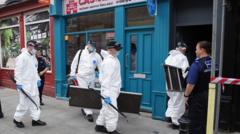
The headlines are always the same. "Shocking discovery." "Centuries-old mystery." "A tragic window into the past." A renovation crew pulls up a rotted oak plank in a 17th-century cottage and finds a bundle. The internet loses its collective mind over a "300-year-old baby" found under the floorboards.
The media treats these finds like a scene from a gothic horror novel or a lost chapter of a history textbook. They lean into the macabre, the sentimental, and the purely speculative. They frame it as an anomaly.
They are wrong.
Finding human remains, specifically infants, beneath the floors of old dwellings isn't a "shattering discovery." It is a baseline reality of historical domestic life that we have scrubbed from our sanitized modern memory. If you’re shocked by this, you don't understand history; you understand Disney-fied heritage.
The Myth of the Anomalous Tragedy
The "lazy consensus" suggests that a body under the floorboards implies a dark, hidden crime—a secret birth or a Victorian-era murder. While that makes for great true-crime podcasts, the data tells a much more clinical story.
In the 17th and 18th centuries, infant mortality rates were staggering. We’re talking about a world where nearly 25% of children didn't see their first birthday. Death wasn't an event; it was an environment.
The assumption that every concealed burial is a "crime" ignores the intersection of poverty, folk belief, and the rigid laws of the Church. For centuries, infants who died before baptism were denied burial in "consecrated" ground. To a grieving parent in 1720, the choice wasn't between a "proper funeral" and the floorboards. The choice was between throwing their child into an undignified communal pit for "sinners" or keeping them close, within the protection of the home.
Putting a child under the floor wasn't always an act of concealment. Often, it was an act of preservation.
Spiritual Insulation and the Foundation Sacrifice
Archaeology has a term for this that the mainstream press avoids because it sounds too "occult": spiritual architecture.
We find shoes in walls. We find mummified cats in rafters. We find "witch bottles" buried under hearths. These aren't accidents. They are deliberate deposits meant to protect the household. In many Northern European traditions, the "foundation sacrifice" was a real, albeit fading, cultural memory.
When a baby died naturally and was buried beneath the floor, the line between "grief" and "protection" blurred. The child became part of the house. They became a guardian. By framing these finds as "creepy mysteries," we strip away the agency of the people who lived there. We project our modern discomfort with death onto a culture that viewed the veil between the living and the dead as a thin, permeable membrane.
The Forensic Fallacy
Every time a floorboard discovery hits the news, the first question is always: "Can we get DNA?"
As someone who has looked at the intersection of archaeological ethics and public fascination, I can tell you: the obsession with "solving" these cases is a waste of resources. We spend thousands of dollars on radiocarbon dating and isotopic analysis to "identify" a life that lasted three days in 1740.
Why? To satisfy a voyeuristic itch.
We don't need a lab report to tell us that life was hard, medicine was non-existent, and the floor was the only cemetery a penniless mother could afford. Forensic science in these instances is often just expensive performance art. It adds nothing to our understanding of the period that we didn't already know from parish records and social history.
Stop Calling it a Discovery
A "discovery" implies something was lost. These remains weren't lost. They were placed.
The sensationalism surrounding these stories actually damages our ability to preserve history. When we treat these finds as "news," we encourage amateur "treasure hunters" and DIY renovators to rip up floors in search of a viral moment.
I’ve seen historical sites compromised because a homeowner thought they found a "murder mystery" and called a tabloid before a curator. By the time an expert arrives, the context—the most vital part of the find—is destroyed. Was there a coin nearby? A sprig of dried rosemary? A specific type of textile wrap? That context tells us if this was a desperate burial or a ritualistic one. Without it, you just have a skeleton and a headline.
The Brutal Reality of Space
Let's talk about the logistics that modern observers find "revolting."
Before the mid-19th century, the concept of "private space" was a luxury for the elite. Families lived in cramped, multi-generational hovels. When someone died, they weren't whisked away by a funeral director in a black SUV. They stayed in the room. They were washed on the kitchen table.
If you lived in a rural cottage with no transport and the ground was frozen solid in January, you didn't trek ten miles to a frozen churchyard for a child the law said you couldn't bury there anyway. You lifted a board.
It’s not "chilling." It’s practical. Our ancestors were many things, but they were not sentimental about floorboards. They used the tools and the space they had.
Why We Can't Handle the Truth
The reason these stories go viral isn't because they are rare. It’s because they break the contract we’ve made with the modern world. We’ve moved death to hospitals and morgues. We’ve turned "home" into a sanitized investment vehicle.
The idea that the very ground you walk on in your "charming" fixer-upper is a graveyard is an existential threat to the modern psyche. So, we frame it as a "mystery" to distance ourselves from it. We turn it into a "300-year-old baby" story so we don't have to acknowledge that for most of human history, the home was a place of both birth and rot.
If you’re living in a house built before 1900, there is a statistically significant chance you are sleeping above someone’s "secret."
The Professional Price of Honesty
The downside to this contrarian view? It’s boring for TV. Producers don't want to hear that a discovery is "consistent with standard post-medieval domestic burial practices." They want ghosts. They want scandal. They want a "cold case" that’s been cold for three centuries.
But if we want to actually respect the people who came before us, we have to stop treating their tragedies as entertainment. We have to stop acting like every floorboard burial is a precursor to a horror movie.
It’s time to accept that the past wasn't a series of "mysteries" waiting for a 21st-century influencer to "uncover" them. The past was a brutal, cramped, and deeply superstitious place where the floorboards were the only sanctuary left for the marginalized.
Stop looking for a "crime" and start looking at the floor. It's not a crime scene; it's a map of how we used to survive.
Put the boards back down and let them be.