The Fetishization of Ancient Silicon
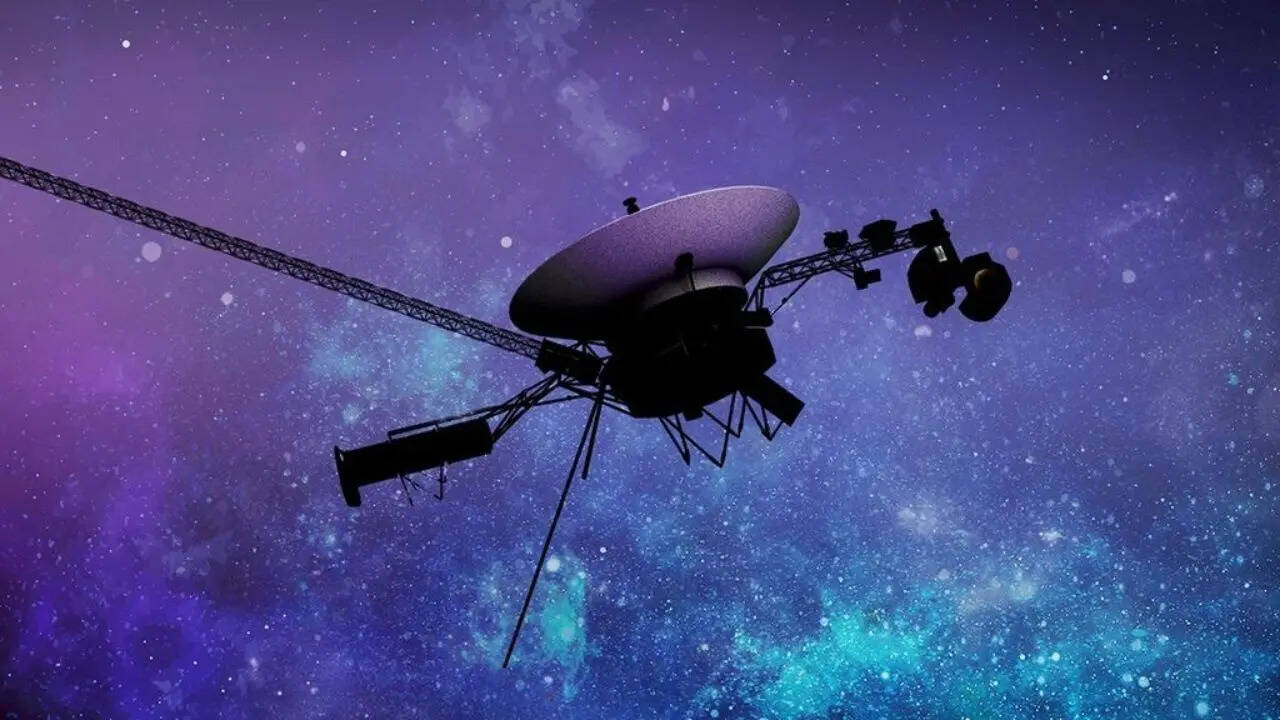
Mainstream science reporting has a problem. It treats Voyager 1 like a gritty protagonist in a survival movie—the lone hero outlasting the odds in the interstellar void. We see headlines praising the "miracle" of a 47-year-old computer still pinging Earth from 15 billion miles away.
That sentiment is lazy. It is a dangerous distraction from the reality of technical stagnation.
Voyager 1 isn't a miracle. It is a testament to the fact that we have spent the last half-century perfecting the art of keeping a ghost on life support rather than building the fleet that should have replaced it decades ago. While the public swoons over a probe running on less memory than a modern car key, the aerospace industry is quietly admitting that we have lost the ability to build hardware that durable.
We aren't celebrating Voyager's longevity. We are mourning our own lost ambition.
The Digital Archeology Trap
The recent "thrilling" recovery of Voyager 1’s Flight Data Subsystem (FDS) is a prime example of the industry's misplaced priorities. When a single chip failed in early 2024, NASA engineers had to dig through decades-old paper manuals to find a workaround.
Let's be clear about the tech we are deifying here. We are talking about:
- Three dual-redundant computer systems.
- Total memory capacity of about 68 kilobytes.
- Data transmitted via an 8-watt transmitter (about the power of a nightlight).
The "fix" involved moving code to different parts of the functional memory. It was an impressive feat of digital archeology, certainly. But it also highlights a brutal truth: we are dependent on systems we no longer fully understand. If the original engineers pass away, the knowledge base for Voyager vanishes. We are maintaining a mechanical fossil because we are too risk-averse to launch its successor.
The consensus view says: "It’s amazing it still works!"
The industry insider view says: "Why is this our only functional interstellar asset?"
Efficiency is the Enemy of Resilience
We love to talk about "optimization" in modern tech. We want everything smaller, faster, and cheaper. But Voyager 1 proves that efficiency is the enemy of survival in deep space.
Modern spacecraft are built with Commercial Off-The-Shelf (COTS) components. They are faster, but they are fragile. They are susceptible to Single Event Upsets (SEUs)—where a stray cosmic ray flips a bit and crashes the system. Voyager 1 survived because its circuitry was "chunky." The gates were large enough that a stray particle didn't always spell doom.
We have traded robustness for processing power. If we launched a "modern" Voyager today with a standard high-end processor, the radiation environment of the heliopause would likely fry its logic gates within a few years unless we spent billions on heavy shielding.
We’ve forgotten how to build for the long haul because the venture capital and government funding cycles only care about the next five to ten years. Voyager was built in an era where "mission success" meant decades, not the next quarterly report.
The Plutonium Debt
The most uncomfortable truth about Voyager’s "immortality" is its power source. It runs on Multi-Hundred Watt Radioisotope Thermoelectric Generators (MHW-RTGs). These convert the heat from the decay of Plutonium-238 into electricity.
The probe is currently losing about 4 watts of power every year as the plutonium decays. NASA has been systematically shutting down heaters and non-essential instruments just to keep the basic telemetry alive.
Here is the part the upbeat articles skip: The United States essentially stopped domestic production of Plutonium-238 in the late 1980s. We’ve been living off a dwindling stockpile ever since. While production restarted in small amounts at Oak Ridge National Laboratory around 2015, we are nowhere near the capacity needed for a massive fleet of interstellar probes.
We are celebrating Voyager’s survival while we lack the fuel to send a replacement. It’s like cheering for a car that’s coasting on its last fumes while the gas stations behind it have all been demolished.
The Myth of Interstellar Discovery
We are told Voyager is "exploring the stars." That’s a romantic lie.
Voyager 1 is in the interstellar medium, yes, but it is effectively blind. It isn't taking photos anymore—the cameras were turned off in 1990 to save power. Its "discoveries" now consist of measuring plasma density and magnetic fields. These are valuable data points for physicists, but they are a far cry from the "grand tour" of the planets that captured the world's imagination.
The probe is essentially a glorified thermometer floating in a dark ocean.
If we truly cared about interstellar exploration, we would be funding projects like Breakthrough Starshot or nuclear-thermal propulsion systems. Instead, we spend millions in man-hours to squeeze one more bit of data out of a 1970s tape recorder. We are addicted to the nostalgia of the Golden Age of Space because we are afraid to admit we aren't in one anymore.
The False Hope of Software Patches
The engineering team earned their accolades for the memory-shift fix, but let’s look at the math. The distance between Earth and Voyager 1 is so vast that light takes over 22 hours to travel one way.
$$t = \frac{d}{c}$$
Where $d$ is approximately $2.4 \times 10^{10}$ km. Every time we send a command, we have to wait nearly two days to see if we accidentally killed the probe. This isn't "agile development." It’s a slow-motion tightrope walk over an abyss.
The reality of space-hardened software is that it is rigid by design. The more we "patch" it to account for failing hardware, the more technical debt we accrue. We are building a house of cards on a foundation that is physically disintegrating.
Why You’re Asking the Wrong Question
People ask: "How much longer can Voyager 1 live?"
The real question is: "Why have we allowed ourselves to be satisfied with a 50-year-old answer?"
We have become a society that maintains rather than creates. We see Voyager as a triumph of longevity, but it is actually a symptom of our inability to take big risks. In 1977, we built something that could last 50 years. In 2024, we build satellites that are designed to de-orbit and burn up in five.
The Death of the Generalist
The Voyager mission succeeded because the original team consisted of generalists who understood the entire stack—from the physics of the RTGs to the assembly language of the FDS.
Today’s engineering environment is hyper-siloed. You have "experts" in Python who couldn't tell you how a logic gate works. You have hardware designers who have never written a line of low-level code. If we tried to build Voyager today, the project would be buried in committee meetings, "synergy" workshops, and layers of abstraction that would make the final product bloated and fragile.
Voyager 1 is a reminder that excellence requires simplicity and total system ownership. It is a rebuke to our modern obsession with complexity.
Stop Clapping for the Ghost
When Voyager 1 finally goes silent—and it will, likely by 2030—there will be a global outpouring of grief. People will talk about it as the end of an era.
They’re wrong. The era ended a long time ago. We just used Voyager to pretend it hadn't.
We need to stop treating this probe like a mascot and start treating it like a challenge. If a group of engineers using slide rules and 68KB of memory could reach interstellar space, our failure to establish a permanent presence there with today's technology is nothing short of a generational embarrassment.
Let the probe die. Turn the heaters off. Stop the desperate search for memory workarounds. Take the resources, the talent, and the funding used to maintain this relic and put them into a mission that actually moves the needle.
The most respectful thing we can do for Voyager’s legacy isn't to keep it on life support; it's to build something that makes it look like the primitive antiquity it actually is.
Launch something new or admit that we’ve given up on the stars.