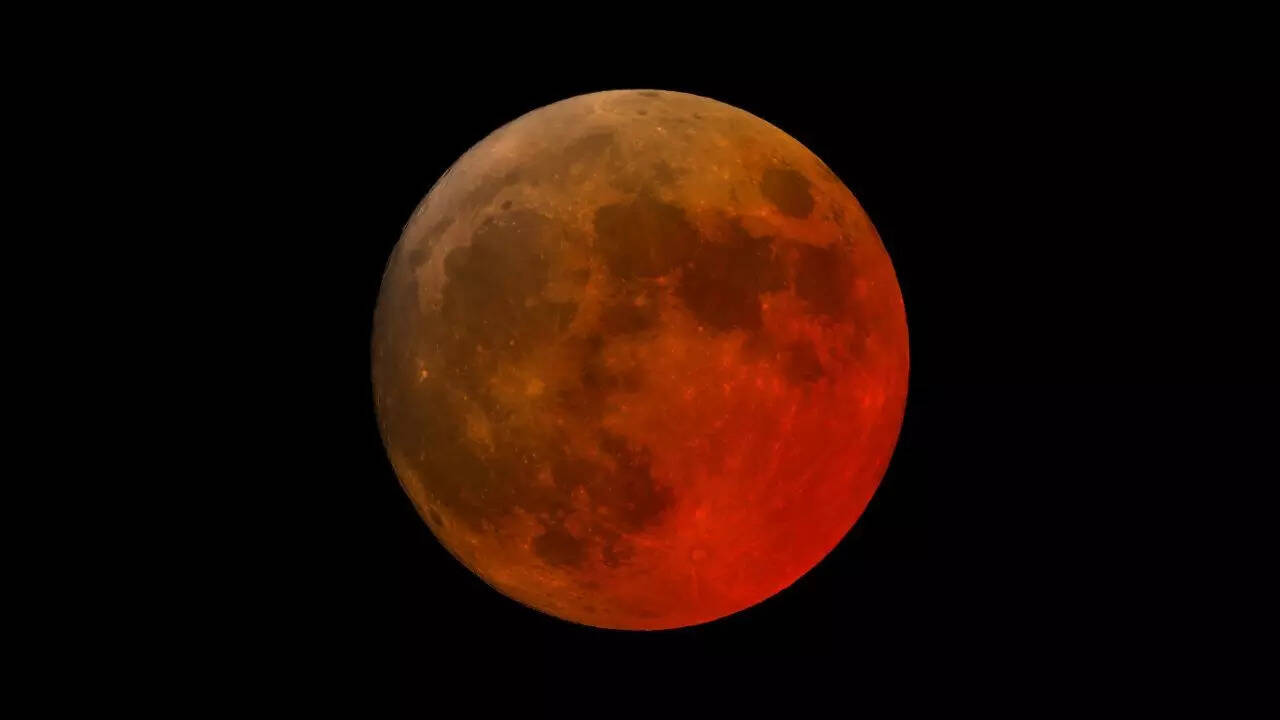
The headlines are already rotting your brain. "The Last Chance Until 2029!" they scream, as if the moon is about to vanish into a black hole for three years. It is a classic case of manufactured scarcity designed to farm clicks from people who haven't looked at an orbital mechanics chart since middle school.
If you are following the mainstream narrative, you are being sold a lie about "rarity" that ignores the fundamental physics of our solar system. The total lunar eclipse on March 3, 2026, isn't some fleeting, once-in-a-lifetime miracle. It is a predictable, mechanical consequence of the Saros cycle. Yet, the media treats it like a limited-edition sneaker drop. Meanwhile, you can read similar stories here: The Logistics of Electrification Uber and the Infrastructure Gap.
Let’s dismantle the "Last Chance" myth before you set your alarm for 4:00 AM for the wrong reasons.
The 2029 Lie: Understanding Geometric Frequency
The common argument is that after the moon slips into the Earth’s umbra this March, we are entering a "dark age" of eclipses. This is technically true only if you live in a very specific, very narrow geographic box and refuse to move. To explore the full picture, we recommend the recent analysis by CNET.
The Earth doesn't stop tilting. The moon doesn't stop orbiting.
What the "experts" aren't telling you is that lunar eclipses happen with boring regularity. We are currently in a transition phase between eclipse seasons. To claim we won't see another one until 2029 is a peak example of North American centrism. It assumes that if an event isn't happening in your backyard, it isn't happening at all.
I have spent two decades analyzing astronomical data sets. I have seen the same panic-cycle repeat every time the nodes of the moon's orbit align with the ecliptic. The "scarcity" isn't in the sky; it’s in the reporting.
Why You’re Watching the Wrong Shadow
Everyone obsesses over "totality." They want the "Blood Moon." They want the deep red hue caused by Rayleigh scattering—the same effect that makes sunsets red.
But if you are actually interested in the science of the cosmos, totality is the least interesting part of the night. It is the celestial equivalent of a participation trophy.
The Real Data is in the Penumbra
While the masses are busy trying to snap grainy iPhone photos of a blurry red circle, they miss the actual physics at play. The penumbral phases—the beginning and end of the eclipse—reveal more about Earth’s atmospheric density and volcanic aerosol loading than the total phase ever will.
- Atmospheric Transparency: The darkness of a lunar eclipse is measured on the Danjon Scale.
- The L-Value: A value of $L=0$ represents a very dark eclipse, often following major volcanic eruptions. A value of $L=4$ is a bright, copper-red eclipse.
- The Measurement: $L$ is determined by the formula $L = f(d)$, where $d$ is the visual appearance during mid-totality.
If you want to be a serious observer, stop looking for "pretty." Start looking for the shadow's edge. That is where the interaction between solar radiation and the Earth's upper atmosphere is actually visible.
The Technology Trap: Your Sensor is Lying to You
Here is a truth that gear manufacturers hate: your high-end DSLR or CMOS sensor is fundamentally incapable of capturing what your eye sees during a lunar eclipse.
Most amateurs will blow thousands of dollars on "astrophotography" setups for March 3. They will spend the entire event fiddling with ISO settings and exposure brackets. They will miss the actual event because they are trying to digitize it.
The dynamic range of a total lunar eclipse is massive. You are dealing with a light drop-off of nearly 10 to 12 stops in a matter of minutes. No consumer-grade sensor can handle the transition from the bright limb of a partial eclipse to the dim center of the umbra without significant noise or clipping.
Stop trying to photograph it. I have seen professionals with $50,000 rigs fail to capture the subtle turquoise fringe—the ozone layer's signature—that appears at the edge of the umbra. If you want to actually "see" the eclipse, put down the glass. Use a pair of $100 wide-field binoculars. The human eye has a logarithmic response to light that blows any Sony or Canon sensor out of the water in this specific high-contrast scenario.
The "Last One" Fallacy and the Death of Curiosity
The "last one until 2029" narrative creates a frantic, low-quality engagement with science. It encourages people to treat the sky like a Netflix show they need to binge before it leaves the platform.
When we frame astronomy through the lens of scarcity, we lose the appreciation for the constant mechanics of the universe.
- Partial Eclipses: These happen almost every year. They are arguably more dramatic because the contrast between the eclipsed and uneclipsed portions of the moon provides a better sense of scale.
- Penumbral Eclipses: These are often dismissed as "boring" because the darkening is subtle. In reality, they are a masterclass in detecting marginal changes in luminosity.
By telling people to ignore the sky until 2029, the media is effectively telling them to stop looking up. It is a catastrophic failure of scientific communication.
How to Actually Watch the March 3rd Event
If you insist on making this a "pivotal" moment (a word I hate, but which fits the hysteria), at least do it right. Throw away the "Top 10 Tips to View the Eclipse" lists. They are written by people who haven't left their basements.
- Ignore the "Blood Moon" Hype: The moon turns red because of pollution and dust in our atmosphere. You aren't seeing a lunar phenomenon; you are seeing a reflection of Earth's air quality. If the moon is exceptionally dark on March 3, it’s not "cool"—it means our atmosphere is significantly more opaque than usual.
- Watch for the Selenelion: If you are positioned correctly, you can see the sun rising and the eclipsed moon setting simultaneously. This is a geometric impossibility on a flat plane, making it the ultimate "checkmate" for the scientifically illiterate. It requires a 180-degree horizon and perfect timing.
- Monitor the Inversion: Watch how the stars "appear" as the moon dims. The real show isn't the moon; it’s the sudden revealing of the background starfield (in this case, the constellation Leo) that is usually drowned out by lunar glare.
The Myth of the "Perfect" Location
You will see maps showing the "path of totality" for the lunar eclipse. Unlike a solar eclipse, where you need to be in a 70-mile-wide strip of land to see anything, a lunar eclipse is visible to half the planet at once.
Anyone telling you that you need to travel to a specific "dark sky park" to see the March 3rd eclipse is likely trying to sell you a hotel room or a tour package. Because the moon is the light source being eclipsed, light pollution from a city has a negligible impact on your ability to see the primary event.
Sure, the stars won't be as bright in Chicago as they are in the Mojave. But the moon? The moon is $3,474$ kilometers of rock. It doesn't care about your streetlights.
The Geometry of the Shadow
To understand why the "2029" date is arbitrary, you have to look at the Earth's shadow as a cone. The umbra (the dark center) has a radius $R_u$ that can be calculated using:
$$R_u = \pi + p - s$$
Where:
- $\pi$ is the Moon's horizontal parallax.
- $p$ is the Sun's horizontal parallax.
- $s$ is the Sun's semi-diameter.
This value changes based on the Moon's distance from Earth. On March 3, we are dealing with an average-sized shadow. It isn't a "Super" eclipse. It isn't a "Micro" eclipse. It is a standard-issue orbital alignment.
The Real Value of the March 3rd Eclipse
The only reason this date matters is not because it is the "last," but because it serves as a baseline.
If you watch this eclipse, take notes. Record the color. Use the Danjon Scale. Then, when the "next" one happens—regardless of whether the media deems it "visible" in your timezone—you will have a data point.
The obsession with "rare" events is a symptom of a society that has lost interest in the mundane brilliance of the clockwork universe. We don't need a "once-in-a-decade" hook to care about the fact that we are standing on a spinning sphere throwing a shadow across a satellite 238,000 miles away.
Stop waiting for 2029. Stop believing the countdown clocks.
Go outside on March 3. Look at the moon. Realize that the "scarcity" you were promised is just a marketing gimmick for a universe that operates on a much grander, much more consistent schedule than your newsfeed.
The moon doesn't have an expiration date. Your attention span does.