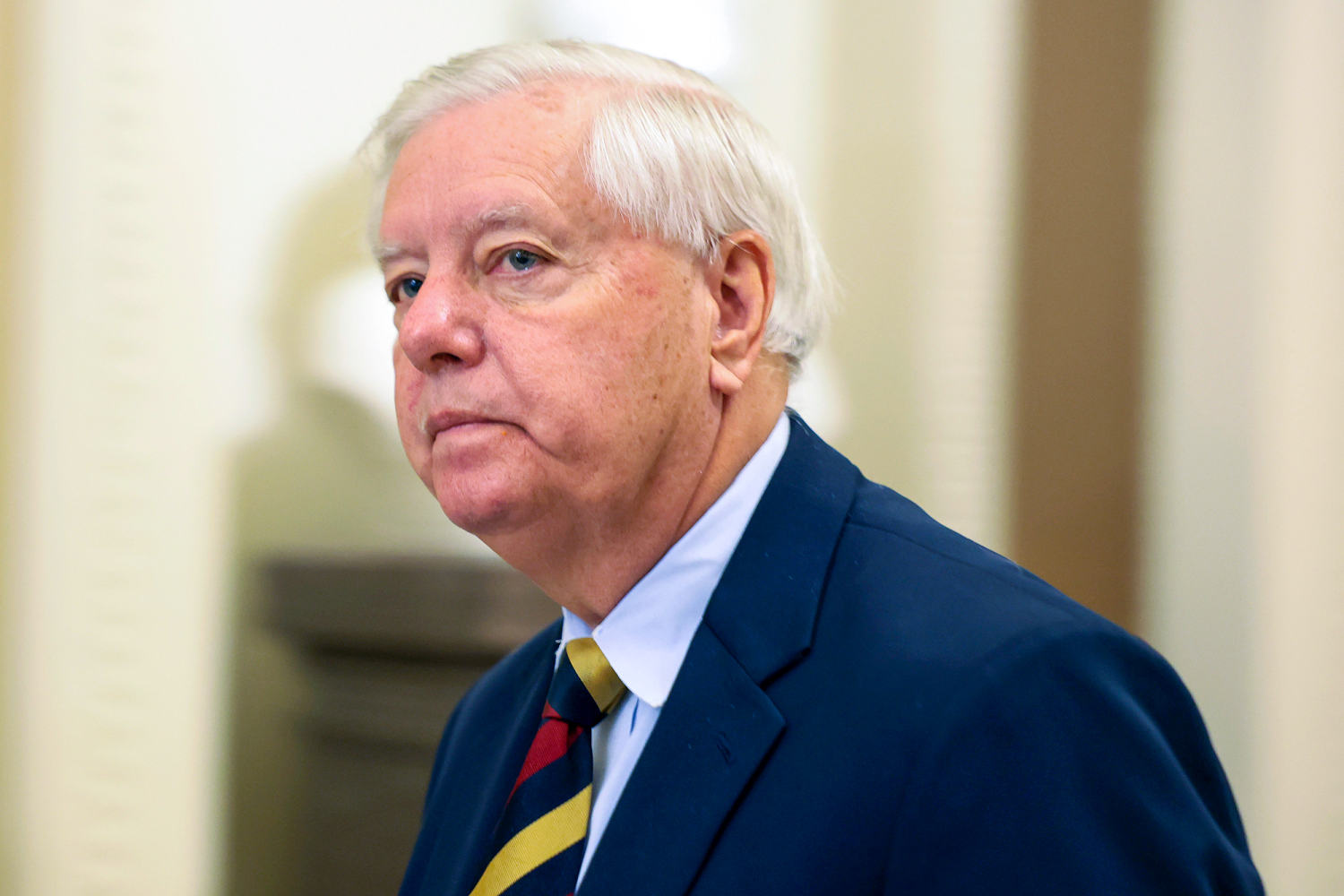
The foreign policy establishment is suffering from a collective, terminal case of 1970s panic. Senator Lindsey Graham takes to the airwaves to beat the drum of maximum escalation, declaring that the closure of the Strait of Hormuz is "hurting us all" and demanding we strike Iran’s energy infrastructure. The logic is as old as the rust on our mothballed battleships: a choked chokepoint means global economic ruin, so the American military must play global ocean cop, regardless of the body count or the ballooning national debt.
It is a completely bankrupt premise.
The ongoing closure of the Strait of Hormuz is not the apocalypse. It is a long-overdue stress test that the global economy actually needs to endure. For decades, Washington has operated on the lazy consensus that guaranteeing the free flow of oil through a twenty-one-mile-wide ditch controlled by a hostile regional power is a permanent American obligation. I have watched defense contractors and beltway think tanks milk billions out of this exact threat matrix. They want you to believe that if a single supertanker gets stuck, the modern world grinds to a halt.
The reality is far more interesting. By rushing to "fix" the chokepoint with kinetic strikes, we are artificially extending our dependence on a fragile, geographically cursed supply chain. The status quo isn’t hurting us all; the status quo has been coddling us.
The Myth of the Unsubstitutable Waterway
Let's look at the actual mechanics of global energy trade, rather than the frantic hyperbole broadcasted from Capitol Hill. Yes, roughly a fifth of the world’s petroleum liquids pass through the Strait. But the assumption that this oil simply vanishes if the gate slams shut is economically illiterate.
When supply chains contract, capital adapts with brutal efficiency. We are already seeing the early stages of this restructuring. Saudi Arabia’s East-West Pipeline and the United Arab Emirates’ Habshan–Fujairah pipeline exist precisely for this scenario. Combined, these networks can bypass the strait to move millions of barrels per day directly to the Red Sea and the Gulf of Oman. Are they at maximum capacity right now? No. Will they get there when the financial incentives become impossible to ignore? Absolutely.
Furthermore, global markets are no longer tethered exclusively to the whims of the Persian Gulf. The rise of non-OPEC production—spearheaded by the Permian Basin in West Texas, the pre-salt fields of Brazil, and Guyana’s massive offshore developments—has fundamentally rewritten the geopolitical playbook. The United States is a net exporter of crude oil. The panicked rhetoric about domestic gas lines and economic collapse is a phantom menace used to justify a forward military posture that costs more than the oil itself is worth.
Imagine a scenario where the U.S. Navy permanently steps back from policing the Persian Gulf. The immediate result would be a sharp, painful spike in Brent crude. That much is undeniable. But that pain is the market's natural pricing mechanism for risk. By suppressing that risk with American tax dollars and military lives, we have spent decades subsidizing cheap energy for America's economic competitors.
Subsidizing Beijing with American Blood
Who actually benefits from the U.S. military guaranteeing safe passage through Hormuz? Look at the destination tracking data for the supertankers leaving the Gulf. They aren't heading to New York or Los Angeles. They are heading to Ningbo, Qingdao, and Chiba.
China is the world’s largest importer of crude oil, relying on the Middle East for roughly half of its supply. When Senator Graham demands that American warships engage in "limited kinetic activity" to open the waterway, he is effectively asking American sailors to risk their lives to secure the energy supply chain of our primary geopolitical rival. It is strategic madness.
If Beijing wants the oil flowing through Hormuz, let Beijing build the carrier strike groups, establish the regional bases, and absorb the anti-ship missiles required to police it. Let them negotiate the diplomatic minefields of the Middle East. By stepping in to play the hero, Washington relieves China of a massive strategic burden and allows them to focus their naval ambitions entirely on the First Island Chain and the Taiwan Strait.
We are told that a closed strait collapses the global economy, which in turn hurts America. This is the classic trap of secondary consequences. The primary consequence of military intervention is a hot, unpredictable war with a deeply entrenched regional power that has spent forty years preparing for an asymmetric naval conflict. The cost of that war—in debt, destabilization, and lives—dwarfs any temporary economic friction caused by rerouting oil tankers.
The Brutal Truth About "Project Freedom Plus"
The latest buzzword floating out of Washington is "Project Freedom Plus"—a sanitized euphemism for a multinational naval coalition backed by targeted strikes on Iranian soil. It sounds clean on a PowerPoint slide. It is a disaster in practice.
The assumption underlying this strategy is that Iran will fold under a weekend's worth of airstrikes. It completely ignores the reality of modern asymmetric warfare. Iran does not need to win a fleet-on-fleet engagement with the U.S. Navy. They have thousands of smart mines, low-cost loitering munitions, and swarm boats hidden along a jagged, mountainous coastline that spans the entire length of the strait.
If the U.S. initiates kinetic strikes, Iran’s response will not be a formal naval battle. It will be the systematic targeted destruction of regional infrastructure. They can hit the desalination plants in Saudi Arabia, the loading terminals in Ju'aymah, and the processing facilities at Abqaiq with drone swarms.
Are we prepared to occupy southwestern Iran to stop drone launches? Because that is the logical endpoint of the escalation ladder Graham is casually climbing. If you pull the trigger on a "limited" strike, you better be ready to buy the whole war.
What Happens If We Do Nothing?
The hardest pill for the foreign policy elite to swallow is that inaction is often the most potent strategic weapon available.
If the United States refuses to bail out the international community, the crisis shifts from a Washington problem to a global problem. The countries most exposed to the chokepoint—China, India, Japan, and South Korea—will be forced to act. They will have to deploy their own resources, spend their own capital, and make their own uncomfortable diplomatic concessions to secure the waterway.
More importantly, prolonged disruption forces an aggressive, market-driven decoupling from volatile energy corridors. Capital hates instability. If the Strait of Hormuz remains a high-risk zone, international investment will permanently shift toward safer, localized energy infrastructure, domestic production, and alternative transit routes.
The pain of a closed strait is a corrective mechanism. It is the economic fever required to break a dangerous, multi-decade addiction to a broken geopolitical status quo.
Stop trying to fix the Strait of Hormuz. Stop sending carrier groups to play referee in a centuries-old regional feud. Let the chokepoint remain choked until the nations who actually rely on it are forced to pay the true, un-subsidized price of their energy security.