The Spectacle is a Distraction
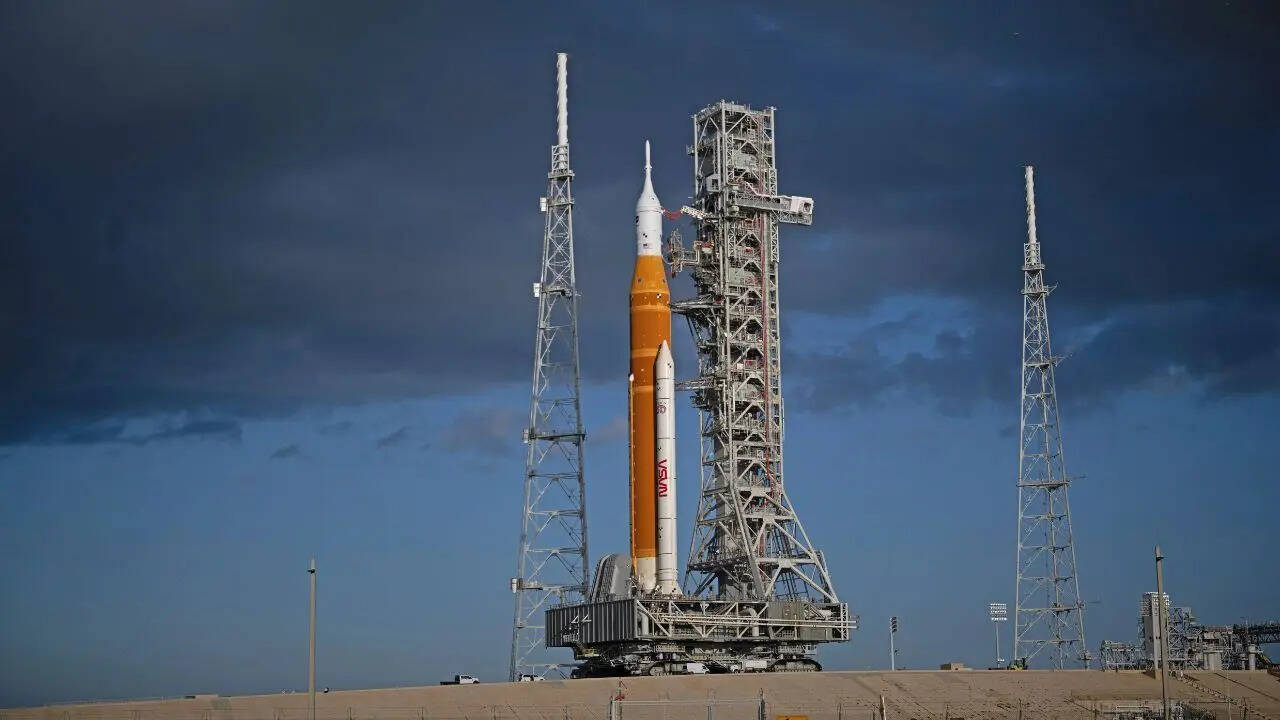
Most media outlets are prepping you for a light show on April 1. They want you to tune in for the orange plume of the Space Launch System (SLS), the slow-motion rumble of the solid rocket boosters, and the emotional close-ups of four astronauts waving from the gantry. They treat a moon mission like a Super Bowl halftime show—all production value and zero substance.
If you’re watching Artemis II for the "vibes," you’re missing the point.
The mainstream narrative is obsessed with the "return to the Moon." It’s a nostalgic trap designed to make you feel like it’s 1969 again. But Artemis II isn't a victory lap. It’s a high-stakes stress test of a rickety supply chain and a legacy architecture that is fighting for its life against the rapid iteration of private spaceflight. You shouldn't be looking at the countdown clock; you should be looking at the telemetry.
The "Free Return" is a Safety Net, Not a Choice
The competitor articles will tell you Artemis II is a "daring loop around the lunar far side." That’s a romantic way of saying the mission is designed so the crew can’t get stuck.
The mission uses a free-return trajectory. In simple terms, gravity does the work. Once the Orion spacecraft is on its path, if the service module engine fails to fire for a lunar orbit insertion, the Moon’s gravity naturally slingshots the capsule back toward Earth.
- The Lazy Consensus: This is a "planned flyby" to survey landing sites.
- The Reality: This is a conservative, "fail-safe" mission profile because NASA cannot afford a repeat of the Apollo 13 oxygen tank crisis with a vehicle that costs roughly $4 billion per launch.
We aren't going to the Moon on April 1. We are throwing a $20 billion dart at the Moon and hoping the wind doesn't blow. The real drama isn't whether they see the lunar surface—it's whether the life support systems (ECLSS) can handle four humans in a high-radiation environment for ten days without a hardware "hiccup" that would be fatal in a deep-space scenario.
Why the SLS is a Dead Man Walking
Industry insiders know the SLS is a "Frankenstein" rocket. It uses Space Shuttle Main Engines (RS-25s) that were designed to be refurbished and reused, yet we are dunking them into the Atlantic Ocean after a single use. It’s like buying a Ferrari, driving it once, and then pushing it off a cliff.
While you watch the launch, keep this in mind: SpaceX’s Starship is designed to be fully reusable. NASA’s current Artemis architecture is built on 1970s hardware logic wrapped in a 2020s carbon-fiber skin.
The Real Cost Breakdown
| Component | Status | Cost Per Mission (Est.) |
|---|---|---|
| SLS Rocket | Consumable (Destroyed) | $2.2 Billion |
| Orion Capsule | Partially Reusable | $1 Billion |
| Ground Systems | Fixed Cost | $600 Million |
I’ve sat in rooms where engineers openly admit the SLS is a jobs program disguised as an exploration initiative. If you want to be a smart viewer, don't cheer for the lift-off. Watch the Integrated Communications and Navigation (ICPS) stage separation. If that second stage doesn't perform a perfect burn to raise the perigee, the mission is over before it clears the Van Allen belts.
The Radiation Problem No One Mentions
The media loves to talk about the "first woman" and "first person of color" on a lunar mission. Representation matters, but the Sun doesn't care about demographics.
Artemis II will take the crew further from Earth than any human has traveled in over fifty years. They will pass through the Van Allen radiation belts—zones of energetic charged particles trapped by Earth's magnetic field.
The Orion spacecraft has "radiation shelters" (essentially moving cargo around to create a denser shield), but the mission is a gamble on solar weather. If a massive Solar Particle Event (SPE) occurs while the crew is outside the protection of Earth's magnetosphere, the mission shifts from a PR win to a medical emergency.
When you see the "streaming details" and "crew bios" on other sites, remember that they are ignoring the physics of $\text{Ionizing Radiation}$. The crew isn't just "flying"; they are being pelted by high-speed protons.
How to Actually "Watch" This Mission
Stop looking at the 4K NASA TV feed for ten seconds and look at the Flight Director’s loop if you can find a transcript.
- T+ 0:00 to 2:12: Watch the Solid Rocket Boosters (SRBs). They provide 75% of the thrust. If there is a thrust vector control failure here, the abort system (LAS) has milliseconds to pull the capsule away.
- The High Earth Orbit (HEO) Phase: This is the most underrated part of the mission. Orion will stay in a massive elliptical orbit around Earth for 24 hours before heading to the Moon. Why? To test the proximity operations. They are going to use the spent ICPS stage as a target to practice manual flying.
- The Splashdown: Everyone forgets the heat shield. Orion will hit the atmosphere at 25,000 mph (roughly Mach 32). The friction will create a plasma field that hits temperatures of 5,000°F.
The "April 1" Irony
The scheduled date is April Fool’s Day. There is a dark irony in that. For years, critics of the SLS program called it a joke—a "Rocket to Nowhere."
If Artemis II succeeds, it proves that "Old Space" can still deliver, albeit at a price tag that would make a small nation flinch. If it fails, or even if it suffers a significant delay (which is statistically probable given NASA's 0% "on-time" record for new heavy-lift vehicles), the entire lunar program will likely be handed over to the private sector entirely.
The "Live Streaming Details" you’re looking for shouldn't be about where to find the YouTube link. You should be looking for the live telemetry of the Optical Communications experiment. NASA is testing laser-based data transmission. This is the only "cutting-edge" part of the mission. It allows for 4K video from the Moon. Everything else is just expensive plumbing.
Don't Buy the Hype, Verify the Data
The "People Also Ask" sections on Google are filled with questions like "How long does it take to get to the Moon?" and "Who are the astronauts?"
Wrong questions.
You should be asking: "What is the acceptable margin of error for the Orion heat shield charring?" or "How many RS-25 engines does NASA have left in the warehouse before they run out of Shuttle-era parts?"
The truth is that Artemis II is a bridge. It’s a bridge between the era of government-funded "prestige" missions and the era of commercial space dominance. We are watching the last gasp of a 20th-century philosophy trying to survive in a 21st-century economy.
When the countdown hits zero on April 1, don't just stare at the screen in awe. Look at the vibration data during Max-Q (maximum dynamic pressure). If the vehicle shakes more than the modeled parameters, the structural integrity of future "Lunar Gateways" is in question.
Space isn't about "bravery" or "pioneering" anymore. It’s about logistics, thermal management, and orbital mechanics. If you want to be more than a passive consumer of NASA propaganda, start paying attention to the hardware, not the hashtags.
Turn off the commentary. Mute the "social media influencers" NASA invited to the Cape. Watch the burn timers.
The math doesn't lie, but the PR department does.