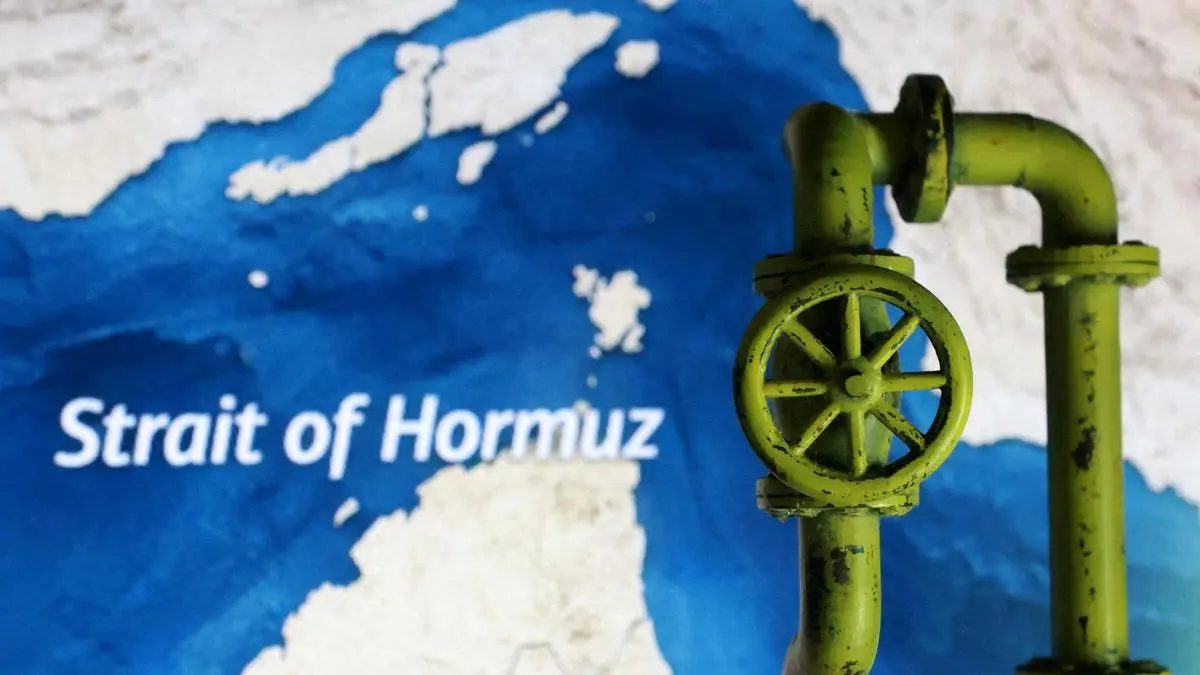
Mainstream maritime analysts are treating the birth of the Persian Gulf Strait Authority (PGSA) as a desperate, mid-conflict stunt by Tehran to save face. They see the newly minted @PGSA_IRAN account on X and the demands for vessel manifests as a paper tiger trying to govern an international waterway via email.
They are completely wrong.
This is not a temporary wartime escalation. It is a permanent corporate restructuring of global energy transit. While the Pentagon relies on Operation Epic Fury and naval escorts to force a return to the old status quo, Iran is running a textbook platform-monopoly play. They have realized that you do not need to sink tankers to control a chokepoint when you can just become its digital clearinghouse.
By creating a sovereign transit-toll regime, demanding data packages to info@PGSA.ir, and pricing risk through its new bitcoin-backed "Hormuz Safe" insurance platform, Iran is shifting from a military threat to a hostile landlord. If you think a permanent Western naval presence or a future ceasefire will restore "free transit" through the strait, you are fundamentally misreading the mechanics of modern maritime leverage.
The Sovereign Extortion Monopoly
The legacy consensus assumes that under international law, specifically the UN Convention on the Law of the Sea (UNCLOS), the Strait of Hormuz is protected by the transit passage doctrine. Analysts expect that once the current geopolitical dust settles, international courts or coalition warships will re-establish unimpeded navigation.
That reality died when the PGSA went live.
I have spent years watching shipping boards navigate arbitrary compliance frameworks. What Iran is doing right now is not a blockade; it is a platform capture. They are standardizing a protection racket into a legitimate administrative workflow.
To pass through the strait today, a ship must submit a Vessel Information Declaration detailing its cargo, ultimate beneficial ownership, crew manifests, and explicit insurance coverages. Refuse the paperwork, and the IRGC Navy moves from coastal patrol screens to an active open-water presence. They do not even need to fire a shot. They simply crowd the sea lanes with hundreds of high-speed craft, turning a 21-mile-wide channel into an impenetrable holding queue.
The compliance cost is already baked into the system. Underneath the table, certain commercial operators are reportedly shelling out up to $2 million per transit, settled cleanly in Chinese yuan or bitcoin. This is a brilliant, permanent monetization of a geographic monopoly. Tehran has realized that a physical blockade costs money and invites cruise missiles, but a bureaucratic digital toll booth generates $10 billion in non-fiat, un-sanctionable revenue.
Why Your Naval Escorts Are Half-Measures
Corporate boards love the idea of military protection. When the White House launched "Project Freedom" to guide stranded mariners out of the Gulf, the shipping industry exhaled a collective sigh of relief. Tankers started aligning themselves behind coalition destroyers, believing guns could solve a sovereign regulatory trap.
They cannot. Naval escorts are a tactical band-aid for a structural commercial disease.
Consider the compliance reality for a compliance officer sitting in London, Singapore, or New York. The U.S. Office of Foreign Assets Control (OFAC) explicitly warns that any payment made to Iranian-linked entities for safe passage triggers severe secondary sanctions. Meanwhile, the PGSA dictates that any ship deviating from their specific corridors faces direct seizure.
A warship can defend a tanker from an incoming anti-ship cruise missile. A warship cannot defend a shipowner from losing their global corporate insurance policy because they ran an administrative gauntlet. If a vessel operates "dark" with its Automatic Identification System (AIS) deactivated to evade PGSA tracking, it invalidates its P&I club coverage. If it turns AIS on and complies with Iran, it flags itself for an OFAC audit.
Iran has created a classic double-bind. By forcing operators to choose between physical risk or financial ruin, they have bypassed the military supremacy of the West entirely. We saw this exact playbook with bilateral cluster transits, where India-flagged vessels accepted operational assurances from Tehran to pass safely outside the coalition framework. They did not need a Western naval escort because they chose to pay the landlord.
The Decentralized Insurance Trap
The real masterstroke of the PGSA is not the toll; it is the launch of the "Hormuz Safe" insurance platform.
For decades, the maritime industry has relied on Western-dominated protection and indemnity clubs to underwrite war risks. When shipping insurance rates for the strait surged by four to six times following the initial outbreaks of hostilities, the traditional market froze.
Iran stepped into the void with a bitcoin-settled maritime insurance product that guarantees protection against inspection, detention, and confiscation. Critics point out that "Hormuz Safe" explicitly excludes standard war damage, calling it an obvious scam.
They are missing the nuance.
"Hormuz Safe" is not designed to protect a ship from a bomb; it is designed to protect a ship from Iran. It is a formalized, on-chain protection fee wrapped in the language of decentralized finance. By shifting payments to a blockchain ledger, Tehran has built a financial pipeline that functions completely independently of SWIFT, New York clearinghouses, and Western intelligence tracking.
Stop Planning for a Return to Normal
If your maritime logistics strategy involves waiting out the crisis until the strait "opens up" back to 2024 standards, you are burning capital on a fantasy. The operational environment has structurally bifurcated. The Strait of Hormuz is no longer a global common; it is a managed toll road split between a U.S.-led blockade zone and an Iranian administrative grid.
The downside to acknowledging this contrarian reality is stark: it means admitting that global supply chains have permanently lost frictionless access to 20% of the world's seaborne crude oil trade. It forces companies to accept higher operational overhead, fragmented compliance structures, and the reality that regional autocracies can successfully build parallel global institutions.
The era of free transit through the world's premier energy chokepoint is over. The PGSA is not a temporary wartime committee. It is the new board of directors for the Persian Gulf, and they are already collecting rent.