The world is hyperventilating over a chokepoint that matters far less than the headlines suggest. Whenever a politician—be it Donald Trump or a European head of state—grumbles that "other countries" need to step up and police the Strait of Hormuz, they are performing a tired piece of theater. They are arguing over who pays for the security of a 20th-century relic while the 21st-century energy map has already shifted beneath their feet.
The "lazy consensus" dictates that if the Strait of Hormuz closes, the global economy collapses. This is a foundational myth of modern geopolitics. It keeps defense budgets bloated and ensures that every minor naval skirmish near the Persian Gulf is treated like the opening bell of World War III.
It is time to stop pretending the Strait is the jugular of the West. It isn't.
The Myth of Global Dependence
The traditional argument is simple: 20-30% of the world's oil flows through that narrow strip of water. Therefore, total Western naval dominance is the only thing standing between you and $15-a-gallon gasoline.
This logic is decades out of date.
I’ve spent years watching analysts stare at tanker tracking data while ignoring the structural shifts in where that oil actually goes. Look at the data. The vast majority of crude exiting the Gulf isn't destined for the Port of Los Angeles or Rotterdam. It’s heading to China, India, Japan, and South Korea.
When American leaders demand that others "occupy" or "secure" the region, they aren't just complaining about the bill; they are pointing out a glaring strategic absurdity. The United States, now a net exporter of energy thanks to the Permian Basin, is effectively acting as a free private security guard for its primary economic rivals.
Why are we treating a regional Asian supply chain issue as a global security crisis?
The Fallacy of the Total Blockade
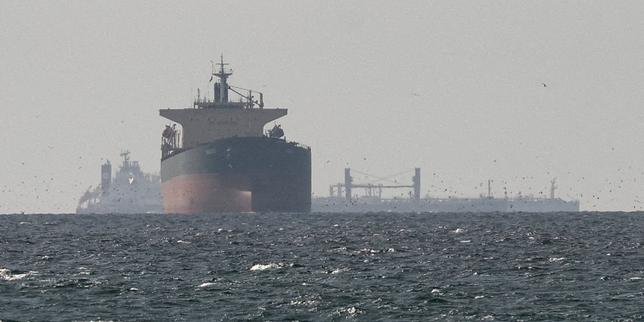
The most common fear-mongering tactic involves "The Great Closure." Pundits imagine a scenario where a regional power sinks a few VLCCs (Very Large Crude Carriers), mines the water, and shuts down the world.
This ignores the brutal reality of modern salvage and maritime warfare.
- The Strait is too deep and too wide to stay closed. You cannot "block" it like a door. You can harass it. You can raise insurance premiums. But you cannot stop the flow of physical commodities for more than a few days without an overwhelming, sustained air and sea campaign that no regional actor can maintain against a coordinated response.
- Pipelines are the ignored pressure valve. Everyone forgets the East-West Pipeline in Saudi Arabia or the Abu Dhabi Crude Oil Pipeline. These aren't just "alternatives." They are massive, existing bypasses that can move millions of barrels per day directly to the Red Sea or the Gulf of Oman, completely skipping the Strait.
We are obsessed with the bottleneck because it’s easy to put on a map. We ignore the plumbing because it’s boring.
The Insurance Trap
When people talk about "security" in the Strait, they are usually talking about money, not bullets. The real "war" is fought in the Lloyd's of London insurance market.
When a drone hits a tanker, the oil doesn't vanish. The price of moving it just goes up. The "War Risk" surcharges added to shipping contracts are a tax on inefficiency, not a death knell for civilization. If the West truly wanted to stabilize the region, it would stop sending more destroyers and start innovating in maritime insurance guarantees and sovereign indemnity funds.
Instead, we send $2 billion warships to play cat-and-mouse with $20,000 drones. The math is pathetic. I have seen strategic planners ignore this lopsided cost-exchange ratio for years because admitting it would mean admitting that our current naval doctrine is obsolete.
Trump’s Accidental Truth
Donald Trump’s rhetoric on this is often dismissed as isolationist rambling. It isn't. It’s a crude articulation of a sophisticated reality: The "Global Policeman" model is a subsidy for the East paid for by the West.
If China needs the oil to keep its manufacturing hubs humming, China should be the one patrolling the waters. If India’s growth depends on Qatari LNG, New Delhi should be the one sending the frigates.
The pushback against this idea usually involves "freedom of navigation." It's a noble phrase that covers a dirty secret. We aren't defending a principle; we are defending a price point. By providing "free" security, we disincentivize the actual stakeholders—the buyers in Asia—from taking responsibility for their own energy security.
The Energy Transition's Dirty Secret
Here is the nuance the "En Direct" news feeds won't tell you: The louder the drums of war beat in the Middle East, the faster the transition to renewables and nuclear becomes a national security mandate rather than an environmental one.
Every time a tanker is harassed in the Strait, the ROI on a domestic solar farm or a modular nuclear reactor in Europe goes up. The Strait of Hormuz is becoming a "legacy asset." Investing more blood and treasure into its defense is like buying more carriages to save the horse-and-buggy industry because you’re afraid of the "disruption" of the automobile.
Stop Asking "Who Will Protect the Strait?"
That is the wrong question. It assumes the Strait must be protected by a centralized, Western-led naval force.
The right question is: "Why are we still building an entire global security apparatus around a single 21-mile-wide strip of water that we no longer fundamentally need?"
The vulnerability of the Strait is a choice. We choose to remain dependent on the geopolitical whims of the Gulf. We choose to ignore the bypass pipelines. We choose to subsidize the energy costs of our competitors.
If the Strait closes tomorrow, it will be a mess. Prices will spike. People will panic. But the world will not end. In fact, it might finally force the tectonic shift in energy independence that we’ve been talking about since the 1970s.
The biggest threat to the Strait of Hormuz isn't a blockade. It’s irrelevance.
Stop looking at the Persian Gulf through a 1991 lens. The ships are moving, the oil is flowing, and the West needs to stop paying for the privilege of watching it happen.
If the Asian tigers want their tea hot and their factories running, let them send the convoys. The era of the American oil-guard is over, and the sooner we admit it, the sooner we can stop being held hostage by a geography that doesn't matter anymore.