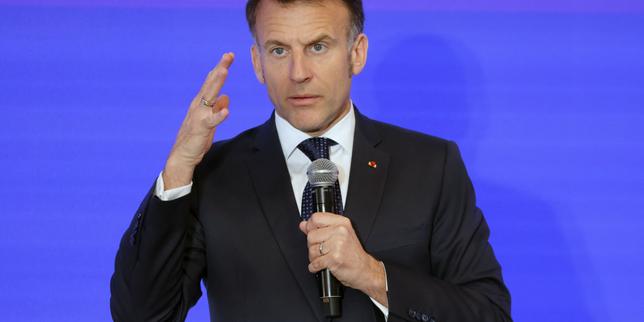
The friction between the French presidency and the United States administration regarding Iranian containment is not a mere diplomatic spat; it is a fundamental collision between two incompatible geopolitical frameworks: Strategic Autonomy and Maximum Pressure. While media narratives often focus on the personality clash between Emmanuel Macron and Donald Trump, the structural rift emerges from a disagreement over the cost-benefit analysis of the Joint Comprehensive Plan of Action (JCPOA) and the long-term utility of secondary sanctions as a tool of extraterritorial sovereignty.
The Divergent Logic of Containment
The impasse is rooted in how each state defines "security." For the United States, security is viewed through a binary lens of total compliance or economic isolation. For France, and the broader European Union, security is an iterative process of engagement intended to prevent nuclear proliferation while maintaining regional stability.
The disagreement functions across three primary vectors:
- Nuclear Non-Proliferation vs. Regional Hegemony: The French position prioritizes the technical constraints of the JCPOA. By strictly limiting Iran’s breakout time, the deal achieves its specific nuclear objective. The U.S. position, however, seeks a "Grand Bargain" that includes ballistic missile restrictions and the cessation of proxy activities in Lebanon, Syria, and Yemen.
- Economic Sovereignty: The U.S. utilizes the dominance of the USD-denominated clearing system to enforce secondary sanctions. This forces French firms (such as Total or Peugeot) to exit Iranian markets despite EU legality. This creates a "sovereignty deficit" that Macron seeks to bridge.
- The Multi-Polarity Variable: France views itself as a "balancing power" (puissance médiatrice). By maintaining a channel with Tehran, Paris attempts to prevent a total pivot of Iran toward the Sino-Russian axis, a shift that would permanently alter the Mediterranean and Middle Eastern security architecture.
The Mechanism of Maximum Pressure
The U.S. strategy operates on a "Collapse-to-Negotiate" model. By strangling the Iranian economy—specifically targeting oil exports and central bank access—the administration aims to incite internal instability or force the Iranian leadership to accept more stringent terms.
This model contains a significant logical bottleneck: The Hardliner Reinforcement Loop. When moderate factions in Iran (formerly led by Rouhani) fail to deliver the economic dividends promised by the JCPOA due to U.S. withdrawal, the political capital shifts to the IRGC (Islamic Revolutionary Guard Corps) and hardline clerics. This shift makes future negotiations more difficult, as the Iranian side views any concession as a strategic liability.
Macron’s Defensive Architecture: The Instex Framework
To counter the U.S. withdrawal from the JCPOA, France, Germany, and the UK established INSTEX (Instrument in Support of Trade Exchanges). This was designed as a special-purpose vehicle to facilitate non-USD trade.
The failure of INSTEX to scale reveals a critical vulnerability in European strategic autonomy. Because most European conglomerates have high exposure to the U.S. financial market, the risk of "de-listing" by the U.S. Treasury outweighs the potential gains of the Iranian market.
- The Financial Asymmetry: A French bank with $10 billion in U.S. assets will not risk those assets for a $500 million Iranian trade credit.
- The Tech Dependency: Most high-value exports contain U.S.-origin intellectual property, triggering export control regulations regardless of the currency used.
The Failure of Symmetrical Diplomacy
Macron’s response to Trump’s accusations of "interference" highlights the breakdown of the traditional Atlanticist alliance. Trump’s assertion that "no one speaks for the United States but the United States" is a tautology that ignores the collective nature of international agreements. When France speaks to Iran, it is not speaking for Washington; it is speaking for the preservation of a multilateral treaty to which France is a sovereign signatory.
This creates a Cooperation Paradox. If France ceases communication with Tehran, the probability of a military miscalculation in the Strait of Hormuz increases. If France continues communication, it risks the ire of its primary security guarantor (the U.S.). Macron has opted for the latter, gambling that France’s role as a permanent member of the UN Security Council necessitates an independent diplomatic track.
Risk Assessment: The Threshold of Kinetic Conflict
The danger of the current trajectory is the "Escalation Ladder." As Iran reaches the limits of "strategic patience," it incrementally violates JCPOA enrichment levels (increasing purity from 3.67% toward 20% and beyond).
Each step up the enrichment ladder reduces the "Breakout Time"—the duration required to produce enough fissile material for a single weapon. As this window closes, the U.S. and Israel face increasing pressure to move from economic warfare to kinetic strikes. Macron’s diplomacy is a desperate attempt to widen this window, using economic incentives (like the proposed $15 billion credit line) as a de-escalation bribe.
Structural Obstacles to Resolution
The primary obstacle is not the lack of a deal, but the lack of credible commitment.
- The US Credibility Gap: Following the 2018 withdrawal, Iranian negotiators view any signature from a U.S. President as temporary, subject to the whims of the next election cycle.
- The Iranian Compliance Gap: Iran’s regional maneuvers and ballistic testing provide constant ammunition for those in Washington who argue that the nuclear deal is a smokescreen for conventional expansionism.
France’s position is inherently precarious because it lacks the "hard power" to guarantee the economic side of the bargain or the "hard power" to deter Iran should the JCPOA fully collapse. Paris is essentially attempting to manage a high-stakes liquidation process where the two primary shareholders are no longer on speaking terms.
Strategic Recommendation for Continental Stability
The European approach must evolve from reactive diplomacy to structural resilience. Relying on the hope that the U.S. will return to a multilateralist posture is a high-risk strategy with diminishing returns.
- Weaponizing the Euro: The EU must accelerate the internationalization of the Euro to provide a viable alternative for global energy settlement, reducing the efficacy of secondary sanctions.
- Developing Asymmetric Diplomatic Channels: France should pivot toward a "JCPOA Plus" framework that acknowledges U.S. concerns regarding ballistics but treats them as a separate, parallel negotiation track rather than a prerequisite for nuclear compliance.
- Hardening European Infrastructure: Establishing a "European Sovereignty Fund" to indemnify mid-sized companies that choose to trade with sanctioned entities (where such trade aligns with EU foreign policy) would provide a buffer against U.S. regulatory overreach.
The Macron-Trump divide is the first major stress test of the post-American world order. The outcome will determine whether Europe remains a junior partner in a U.S.-led "Maximum Pressure" bloc or emerges as an independent geopolitical pole capable of enforcing its own treaty obligations. If France fails to maintain the Iranian channel, the path to a regional conflict in the Middle East becomes significantly shorter, as the last remaining diplomatic circuit breaker will have been removed. The current objective is not to "fix" the relationship with the U.S. administration, but to manage the divergence without triggering a total breakdown of the non-proliferation regime.


