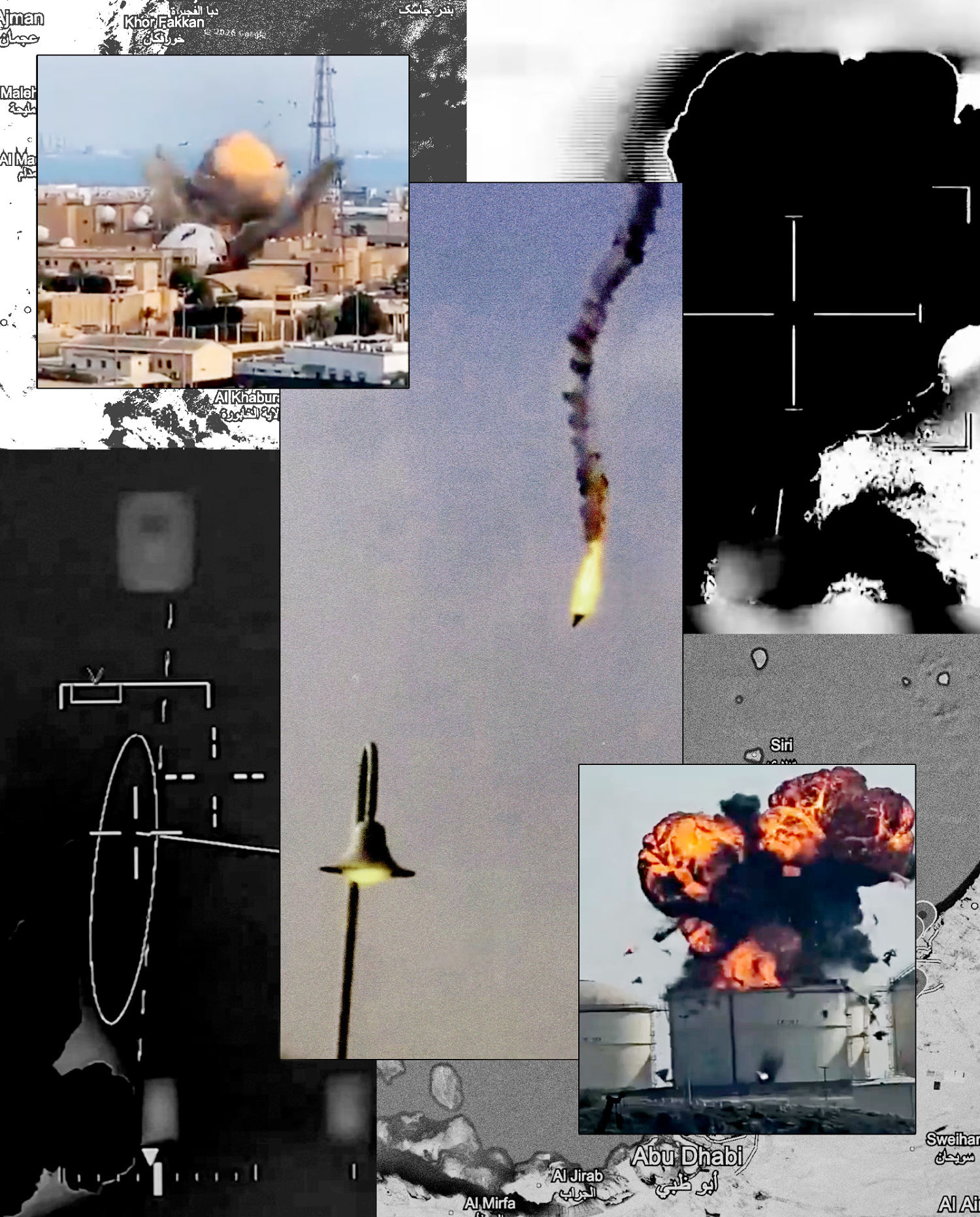
The shift from traditional air superiority to persistent, low-cost loitering munitions represents the most significant shift in aerial warfare since the introduction of the jet engine. Iran’s development of subterranean "drone cities"—hardened, deep-buried facilities designed for the storage, maintenance, and rapid deployment of Unmanned Aerial Vehicles (UAVs)—is not merely a display of hardware. It is a calculated response to the technical reality of modern SEAD (Suppression of Enemy Air Defenses). By moving the entire kill chain underground, the Iranian military apparatus attempts to nullify the primary advantage of high-tech adversaries: the ability to conduct "left-of-launch" strikes.
The Architecture of Subterranean Survivability
Traditional airbases are static, high-signature targets. They require long runways, large hangars, and predictable fuel infrastructure. In contrast, the Iranian "Eagle 44" and similar drone tunnel complexes utilize geological shielding to create a "passive defense" system. The effectiveness of these facilities is measured by three technical variables: Meanwhile, you can explore other stories here: The Logistics of Electrification Uber and the Infrastructure Gap.
- Overburden Thickness: The amount of rock or soil above the facility. To defeat standard bunker-busters like the GBU-31, these tunnels are often bored hundreds of meters into mountain ranges, exceeding the penetration depth of all but the most specialized kinetic penetrators.
- Portal Redundancy: Multiple entry and exit points ensure that a single localized cave-in or strike cannot trap the entire fleet.
- The Launch-to-Exposure Ratio: Drones are pre-assembled and fueled in the "cold" zone. They are moved to the "hot" zone (the portal) only seconds before launch, minimizing the window during which they can be detected by synthetic aperture radar (SAR) or thermal imaging.
The Three Pillars of the Iranian UAV Ecosystem
The drones displayed in these facilities are categorized by mission profile rather than just size or range. The strategic value of the Iranian arsenal lies in its modularity and its focus on the "cost-exchange ratio."
Pillar I: Persistence and Intelligence (The Mohajer and Shahed 129)
These are Medium-Altitude Long-Endurance (MALE) platforms. Their primary function is not the strike itself, but the maintenance of the "kill web." By operating at altitudes where they can remain on station for 20+ hours, they provide the real-time telemetry required to guide cheaper, "dumb" munitions or to verify strike results. The limitation here is satellite link availability; without a robust satellite constellation, these drones are tethered to ground control stations within line-of-sight, unless operated via a relay network. To understand the complete picture, check out the excellent analysis by Wired.
Pillar II: Mass and Attrition (The Shahed 136/131)
The "one-way attack" drone is a flying engine with a warhead. Its design philosophy prioritizes simplicity over sophistication. By using off-the-shelf components, such as MD-550 piston engines, Iran circumvents high-end aerospace sanctions. The goal of the Shahed series is to saturate air defenses. If a $20,000 drone forces the deployment of a $2,000,000 interceptor missile, the attacker wins the economic war even if the drone is destroyed.
Pillar III: Precision and Hybridization (The Karrar and Arash)
The Karrar represents the evolution from target drone to multi-role interceptor. By mounting air-to-air missiles or high-explosive warheads on a jet-powered frame, Iran adds a layer of speed that the piston-driven Shaheds lack. The Arash series, meanwhile, focuses on long-range SEAD missions, specifically designed to home in on the radar signatures of enemy air defense batteries.
The Logistics of the Underground Kill Chain
The visual evidence of rows of drones under portraits of leadership is a branding exercise, but the underlying operational reality is a logistics problem. An underground drone base must function as a self-contained ecosystem. This requires:
- Integrated Fuel Management: Storing volatile fuels in confined spaces requires specialized ventilation to prevent the buildup of explosive vapors.
- Electromagnetic Shielding: To prevent "leakage" that would allow electronic intelligence (ELINT) aircraft to map the facility's internal power usage and communication nodes.
- Rapid Sortie Generation: The bottleneck of any tunnel system is the "mouth." Iranian strategy focuses on specialized rail-launch systems or truck-mounted racks that allow for the simultaneous launch of multiple units, known as "swarming."
The primary technical challenge Iran faces in these environments is the "Data Bottleneck." Controlling a swarm from deep underground requires a complex network of external antennas or fiber-optic links to surface nodes. These surface nodes are the system's "Achilles' heel"—if the antennas are destroyed, the drones inside the mountain are effectively blind and deaf.
The Strategic Logic of Asymmetric Deterrence
The move toward underground drone warfare is a recognition of structural inferiority in conventional manned aviation. Iran’s F-14 and F-4 fleets are aging airframes with limited spare parts. Developing a domestic 5th-generation fighter is financially and technologically prohibitive.
Instead, the drone program follows the "Small, Many, and Cheap" doctrine. This doctrine creates a dilemma for regional rivals. If an adversary launches a preemptive strike, they must use a disproportionate amount of ordnance to penetrate the mountain, yet they can never be certain they have neutralized the "hidden" inventory. This uncertainty is the core of Iranian deterrence.
Quantifying the Threat: The Cost-Benefit Equation
To understand the impact of this infrastructure, we must look at the Cost Function of Air Defense ($C_{ad}$).
$$C_{ad} = (N \times P_i) + (S \times L)$$
Where:
- $N$ is the number of incoming drones.
- $P_i$ is the price of the interceptor.
- $S$ is the strategic value of the target being defended.
- $L$ is the likelihood of a leak (interceptor failure).
In this equation, Iran’s strategy is to maximize $N$ while minimizing the cost of the drone. As $N$ increases, the defender’s inventory of $P_i$ (interceptor missiles) is depleted. Eventually, the cost of defense exceeds the value of the protected asset, or the inventory hits zero, leading to a catastrophic failure of the air defense umbrella. The tunnel systems facilitate this by allowing Iran to stockpile massive quantities of $N$ in a protected environment, ready for a high-intensity "pulse" launch.
The Technical Bottlenecks
While the "drone city" concept is formidable, it is not without critical vulnerabilities. The reliance on commercial-grade GPS for navigation makes these platforms susceptible to electronic warfare (EW) and spoofing. Furthermore, the high-density storage of drones in tunnels creates a "domino effect" risk. A single internal accident—a fuel leak or an electrical fire—within a confined, oxygen-limited space could result in the loss of an entire wing without a single enemy shot being fired.
Additionally, the propulsion systems used in the majority of Iranian drones are noisy and produce a significant thermal signature. While the drones are "hidden" while in the tunnel, they are highly detectable the moment they clear the mountain's shadow. The transition from the underground "hidden" state to the "active" mission state is the moment of maximum vulnerability.
The Shift Toward Autonomous Terminal Guidance
The most critical upgrade to monitor in Iranian UAV development is the transition from GPS-dependent navigation to edge-processing image recognition. By installing low-cost cameras and AI-on-a-chip processors, the drones can compare the terrain below them with pre-loaded satellite maps. This "optical flow" navigation makes them immune to GPS jamming. The footage emerging from these tunnel displays suggests an increasing number of platforms are being fitted with these electro-optical (EO) gimbals, indicating a move toward semi-autonomous terminal guidance.
This development reduces the requirement for constant communication with the underground command center, allowing the drones to operate in a "radio silent" mode once launched, further complicating the defender's task of interception.
The move toward subterranean drone infrastructure signals a permanent shift in regional power dynamics. It represents the "industrialization of the insurgent mindset"—taking the tactics of hidden, mobile warfare and scaling them to a national strategic level. The challenge for modern militaries is no longer finding the aircraft, but finding the factory, the fuel, and the "brains" behind the mountain.
Strategic planners must move away from the "interceptor-to-drone" ratio and toward "network-to-source" disruption. This involves focusing on the supply chain of dual-use components and the specialized drilling equipment required to expand these subterranean webs. The war is no longer in the sky; it is in the substrate.