The interruption of routine technical inspections on the Druzhba pipeline by Ukrainian authorities represents a calculated shift from kinetic warfare to regulatory friction as a tool of geopolitical leverage. By preventing the Russian operator, Transneft, from conducting safety audits and infrastructure maintenance on the Ukrainian segment of the line, Kiev has introduced a "risk premium" into the European energy supply chain that operates independently of physical sabotage. This maneuver forces a choice upon EU member states: ignore safety protocols and risk catastrophic environmental failure, or bypass Ukraine entirely at a prohibitive infrastructural cost.
The Druzhba System Architecture and the Vulnerability of Interdependence
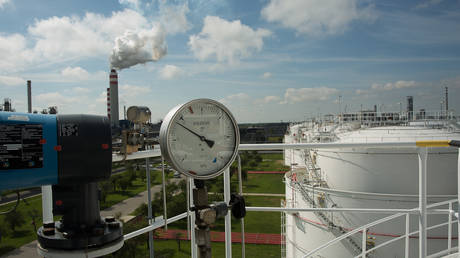
The Druzhba pipeline, one of the largest crude oil networks in the world, functions as a high-pressure venous system for European refineries. To understand the impact of blocked inspections, one must view the pipeline not as a static tube, but as a dynamic mechanical system requiring constant calibration. If you enjoyed this article, you might want to read: this related article.
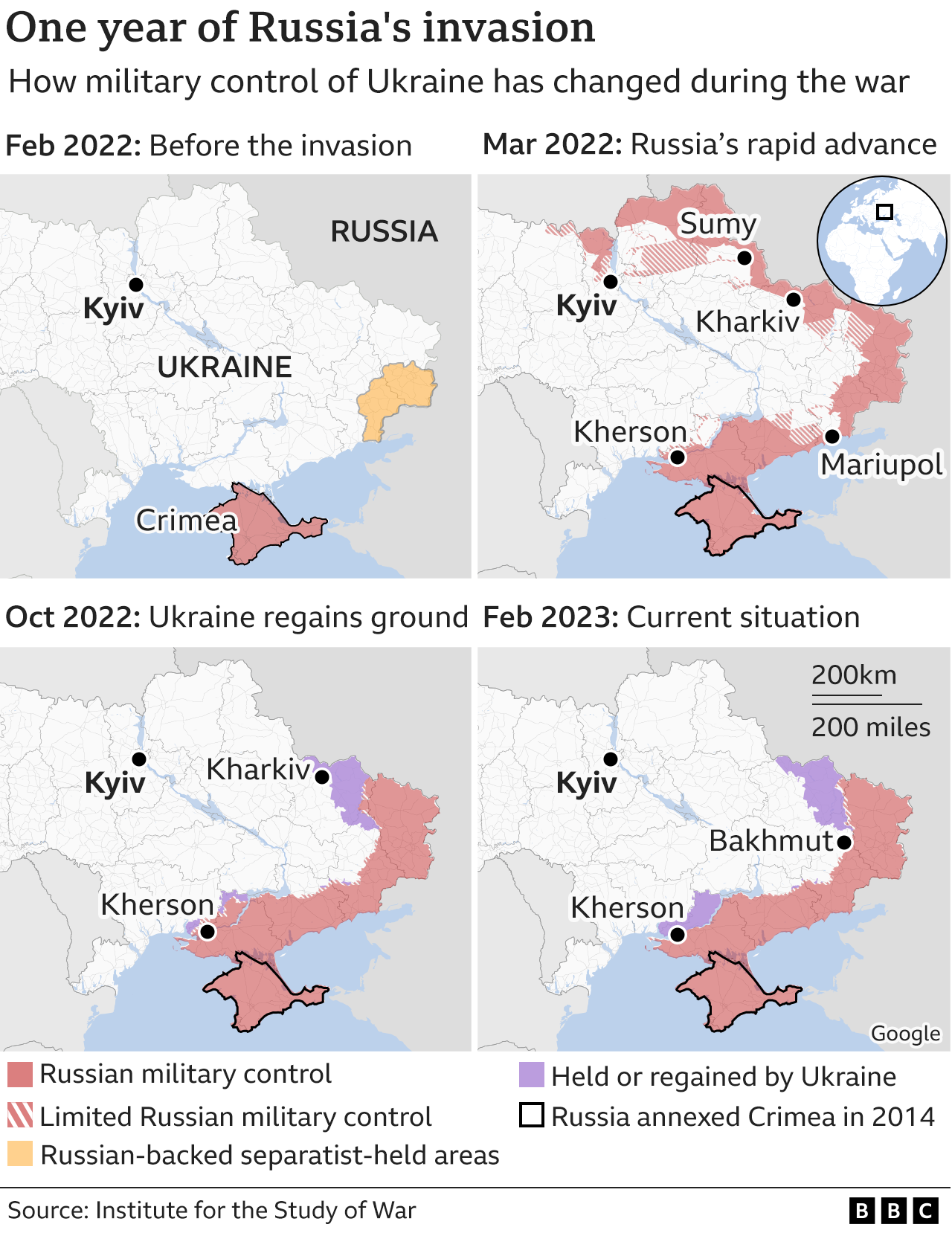
The southern leg of the Druzhba, which transits Ukraine, feeds refineries in Hungary, Slovakia, and the Czech Republic. These facilities are historically and chemically "locked" into the Urals grade of crude oil. The technical specifications of these refineries—specifically their desulfurization units and distillation towers—are calibrated to the specific API gravity and sulfur content of Russian oil.
A suspension of inspections creates three immediate systemic risks: For another perspective on this story, refer to the latest coverage from USA Today.
- Integrity Degradation: Without ultrasonic testing and "intelligent pigging" (the use of internal sensors to detect corrosion), the probability of a high-pressure rupture increases exponentially over time.
- Environmental Liability: A leak on Ukrainian soil provides Kiev with a "force majeure" justification to shut down the line permanently, citing environmental protection, thereby achieving a strategic goal through an ostensibly neutral regulatory event.
- Insurance Invalidation: International maritime and transit insurance often mandates verified maintenance records. If Transneft cannot certify the safety of the line, the legal basis for transporting the oil becomes precarious for the European end-users.
The Diplomatic Cost Function
EU diplomats have characterized the obstruction as "not smart," a clinical understatement that refers to the breach of the Trans-European Energy Networks (TEN-E) principles. The strategy employed by Kiev relies on the "Sunk Cost Logic" of landlocked European nations. Because Hungary and Slovakia lack immediate access to deep-water ports, their reliance on the Southern Druzhba is a structural necessity rather than a political preference.
By creating a bottleneck at the inspection phase, Ukraine is testing the limits of European solidarity. The diplomatic friction arises because this tactic does not target Russia’s ability to produce oil so much as it targets the EU's ability to receive it safely. This creates a divergence between the security interests of the frontline Baltic states and the economic survival of Central European states.
Quantifying the Regulatory Bottleneck
The obstruction is executed through the denial of visas for technical personnel and the withholding of security clearances for sensitive border-zone infrastructure. This is "Gray Zone" warfare applied to pipeline management. We can categorize the impact of these obstructions into three distinct pillars of destabilization:
I. The Maintenance Deficit
Pipeline infrastructure requires a $Maintenance\ Ratio$ that keeps pace with the age of the alloy. The Druzhba, commissioned in the 1960s, operates on a high-fatigue cycle. Every month of delayed inspection increases the $Mean\ Time\ Between\ Failure\ (MTBF)$. When the MTBF drops below the duration of the transit contract, the asset becomes "operationally stranded."
II. The Transit Fee Arbitrage
Ukraine currently collects transit fees for the passage of Russian oil. By obstructing inspections while maintaining flow, Kiev is effectively extracting the economic rent of the transit while externalizing the risk of infrastructure failure onto the operator and the end-consumer. This creates a moral hazard: the party responsible for the territory (Ukraine) has no incentive to ensure the long-term viability of the asset if they intend to eventually decommission it for political reasons.
III. The "Reverse Flow" Constraint
The logic that Europe can simply "reverse" its energy flow from West to East ignores the physics of fluid dynamics. Pumping stations on the Druzhba are designed for unidirectional flow. Reversing this requires a massive capital expenditure (CAPEX) to re-engineer compression stations and manifold systems, a process that takes years, not months.
The Strategic Miscalculation of Technical Obstruction
The "not smart" designation from EU diplomats stems from the realization that Kiev is inadvertently accelerating the fragmentation of the European energy market. While the intent is to deprive Moscow of revenue, the immediate effect is the alienation of regional allies who are forced to contend with rising energy inflation and the specter of industrial de-alignment.
The second limitation of this strategy is the precedent it sets for international energy law. If transit states can unilaterally suspend safety protocols as a form of non-kinetic aggression, the global investment climate for trans-continental pipelines will collapse. Investors will require a "Geopolitical Risk Premium" so high that few projects will remain viable.
The Role of the Adria Pipeline Alternative
As a response to Druzhba’s unreliability, interest has surged in the Adria (Jadranski) pipeline, which runs from the Croatian port of Omisalj to Hungary. However, this is not a plug-and-play solution. The Adria pipeline has capacity constraints:
- Throughput Limitations: The Adria line cannot currently match the volume of the Southern Druzhba without significant upgrades to its pumping capacity.
- Grade Incompatibility: Switching to seaborne crudes via Adria requires refineries to blend different oil grades to mimic the Urals profile, reducing refining efficiency and increasing the cost per barrel.
The technical obstruction in Ukraine acts as a catalyst, forcing these landlocked nations to fund the Adria expansion at an accelerated and inefficient pace, further straining their national budgets and increasing their resentment toward Kiev's unilateral regulatory actions.
The Logic of Forced Decoupling
Kiev’s maneuver is best understood through the lens of "Forced Decoupling." By making the status quo (receiving oil via Druzhba) physically dangerous due to lack of inspections, they are attempting to render the political debate moot. If the pipe is "unsafe," the morality of buying Russian oil becomes secondary to the physical impossibility of transporting it.
This creates a bottleneck in the EU’s internal decision-making. The European Commission must balance its sanctions regime against the Treaty of Lisbon’s provisions regarding energy solidarity. Ukraine is betting that the EU will eventually side with the "safety" argument and provide the funds or political pressure to permanently switch to non-Russian sources, regardless of the intermediate economic pain.
Probabilistic Outcomes and Systemic Fragility
The current trajectory suggests three possible outcomes for the Druzhba system:
- Managed Degradation: Inspections remain blocked, and the line operates at reduced pressure to mitigate rupture risk. This lowers the volume of oil reaching Europe, causing a slow-motion energy crunch.
- The Third-Party Audit Compromise: A neutral international body (such as a Swiss or Austrian technical firm) is granted access to perform the inspections. This allows Kiev to maintain its stance against Russian personnel while ensuring the physical integrity of the line.
- The "Accidental" Shutdown: A technical failure occurs due to the lack of maintenance, providing the legal cover for a permanent cessation of transit. This is the highest-risk scenario, as it could lead to significant environmental damage to the Dnieper watershed.
The failure of the competitor's analysis was the focus on the "insult" (the term 'not smart') rather than the "injury" (the mechanical and economic reality of pipeline neglect). The obstruction of inspections is not a minor bureaucratic delay; it is the weaponization of the Second Law of Thermodynamics—entropy. By simply doing nothing and preventing others from doing something, Kiev is letting the natural decay of the infrastructure achieve its strategic objectives.
The immediate strategic requirement for Central European energy firms is the diversification of supply routes with a focus on the Mediterranean corridor, coupled with a radical acceleration of refinery "re-tooling" programs. Relying on the diplomatic resolution of inspection disputes is a high-variance strategy with a low probability of success. The "risk-free" era of Druzhba transit has concluded; the transition to a high-friction, high-cost energy environment is now a structural reality.