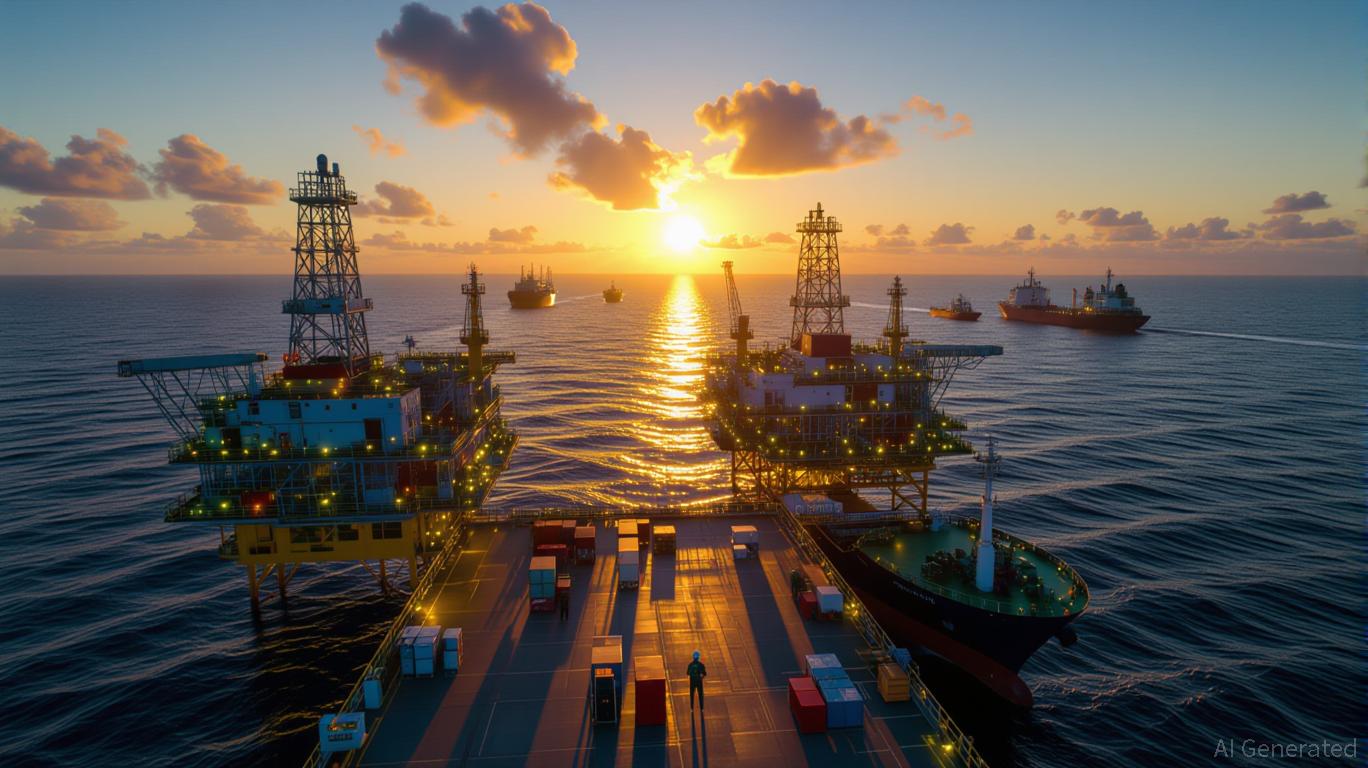
The headlines are obsessed with who pulls the trigger. They want to know if the White House will coordinate with the International Energy Agency (IEA) or if the Interior Secretary has the President’s ear. It is a distraction. The entire conversation assumes that the Strategic Petroleum Reserve (SPR) still functions as a legitimate lever of global economic power. It doesn't.
We are watching a debate over how to use a rusted-out battery. Whether the U.S. participates in an IEA collective release is no longer a question of energy security; it is a question of political theater. If you think a release of 30 million barrels—or even 60 million—meaningfully alters the trajectory of a $100 trillion global economy, you aren't paying attention to the plumbing of the oil market.
The Myth of Global Coordination
The "lazy consensus" suggests that when the U.S. and the IEA act in unison, they "stabilize" markets. This is a polite way of saying they try to trick traders into a momentary panic. I’ve watched desks in Houston and Singapore shrug off these announcements for a decade. Why? Because the market knows the difference between a supply addition and a inventory shift.
When the SPR releases oil, it doesn't create new molecules. It just moves them from a hole in the ground in Louisiana to a commercial tank. The IEA framework was designed in 1974 to counter physical supply disruptions—think the Arab Oil Embargo. In 2026, our "disruptions" are usually just price spikes driven by paper trading and logistical bottlenecks. Using a 1970s emergency tool to fight 21st-century inflation is like trying to fix a software bug with a sledgehammer.
The Empty Tank Problem
The most dangerous part of this "will they or won't they" drama is the math. The SPR is currently sitting at its lowest levels in decades. We spent forty years building a buffer, then liquidated half of it to shave a few cents off the price of 87-octane before an election cycle.
Here is the counter-intuitive truth: The more we talk about using the SPR, the weaker it becomes.
Every time the Interior Secretary or the President signals a release, they telegraph our desperation. They admit that domestic production—despite being at record highs—cannot be steered by the government. By leaning on the IEA, the U.S. signals that it no longer has the internal capacity to go it alone. We are outsourcing our energy sovereignty to a committee in Paris.
The Quality Mismatch Nobody Mentions
If you want to see how deep the rot goes, look at the API gravity of what is actually in those salt caverns. The SPR is largely composed of sour crude. Most of the high-complexity refining capacity on the Gulf Coast is tuned for specific blends. You can’t just dump SPR barrels into the system and expect a 1:1 replacement for lost imports.
In a real crisis—a total blockade of the Strait of Hormuz or a systemic collapse of Venezuelan output—the SPR would provide a few weeks of breathing room. Using it now to manage "price volatility" is an act of strategic vanity. We are burning our insurance policy to pay for a cheap lunch.
The IEA is a Paper Tiger
The International Energy Agency likes to pretend it is a central bank for oil. It isn't. It has no enforcement mechanism. When the U.S. "coordinates" a release, it is usually doing 80% of the heavy lifting while other member nations offer symbolic gestures.
- France might release a few days of stocks.
- Japan might tap into its commercial reserves.
- The U.S. drains its physical strategic stockpile.
This isn't a partnership. It’s a subsidy. We provide the liquidity, and the rest of the world gets the price relief. If the U.S. wants to actually influence the market, it needs to stop asking for permission from a multilateral talk-shop.
Why Domestic Production Is The Only Real Reserve
The Interior Secretary’s focus on the SPR is a pivot away from the only metric that actually matters: the rig count and the DUC (Drilled Uncompleted) inventory.
The "reserve" isn't in the salt caverns. It’s in the Permian. It’s in the Bakken. But the government can’t "release" private production with a signature. They have to actually provide a stable regulatory environment, which is much harder than opening a valve on a government pipe.
Imagine a scenario where the U.S. stops participating in IEA releases entirely. The immediate market reaction would be a spike. But the secondary reaction? A realization that the U.S. is prioritizing its own internal stability over global price-smoothing. That would do more to encourage domestic investment than any "coordinated release" ever could.
The Real Cost of Being "Strategic"
The term "Strategic Petroleum Reserve" is now an oxymoron. There is nothing strategic about selling low and being forced to buy high to refill. We are currently in a cycle where the government is trying to "time the market."
Let’s be clear: The Department of Energy is not a hedge fund. They are terrible at trading. They sold off the reserve when the market was tight and now they are struggling to refill it because they didn't anticipate that prices would stay resilient. This is the "expertise" we are supposed to trust?
Stop Asking the Wrong Question
The media asks: "Will the President authorize the release?"
The market asks: "How much more of your cushion are you willing to destroy?"
Every barrel released today is a barrel we won't have when a genuine, existential supply shock hits. We are treating a terminal illness (energy underinvestment) with a shot of morphine (SPR releases). It feels better for an hour, but the underlying condition is getting worse.
If the U.S. stays in the IEA release game, it is merely accepting its role as the world's swing producer of last resort—using taxpayer-funded assets to bail out global markets. If we want to be serious, we stop the releases, leave the IEA committee, and treat the SPR like what it was meant to be: a glass-box-only-break-in-case-of-war emergency fund.
Anything else is just a press release designed to mask the fact that the White House has lost control of the energy narrative.
Close the valves. Stop the calls to Paris. Let the market find its floor without the crutch of a depleting reserve.